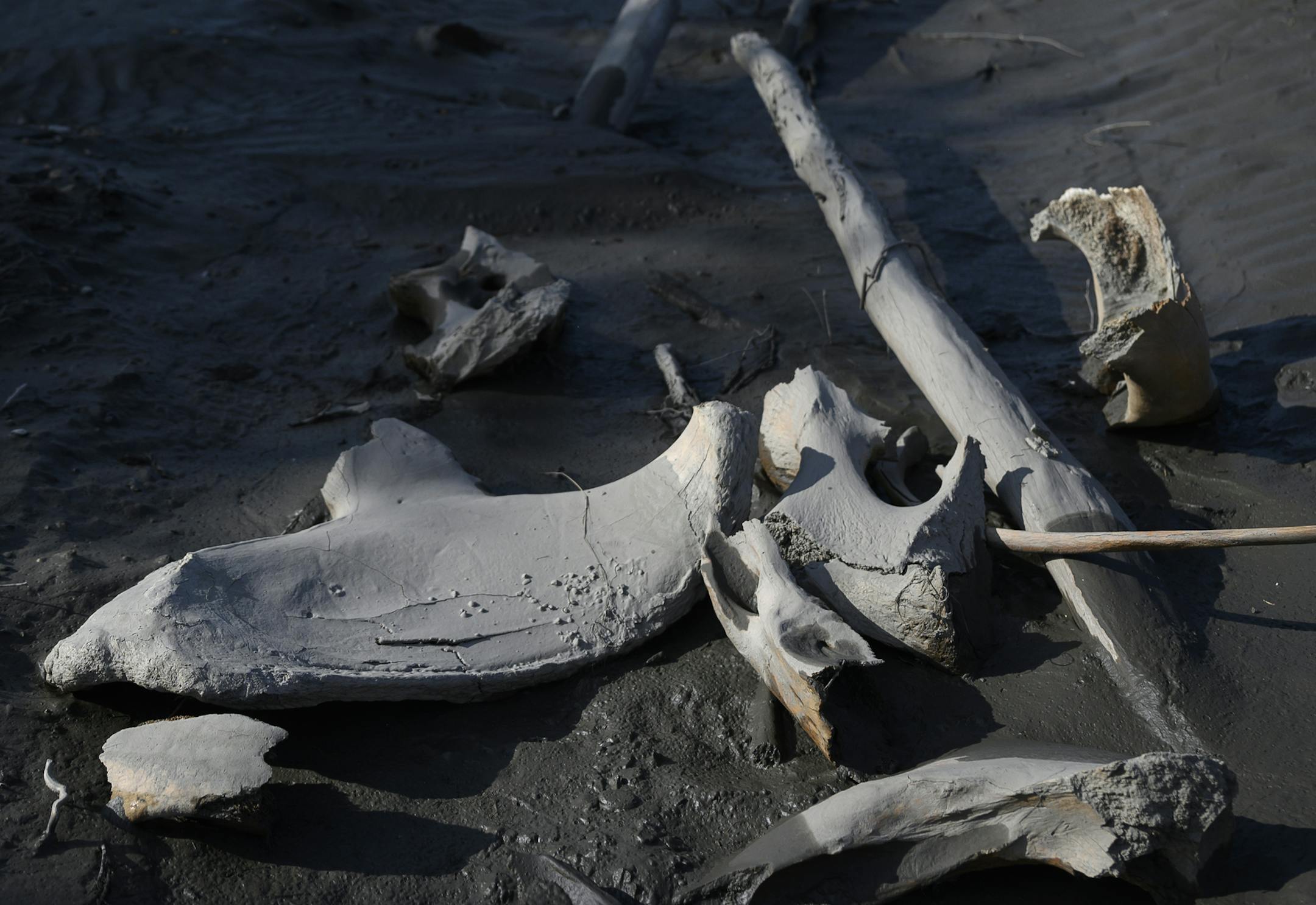
Russia's vast permafrost area once covered more than half the country. But that permanently frozen ground is rapidly thawing as Siberia has warmed faster than almost anywhere else on Earth.
Scientists say the planet's warming must not exceed 2.7 degrees Fahrenheit — but Siberia's temperatures have already spiked far beyond that. And a Washington Post analysis found that the region near the town of Zyryanka, in an enormous wedge of eastern Siberia called Yakutia, has warmed by more than 5.4 degrees Fahrenheit since preindustrial times — roughly triple the global average.
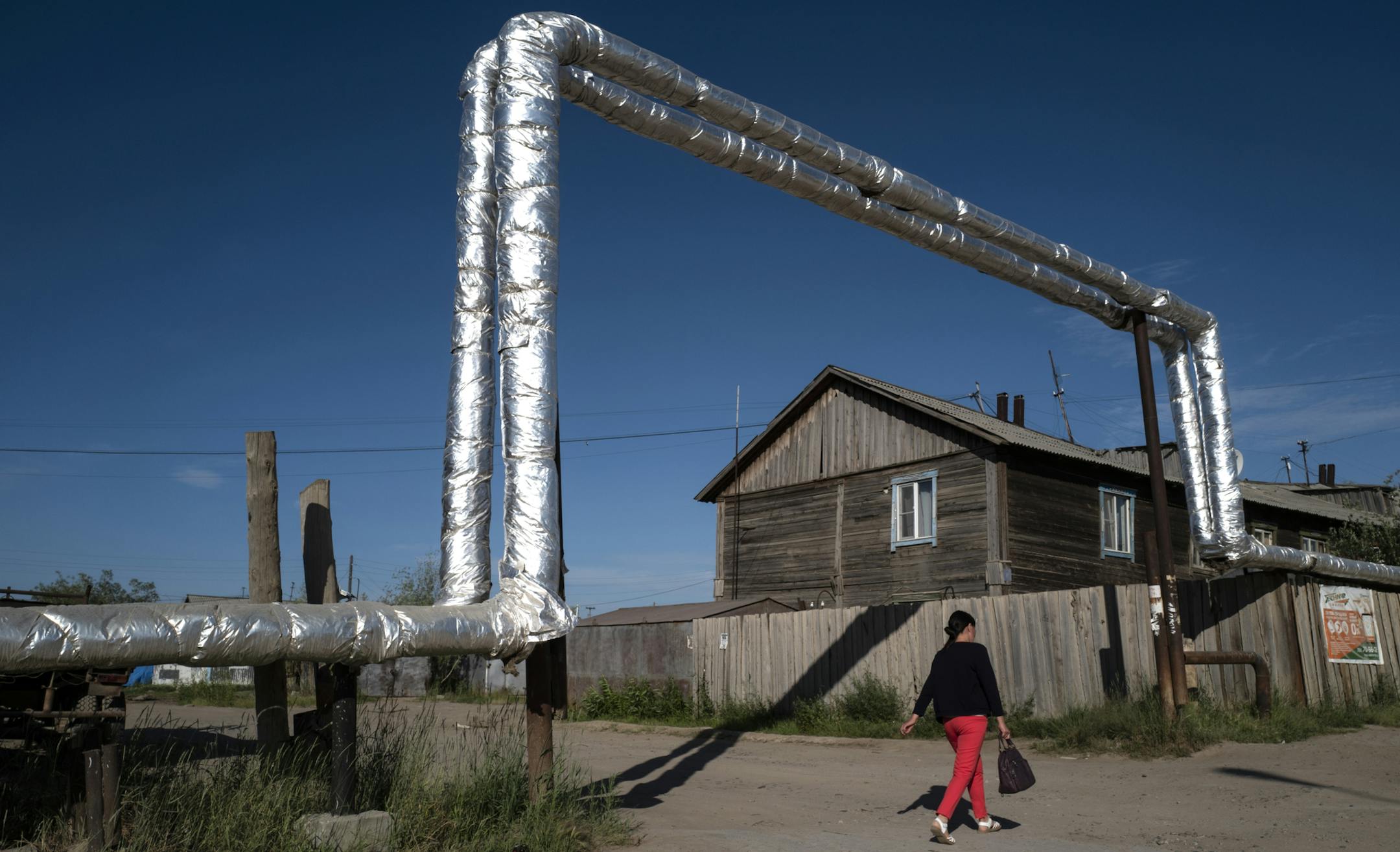
For the 5.4 million people who live in Russia's permafrost zone, the new climate has disrupted their homes and their livelihoods. Rivers are rising and running faster, and entire neighborhoods are falling into them. Buildings, pipelines and other infrastructure are at risk.
The economic loss is $780.5 million to $2.3 billion a year, said Alexander Krutikov, deputy minister for the Far East and Arctic development. "This problem needs to be addressed, because the amount of damage will grow every year," Krutikov said. "The scale is very serious. The pipes explode, the piles collapse."
His comments are another sign that Russia, the world's fourth-biggest emitter, is taking the effects of climate change more seriously. President Vladimir Putin has challenged the widely held assertion that global warming is due almost exclusively to human activity. Still, he decided to ratify the 2015 Paris climate accord this year and said Russia must do whatever it can to mitigate the impact of global warming.
It's a particular worry for mining, oil and gas companies. The permafrost area accounts for 15% of Russia's oil and 80% of its gas operations. It is also home to miners including Norilsk Nickel (Nornickel), the biggest refined nickel and palladium producer.
Russia has long built structures on piles to improve stability. But as the ground warms it becomes softer, and there are signs problems are increasing. "Buildings lost stability as the permafrost warmed," Nornickel said. That prompted the Arctic city to build the first new homes in decades, with fewer floors and weighing less.
New craters have also been found in the gas-rich Yamal region, which is a risk to pipelines, and some houses have had to be pulled down in Norilsk, the industrial town where Nornickel operates.