

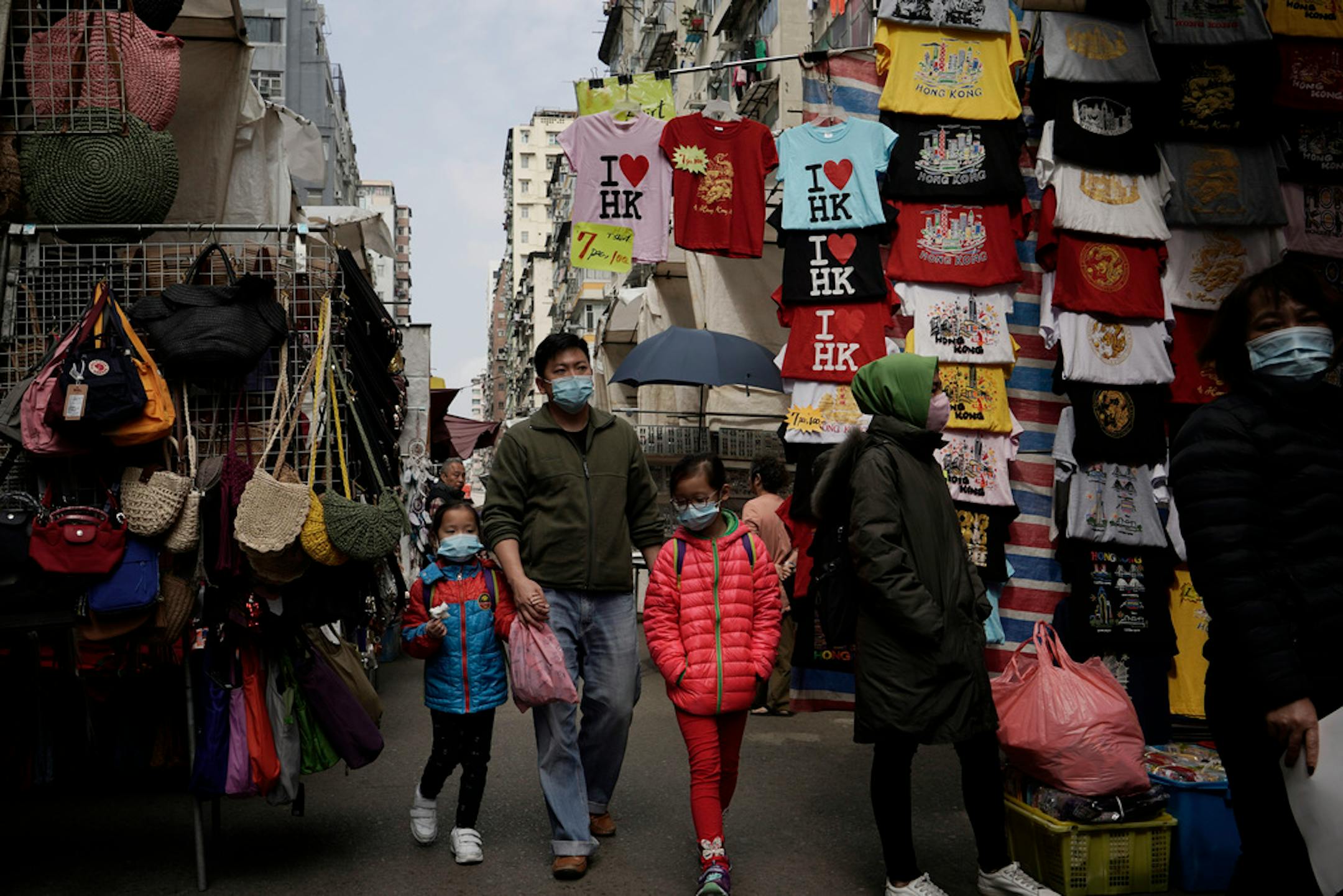
The Yu Garden, a 16th-century complex of pavilions and ponds in the heart of Shanghai, was all gussied up for the Chinese New Year holiday. Its walkways were bedecked with colorful lanterns, its stalls laden with dumplings, its entrances flanked by dozens of security guards to handle crowds.
Just one thing is missing: people. Fearful of coronavirus, they stayed home.
"I'll be doing well if I make a few sales today," says Li Xinming, manager of a silk-scarf shop. Last year Yu Garden attracted 700,000 visitors during the holiday week, peak season for it and its merchants. This year, Li said his losses might wipe out his earnings for months to come.
The question for China, and for the many companies and countries around the world linked to its economy, is whether Li's travails are indicative of a much broader problem.
The obvious reference point is China's battle with SARS, another coronavirus, in 2003. Growth slowed sharply at the height of the epidemic but rebounded swiftly after it was contained. Other recent epidemics have reinforced the impression that economists should not be overly worried, so long as good doctors are on the job. Neither avian flu in 2006 nor swine flu in 2009 dimmed the global outlook.
Yet even flint-hearted investors are wondering whether the new epidemic might be worse. Stocks in Hong Kong have fallen by nearly 10% as reported infections have steadily increased. Tremors have also rippled through global markets.
The concern is less the severity of the virus, which seems less lethal than SARS, but rather the nature and potential duration of China's efforts to bring the outbreak under control. And disruption in China, the world's second-biggest economy, has global consequences. "It's not the disease, it's the treatment," wrote analysts with Gavekal Dragonomics, a consultancy.
The World Bank has estimated that as much as 90% of the economic damage from epidemics stems from people's fear of associating with others, which leads offices and stores to close. In China, this is being magnified by the government's policy of isolating affected areas and limiting interpersonal contact throughout the country. While public-health experts debate whether this is the right approach, economists will count the costs.


