

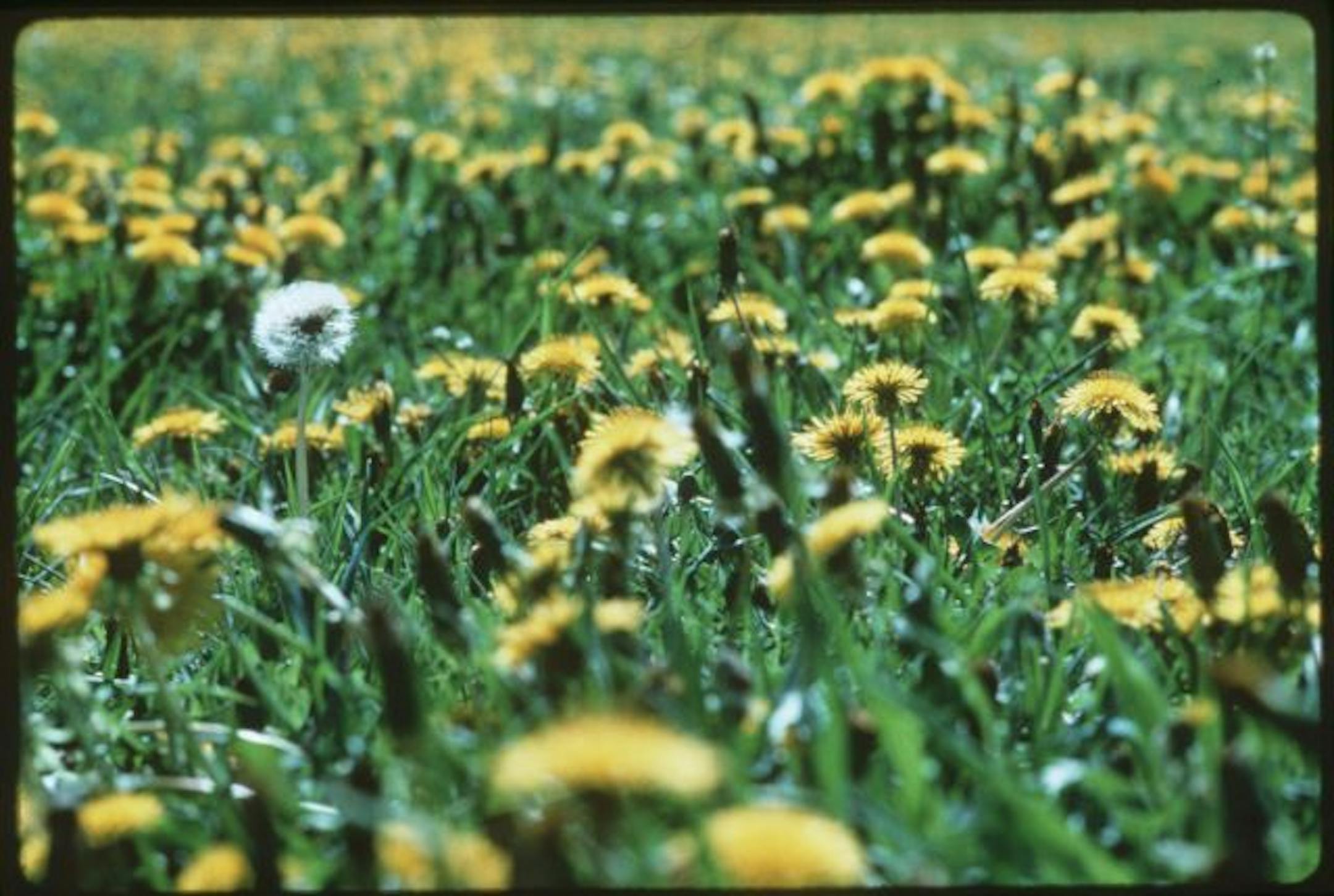
A few spring days ago, while relaxing in my gazebo, I saw, beyond the galaxy of yellow blossoms and white puffballs that is my yard, my young neighbor digging dandelions out of her lawn with a garden trowel.
I could see maybe six spots of yellow in her lawn's even spread of Kentucky bluegrass -- a monocultural sea that surrounds my own biodiverse double lot on all sides. I asked myself: What does the world have against dandelions?
They bloom brightly on southern slopes when the frost is barely out of the ground, bringing color to the drab landscape of early spring. Two weeks later, they've spread across the new green like a golden carpet.
They delight the eyes of children. They nurture honeybees, who, I am told, need all the nurturing they can get. Their buttery color and the consequent "test" under the chin afford us a kind of entry-level intimacy with the opposite sex.
When they go to seed, their tough tall stems, tokens of life's vigor, reassure us: Waste our planet though we may, dandelions will still be multiplying after their kind on the fringes of our toxic dumps.
Once they have filled the air with their fluffy seeds, dandelions subside into (and are, in my yard, a major component of) a lawn's even green, their lion's-tooth leaves visible only to homeowners who have nothing better to do than survey their domain for the slightest irregularity.
Their roots go deep, tapping the subsoil moisture that will keep them green when all about them have gone dormant in our ever-more-frequent droughts (see the preceding paragraph for the lesson taught).
And dandelions have lineage and utility. They were brought to this continent -- a successful species introduction if ever there was one -- by early settlers to provide fresh greens and new wine after long winters of deprivation and scurvy.


