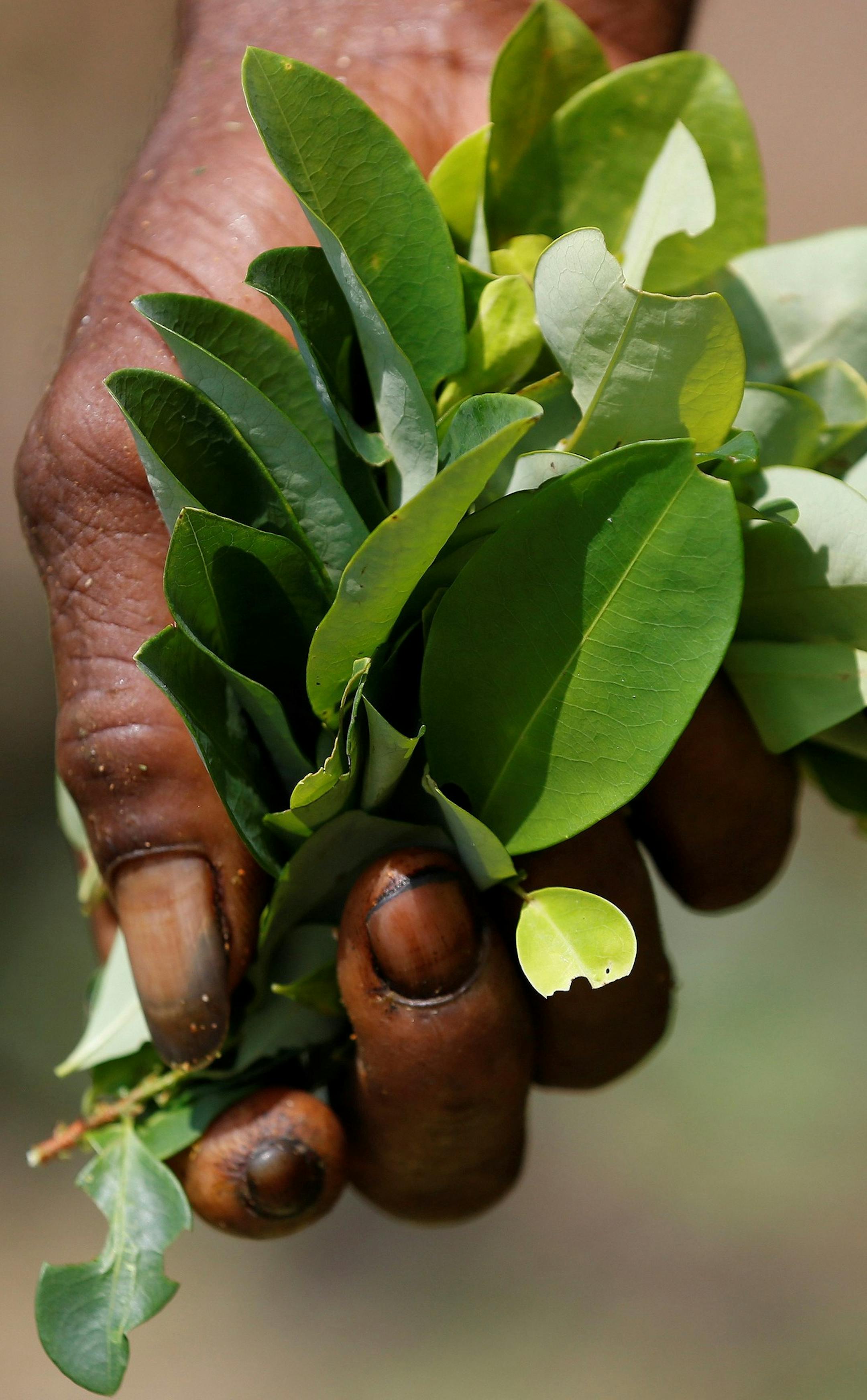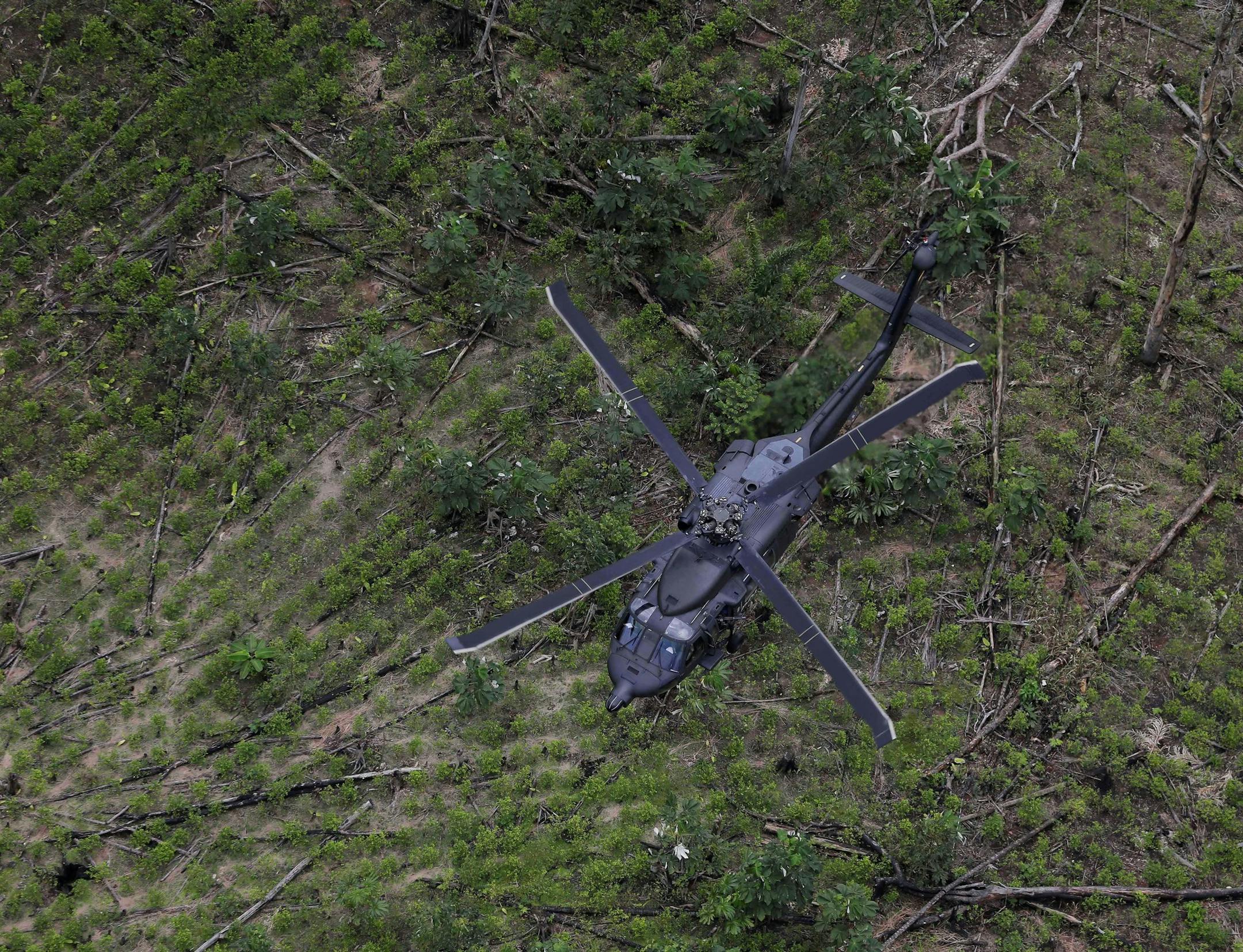
The hills surrounding Sinaí, a village in southwest Colombia, are blanketed in a green patchwork, ranging from the bright chartreuse of coca-plant seedlings to a darker clover color that indicates the leaves are ripe for picking and processing into cocaine.
It is areas like this that have helped to boost Colombia's estimated cocaine output 37 percent since 2015 to an all-time high of 710 tons in 2016, according to the U.S. government. Some 188,000 hectares of land are now planted with coca, up from a low of 78,000 in 2012.
One reason for the rise seems counterintuitive: the signing last November of a peace deal between the government and the FARC rebel group. It was supposed to reduce coca cultivation; the FARC had extorted a tax on coca crops and trafficked cocaine, and under the peace deal it is to support the government's eradication efforts.
But the deal's terms were years in the crafting, and many of its provisions were clear well in advance — including that there would be payments for coca farmers who shifted to different crops. The government created a perverse incentive to plant more.
And as the peace talks progressed, the government scaled back aerial crop spraying — according to its critics, in order to placate the FARC. In 2015 it suspended spraying entirely, citing a study by the World Health Organization concluding that glyphosate, the herbicide dumped out of planes, was "probably carcinogenic."
Instead, Colombia's government is putting its faith in crop substitution. It is aiming at a cut of 50,000 hectares in the area under coca cultivation this year in 40 municipalities.
If a community signs up, each family will receive subsidies and assistance of about $7,800 in the first year that they eradicate their coca, and will be helped to acquire title to the land and to find other means of support. In areas where no deal is struck, the army may come in to root up plants by hand.
Since the end of January, more than 58,000 families representing 49,000 hectares of coca have signed up. But suspicion born of long disappointment is holding others back.