
In Argentina, Macri's upset win could be a turning point for the country, continent

New leader promises greater accountability, transparency for Argentina

November 30, 2015 at 11:45PM
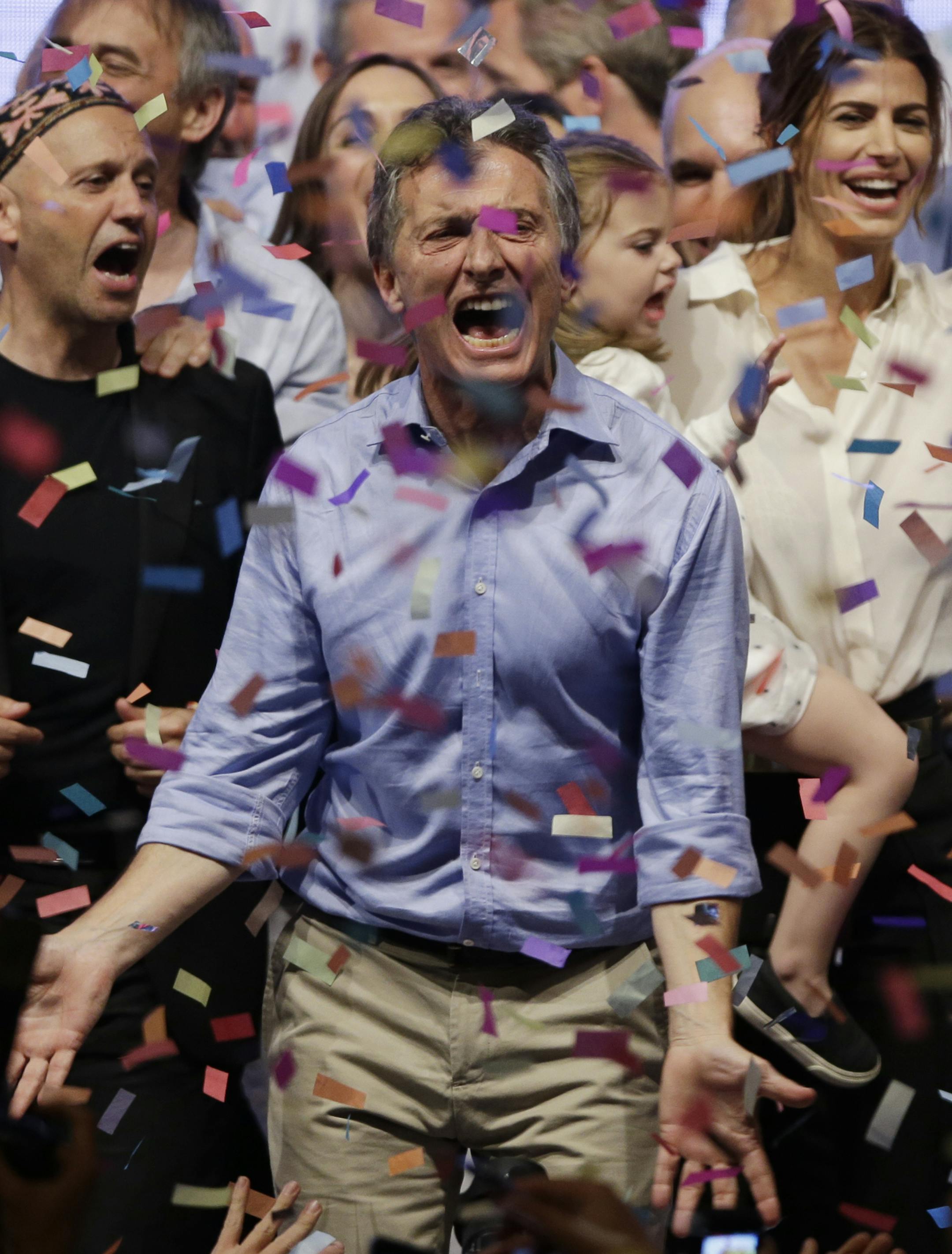
Opposition presidential candidate Mauricio Macri and his wife Juliana Awada, back right, celebrate after winning a runoff election in Buenos Aires, Argentina, Sunday, Nov. 22, 2015. Macri won Argentina's historic runoff election against ruling party candidate Daniel Scioli, putting an end to the era of President Cristina Fernandez, who along with her late husband dominated Argentine politics for 12 years. (AP Photo/Ricardo Mazalan)
Opposition presidential candidate Mauricio Macri and his wife, Juliana Awada, back right, celebrated his runoff victory over ruling party candidate Daniel Scioli in Buenos Aires on Nov. 22. (The Minnesota Star Tribune)

Car horns blared. Firecrackers lit up the sky. Yells of "Vamos!" rang out among Buenos Aires' Parisian-style apartment buildings.

The revelers were acting like football fans, but the win they were cheering on Nov. 22 was political. It was the upset victory of Mauricio Macri, the mayor of the city of Buenos Aires, in a runoff election to become Argentina's next president. Even more than most presidential transitions, Macri's triumph will begin a new era for the country, and perhaps for South America as a whole.

He takes over from Cristina Fernández de Kirchner, who together with her late husband, Néstor Kirchner, governed for 12 years with a defiant populism that distorted the economy, made enemies at home and abroad and undermined institutions.

Fernández leaves her successor with an economy that has barely grown for four years, dwindling foreign-exchange reserves, inflation of around 25 percent and a budget deficit of more than 6 percent of GDP.

Macri's defeated rival, Daniel Scioli, shared Fernández's Peronist pedigree and ran as her heir. But even he would have reversed many of her policies; the parlous state of the economy would have left him with little choice.

With Macri, the first elected president in nearly a century who is neither a Peronist nor affiliated with the movement's weaker rival, the Radical Civic Union, reform is likely to be faster and more profound. He campaigned under the banner of Cambiemos ("Let's Change"), a coalition of mainly centrist non-Peronist parties. After a dozen years of kirchnerismo, he promises a return to economic sanity, diplomatic prudence and a more accountable democracy.

The son of an Italian-born businessman who grew rich on government connections, Macri is an unlikely president, aloof and sometimes almost inarticulate. But he has shown himself to be a good manager and a dogged campaigner. Politically, he is a self-made man. He first came to public notice as a successful president of Boca Juniors, the country's most popular football club. He has built a party — Republican Proposal — from scratch in 10 years.

Change will be evident as soon as Macri takes office on Dec. 10. He is a more collegial executive than Fernández, although he lacks her charisma. At his postelection news conference — itself a sign of greater openness — he suggested he would move quickly to restore professionalism to institutions that the Kirchners had tried to bring to heel. He will shake up the statistics agency, which has been churning out misleading reports on inflation, and he plans to replace the governor of the Central Bank, who has been obediently printing money to finance the budget deficit.
He is choosing well-regarded technocrats to fill top economic jobs. Alfonso Prat-Gay, a former Central Bank governor, is to be the head of a still-weighty finance ministry. Federico Sturzenegger, a congressman and economist, will take charge of the Central Bank.

Macri's choice for education, Esteban Bullrich, commands respect for having reduced the number of teachers' strikes in Buenos Aires.

To reorient Argentina's diplomacy, Macri has named Susana Malcorra, a little-known U.N. official, as foreign minister. The new president wants to repair relations with the United States and European countries, which Fernández snubbed in favor of authoritarian regimes such as Russia, Iran and China. Mercosur, a six-nation trade group, is likely to be more open to agreements with other trade partners than it has been under the Kirchners.

Vocal democracy advocate

Macri will be a bolder advocate of democracy in South America than his fellow leaders: he has already said that Venezuela should be suspended from Mercosur if it does not conduct fair parliamentary elections this Sunday and release opposition leaders from jail.

His most urgent task is the economy, which Fernández kept limping along by means of "patches," quick fixes such as a currency swap with China to replenish foreign-exchange reserves. These have been depleted by debt payments and by spending to support an overvalued exchange rate, which gives Argentines an illusion of prosperity but throttles exports.

Macri's problem is interlinked: removing economic distortions, balancing fiscal accounts and restoring normal financial relations with the outside world.

An adviser to the new president says that lifting exchange controls and removing export taxes will encourage farmers to sell crops they have hoarded. This could bring in as much as $9 billion to the Central Bank, says Luis Miguel Etchevehere of the Rural Society, a farmers' lobby. Rather than turn to the IMF for support, a political non-starter, the new team will look for other emergency sources of foreign funds.

Raising funds abroad would also give the new government more time to close the fiscal deficit. It can move more quickly to cut energy and transport subsidies which go to rich and poor alike: on average, Argentines pay just $9 a month for electricity.

Copyright 2013 The Economist Newspaper Limited, London. All Rights Reserved. Reprinted with permission.

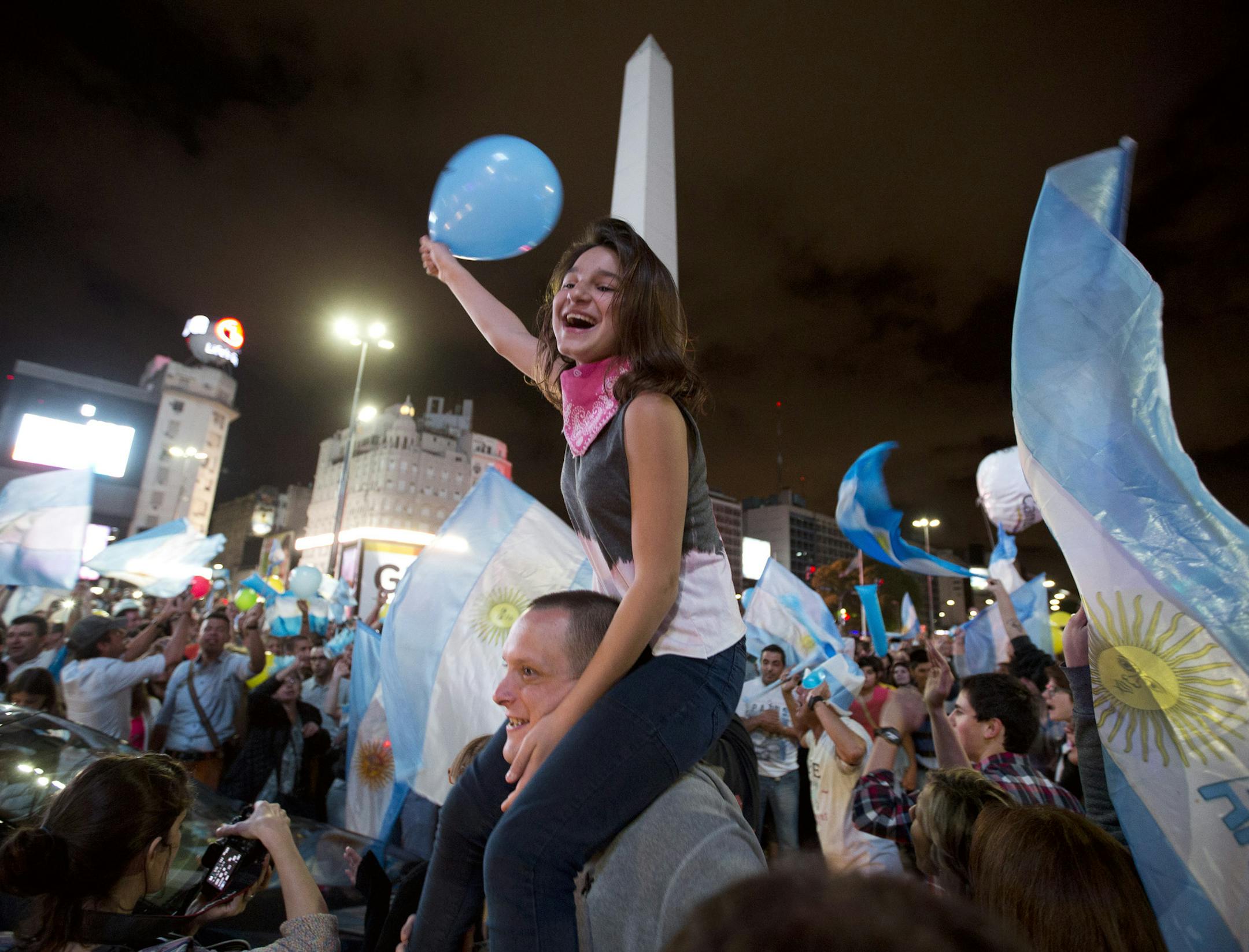
Supporters of presidential candidate Mauricio Macri celebrate at the Obelisk plaza in Buenos Aires, Sunday, Nov. 22, 2015. Macri won Argentina's historic runoff election against ruling party candidate Daniel Scioli, putting an end to the era of President Cristina Fernandez, who along with her late husband dominated Argentine politics for 12 years. (AP Photo/Victor R. Caivano)
Macri supporters at the Obelisk plaza in Buenos Aires cheered the end of the era of President Cristina Fernández Kirschner. (The Minnesota Star Tribune)
about the writer

about the writer

the Economist

More from Business

See More
card image
Renée Jones Schneider/The Minnesota Star Tribune, Leila Navidi/The Minnesota Star Tribune

The holidays aren’t the time to question Minnesotans’ generosity. Neither is an election year.

card image
card image