

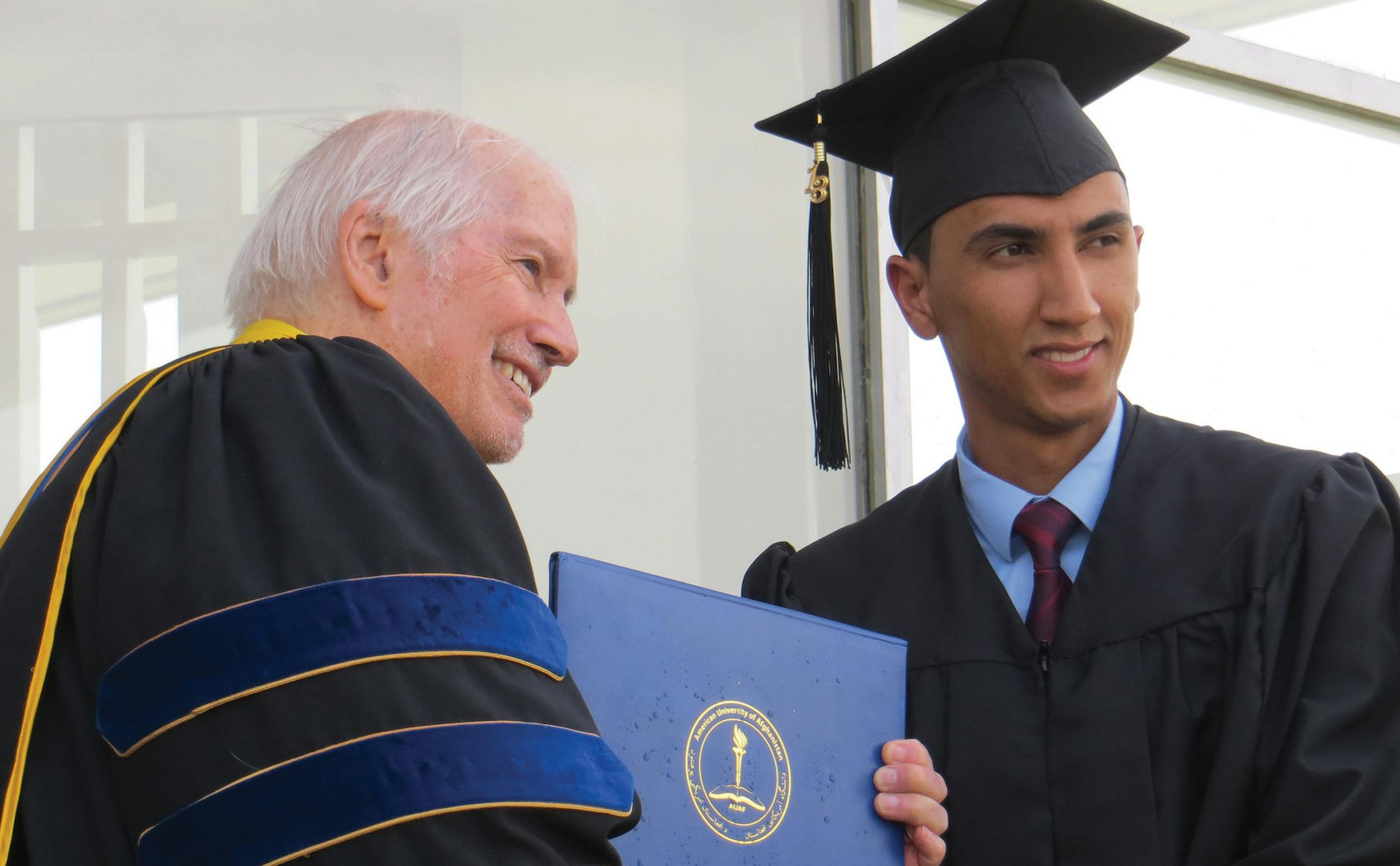
KABUL, Afghanistan – The students wore black gowns, academic caps and unbridled smiles. "Pomp and Circumstance" wandered out of the sound system and across a seating area swollen with family members and friends. The spectators stood as the young scholars strode up the center aisle — a dividing line between past and future, a pathway to dreams.
Like spring, graduation season was in full flower. Even in a land of war.
I arrived in Kabul from Minneapolis in late May, three days before the American University of Afghanistan held its third commencement since opening in 2006. Less than 24 hours before the ceremony, six insurgents had launched an attack on a foreign aid agency nearby, killing four, another violent episode in the U.S.-led war in Afghanistan that began in 2001.
But watching the 129 members of AUAF's class of 2013, I could imagine the scene taking place at Augsburg or Carleton or Macalester. The men and women walked across a dais when their names were called to grip-and-grin with the university president. Then, degree in hand, they waved to loved ones.
They were no longer students. They were graduates entering life's next phase.
"People my age feel our country can have a new start," said Tamana Nabizai, 22, who grew up in Herat, a western province bordering Iran.
In a nation where women's rights languish, almost one-third of the school's more than 1,700 students are women. Campus officials project that women will make up half the student body within a decade, when enrollment at the private, nonprofit school peaks at 5,000 to 6,000. "We have waited long enough," she said. "We are ready to push Afghanistan ahead."
For now, war continues to pull the country back. Students at American University and their counterparts at U.S. schools study in circumstances as different as First World and Third. I'd wager that those attending graduation at the University of Minnesota last month did not have their bags and purses glazed by the moist snout of a bomb-sniffing dog.


