

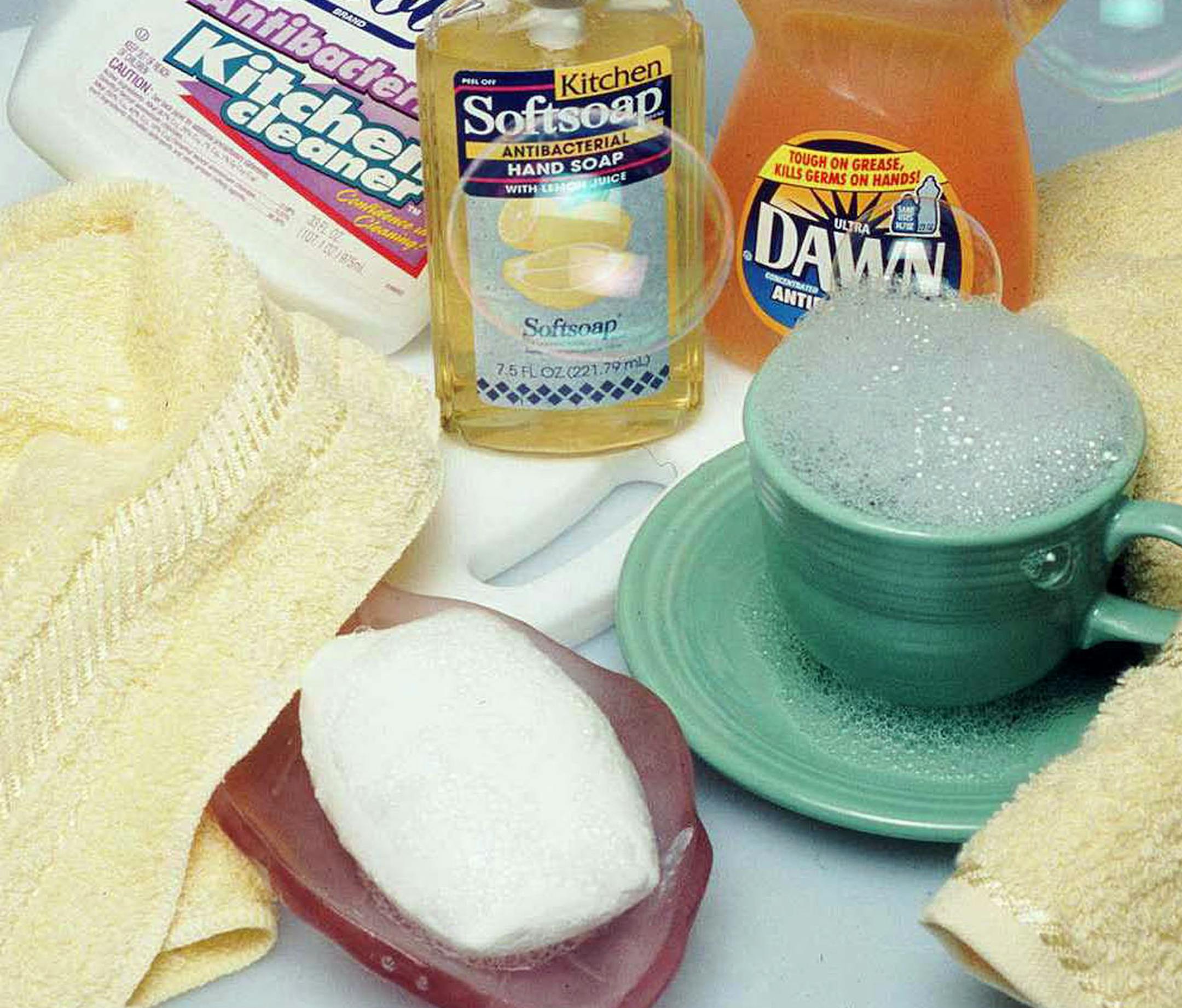
Should you be washing your hands or bathing your children with antibacterial soap?
The University of Texas student government and Canadian leaders say no. Many environmentalists and scientists agree.
The concern is triclosan, an antibacterial chemical used for more than 30 years in soaps, toothpastes, lotions and deodorant and marketed as a germ killer. But antibacterial soap doesn't work any better than regular soap, according to the Centers for Disease Control and Prevention and other studies.
And there are growing concerns about the effect triclosan has on humans and what the chemical runoff does to plants and animals in lakes, streams and rivers.
"There's not really a place for these products on the shelves in the community at this point," said triclosan researcher Allison Aiello of the Center for Society Epidemiology and Population Health, University of Michigan School of Public Health.
During the past couple of years, Colgate-Palmolive, GlaxoSmithKline and Johnson & Johnson have removed triclosan from some of their products.
The University of Texas made news recently when student leaders passed a resolution calling for administrators to ban antibacterial soap from campus. It might have been more of a symbolic move because in 2008 the university began phasing out the use of antibacterial soap, mostly because of costs.
Earlier this month, the Canadian government urged companies to remove triclosan voluntarily from household products because of concern about its toxicity to aquatic organisms. The Canadian action followed a government assessment that the current level of triclosan is not harmful to human health, but in significant amounts it can harm the environment.


