

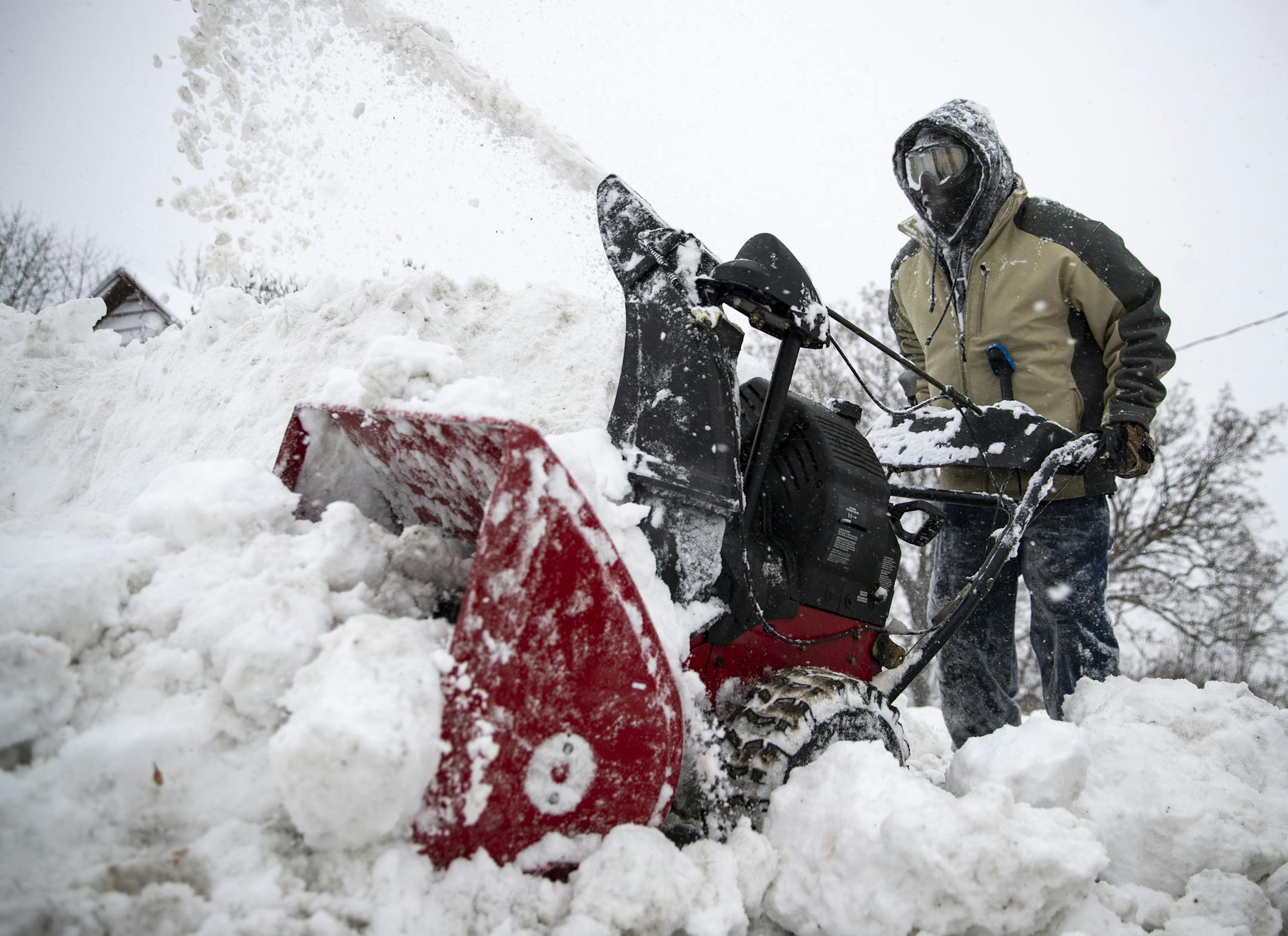
Snowplow drivers, city engineers and park supervisors across Minnesota are bracing for heavier snowfalls this winter as they come to grips with the way climate change is producing more volatile weather in the state's coldest months.
Much as rising temperatures and extra moisture have caused heavier rainstorms in the summer, climatologists say they are causing more weather extremes in winter, too. So even as overall snowfall has declined or stayed relatively flat in recent years, Minnesota is seeing more blizzards and near-blizzards.
This calendar year, for example, St. Paul has declared eight snow emergencies — typically announced for storms with more than 4 inches of snow — compared with the average three to four per year. And 15 of the Twin Cities' top 20 snowfalls since 1884 have occurred within the past 30 years, including the "thunder blizzard" that shut down much of the metro area last April and 2010's "dome-buster" that collapsed the Metrodome roof.
"It just seems like we're getting bigger swings, where it's either much snowier or much less snowy than before," said Mike Kennedy, director of transportation, maintenance and repair for the city of Minneapolis. "Last winter there just wasn't a whole lot of snow at all until mid-February. Then it started snowing and never stopped."
These snowstorms are hitting even as winter temperatures have steadily climbed over time, said Peter Boulay, assistant state climatologist. "We're still getting our snow," he said. "But snowfall is highly variable, not only from winter to winter but within the same winter as well."
But a shifting climate doesn't simply mean more blizzards. Minnesota is getting much less snow in November, shortening the season on one end, and more snow in April, lengthening it on the other. And in between heavy storms, skies now tend to be clear and sunny, turning winters into bipolar periods that alternate between mild blue-sky days and extreme snowfalls.
These dramatic swings are hard on winter tourism and outdoor sports venues that depend on reliable snowpack. Ramsey County, for example, has seen enough brown Decembers and Januarys that it's accelerating a multimillion-dollar plan to install snow-making machines on some of its cross-country ski trails so its parks can retain tournaments, competitions and high school team practices.
A hallmark of a strong winter is a sustained period with at least a foot of snow on the ground, Boulay said. Those winters have been declining steadily. Over the past 20 years, Minnesota had just nine winters when at least a foot of snow accumulated on the ground. That's down from 13 such seasons over the previous 20 years, Boulay said.


