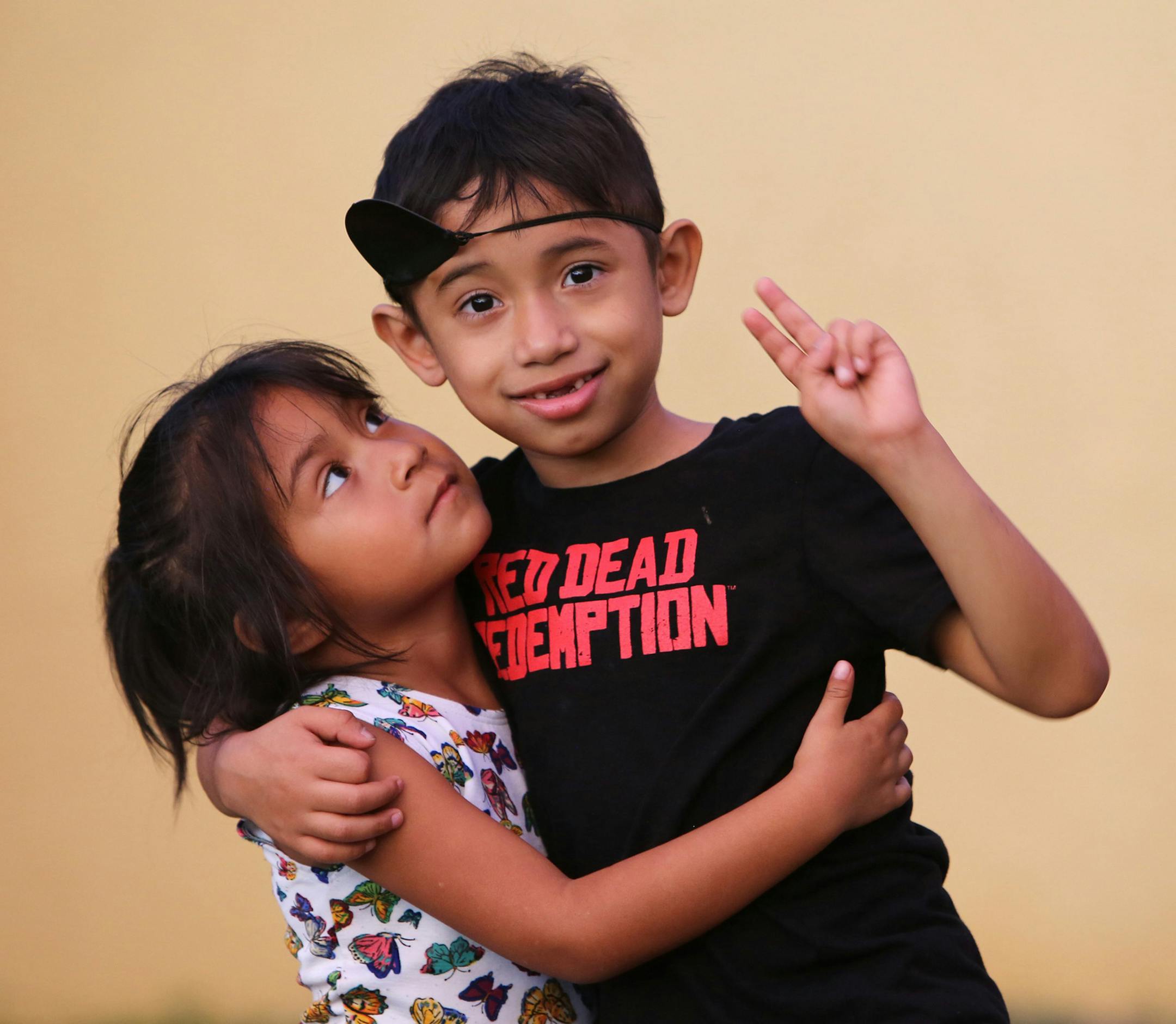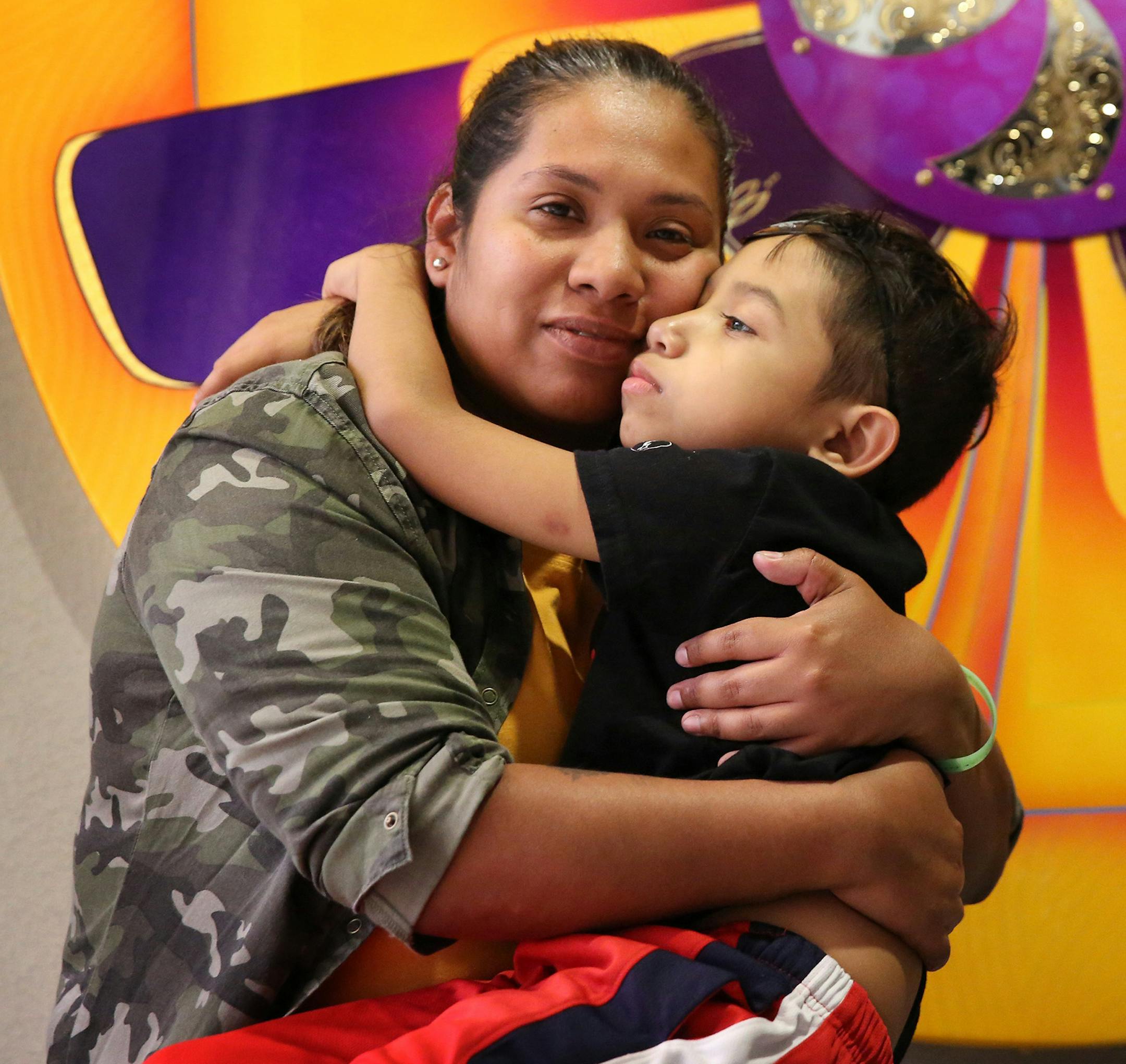
MIAMI – Everyday, Mayra Garcia wakes up with the same thoughts.
Is today going to be the day? Will she get the call telling her there's a match for her young son? Will he finally get the bone marrow transplant to save his life?
"It's getting harder every day," she said. "He's only a little kid. We need help."
Garcia, 31, who lives in Homestead, Fla., with her husband, Dany Morales, 34, said her life has been a waiting game since her 7-year-old son Julian was diagnosed with Dyskeratosis Congenita, a rare genetic disorder in which the marrow does not produce sufficient blood cells, when he was 3.
While he's on a medicine that has stabilized him, there are only a few more years it will work, doctors say. The only long-term treatment for him is a bone-marrow transplant, which replaces the damaged cells with healthy blood stem cells from the bone marrow.
Through the Minneapolis-based nonprofit, Be the Match, Garcia has held donor drives and had dozens of friends and family members tested, but none completely match Julian's DNA profile, necessary for the transplant. Complicating matters, according to Be the Match: Garcia is from Mexico and her husband is from Nicaragua, making it harder to match Julian's DNA profile, as there are fewer Hispanic donors.
"The more ethnically diverse your background is, the more difficult it is to find a match," said Amy Alegi, vice president of marketing and communications for Be The Match.
The number of people who sign up for the registry who are Hispanic, black or from other ethnic groups are low. In 2017, only 7 percent of the registry was made up of Hispanic donors, and only 4 percent were black. By comparison, 49 percent of the registry comprised non-Hispanic whites. The registry contains about 19 million donors.