

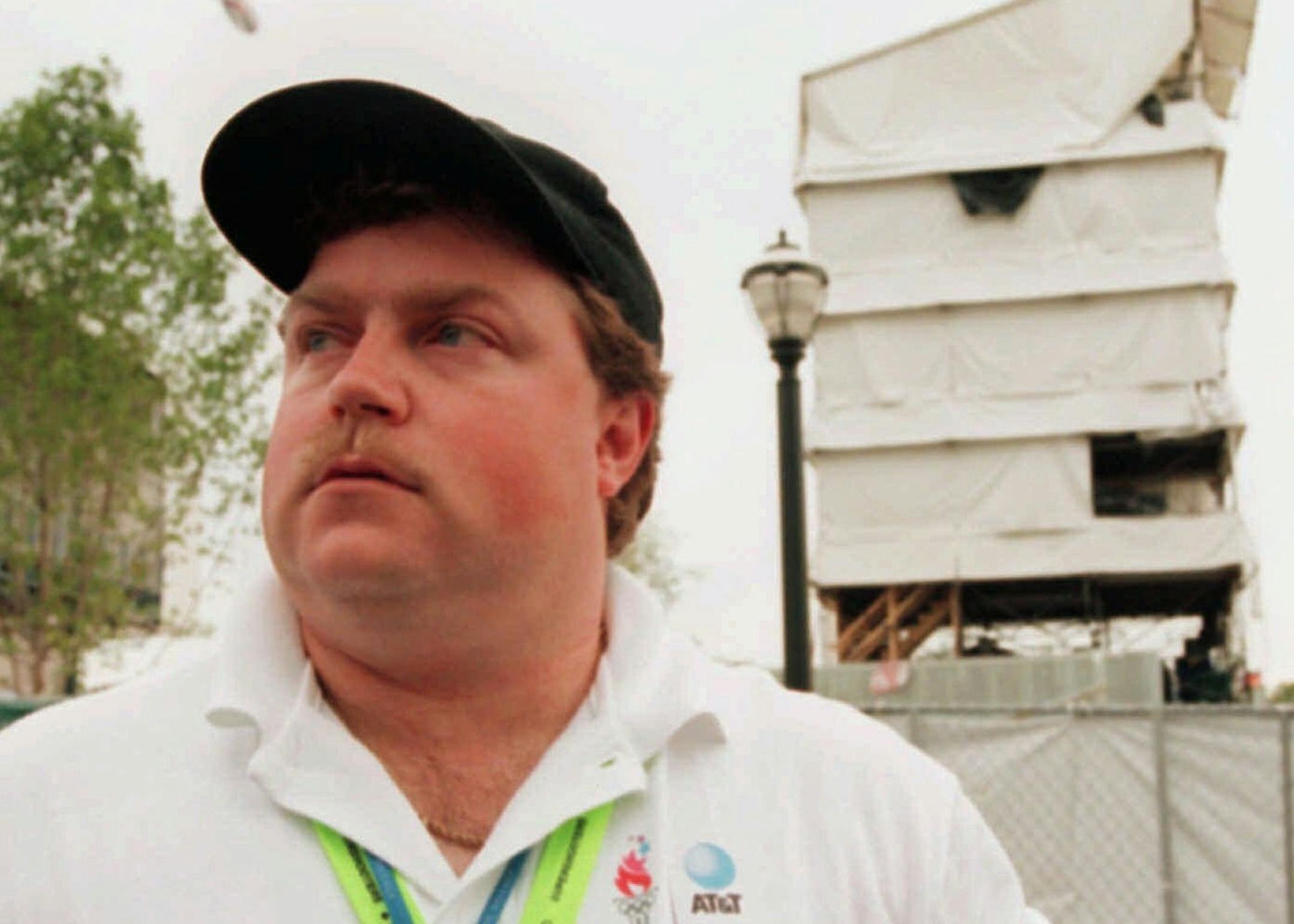
"Dear Richard," the letter began, "I owe you an apology."
Writing an apology is not something journalists are used to doing. But with the release of "Richard Jewell," Clint Eastwood's new movie about the aftermath of the 1996 bombing in Atlanta's Centennial Olympic Park, those of us who reported the story are doing a fresh round of soul-searching.
Jewell might have been the first victim of the 24-hour cable news cycle. He went from hero to villain in less than three days. Jewell was working security in Centennial Olympic Park when he discovered a backpack containing a bomb and alerted law enforcement. The bomb exploded, and soon, so did his life, after the FBI decided he was the suspect and the media piled on.
I had barely gone to sleep around 1:30 a.m. on the night of Saturday, July 27, 1996, when the phone rang. There had been an explosion during a concert in Centennial Olympic Park. By the time I made it downtown, it was clear this had been a bomb. The streets nearby were filled with panic, ambulances and carnage.
The blast killed one woman and injured 111; a cameraman died of a heart attack as he rushed to cover the explosion. A pipe bomb had been carried into the park in a military-style backpack, then left by a bench.
During a news conference in those early hours, someone from the Georgia State Patrol mentioned that a security guard named Richard had spotted the backpack and alerted law enforcement. He seemed to be the hero of the story. I turned to a guest booker and asked her to track him down.
Less than 24 hours after the bombing, Jewell and his mother arrived at CNN. He was flustered. The interview I had pushed for set off the chain of events that led to what Jewell later described as "88 days of hell."
A former employer of Jewell's, the president of a college in north Georgia, was watching and called the FBI. He wanted the bureau to know that Jewell had worked for him and that he had been forced to resign. Agents in the FBI's Behavioral Science Unit in Quantico, Va., were also paying attention. They wondered why Jewell looked uncomfortable and seemed suspicious. They were thinking about Jimmy Wade Pearson, a police officer during the Los Angeles Olympics in 1984 who claimed to have found a bomb on a bus and later admitted planting the device so he could be the hero of his own story.


