
Hyundai is falling behind its Japanese and Western rivals

The South Korean manufacturer is being hurt by rising labor costs.

April 2, 2019 at 12:35AM
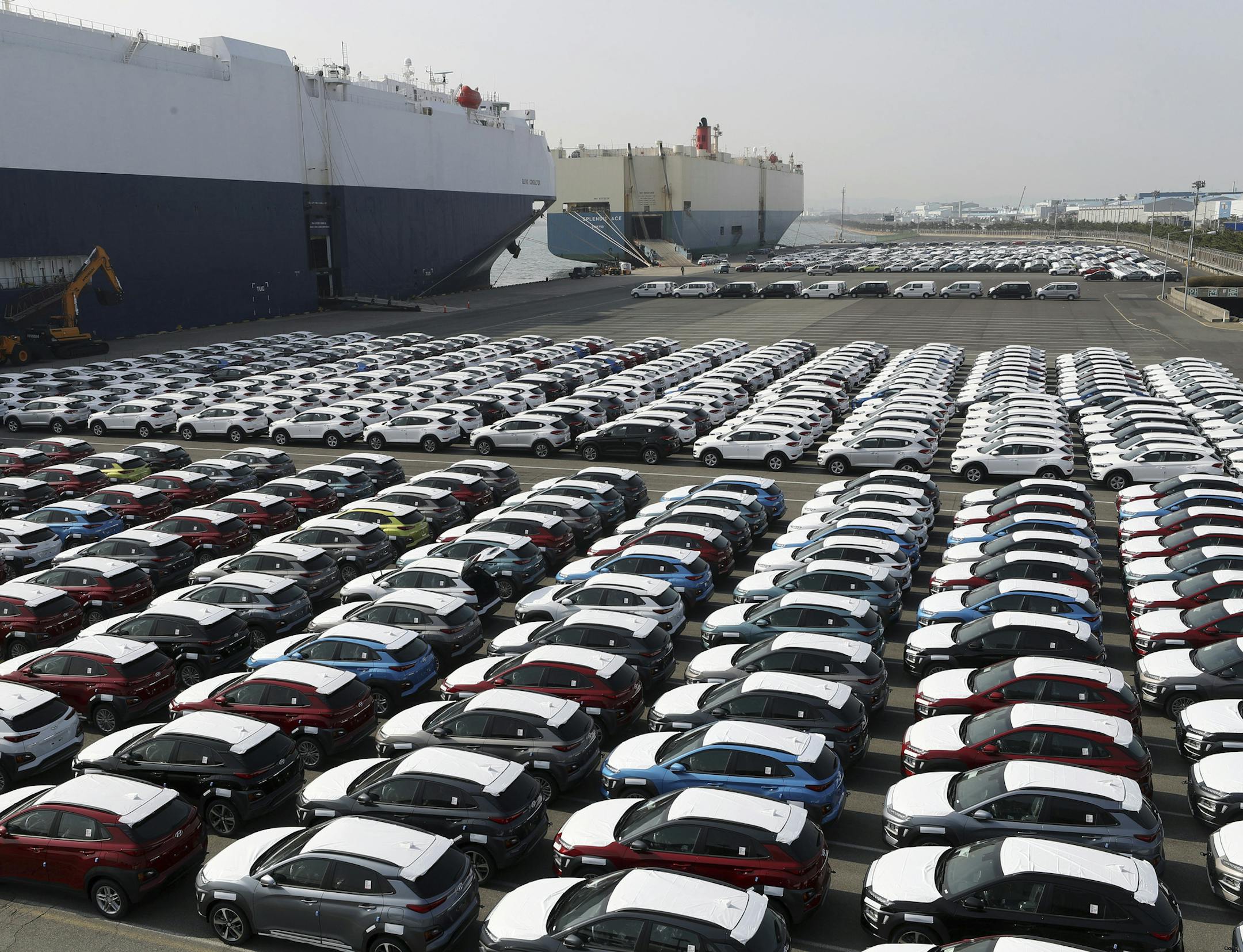
In this March 26, 2018, photo, Hyundai Motor's vehicles are seen at the company's export yard in Ulsan, South Korea. Unions at South Korea's two-largest automakers, Hyundai Motor and Kia Motors, say plans to revise a free trade deal with the United States involve concessions that will prevent local automakers from entering the fast-growing U.S. pick-up truck market. (Kim Yong-tae/Yonhap via AP) ORG XMIT: SEL801
Hyundai Motor’s vehicles were seen at the industry giant’s export yard in Ulsan, South Korea. (The Minnesota Star Tribune)

The offices of the Asan car suppliers' union resemble a bygone era. Walls are decorated with fading photographs of past protests. Cigarette smoke wafts from the foyer, where workers in overalls lounge on battered sofas enjoying a break between shifts. Most are well into middle age.

Do Sung-Dae, the union's boss — shock of gray hair, horn-rimmed glasses, waistcoat heavy with pins supporting various causes — is locked in a struggle with Yoosung Enterprise, a parts maker that employs its members in Asan, an industrial city south of the capital, Seoul.

Korean parts-producers are being squeezed. More have filed for bankruptcy protection since last autumn than at any time since the financial crisis in 2008. Plenty, including Yoosung, claim they are fighting for survival. Their troubles are a symptom of a deepening crisis in the industry. At the industry's center is a single giant firm: Hyundai Motor Co.

In 20 years Hyundai Motor — which also controls Kia — went from being barely known to the world's fifth-biggest carmaker by churning out decent if unexciting cars that were cheaper than similar ones produced by Japanese or Western competitors. Like Asan's union offices, however, it has failed to keep up with the times.

Hyundai's global sales were stagnant at $85 billion last year. Net profit declined in 2018 for the sixth year in a row.

Since 2014, its shares have underperformed major peers such as Toyota, General Motors and Ford, measured in dollars. Some reasons for this lie beyond Hyundai's control. A weak yen boosted Japanese producers. The trade dispute between the United States and China, as well as separate threats by President Donald Trump to impose additional tariffs on Korean cars, did not help. Its business in China was hit by a yearlong Chinese boycott of South Korean products that followed a dispute over South Korea's new missile-defense system in 2017.

Many problems, though, are homegrown. Hyundai's move upmarket in the past few years exposed it to fiercer competition. It missed the shift toward SUVs in Europe, the U.S. and, most recently, China. Its Genesis brand has lagged behind in the highest-margin premium segment.

Half of its production capacity in China now sits idle — aggressive expansion may have more to do with this than the boycott, said James Lim of Dalton Investments, an asset manager.
Rising labor costs at home, where it produces 40 percent of output, have crimped Hyundai's ability to compete on price. "Customers still expect our cars to be cheaper than, say, a Volkswagen," said Cho Won-hong, the firm's chief strategist.

Cho wants to persuade them to pay more, by betting on future technologies such as hydrogen fuel cells and loosely defined "integrated mobility" (car-sharing, autonomous vehicles and the like).

Yet Hyundai channels 3 percent of sales to research and development, compared with 6 percent at Volkswagen or Toyota's 4 percent, according to Bloomberg.

Some analysts blame the R&D shortfall on high labor costs. Others point to the old habits of the chaebol, the South Korean conglomerates of which Hyundai's parent company is one of the biggest. In good times it plowed spare cash from its carmaking arm on speculative property investments in Seoul's glitzy Gangnam district and bought back a struggling construction company.

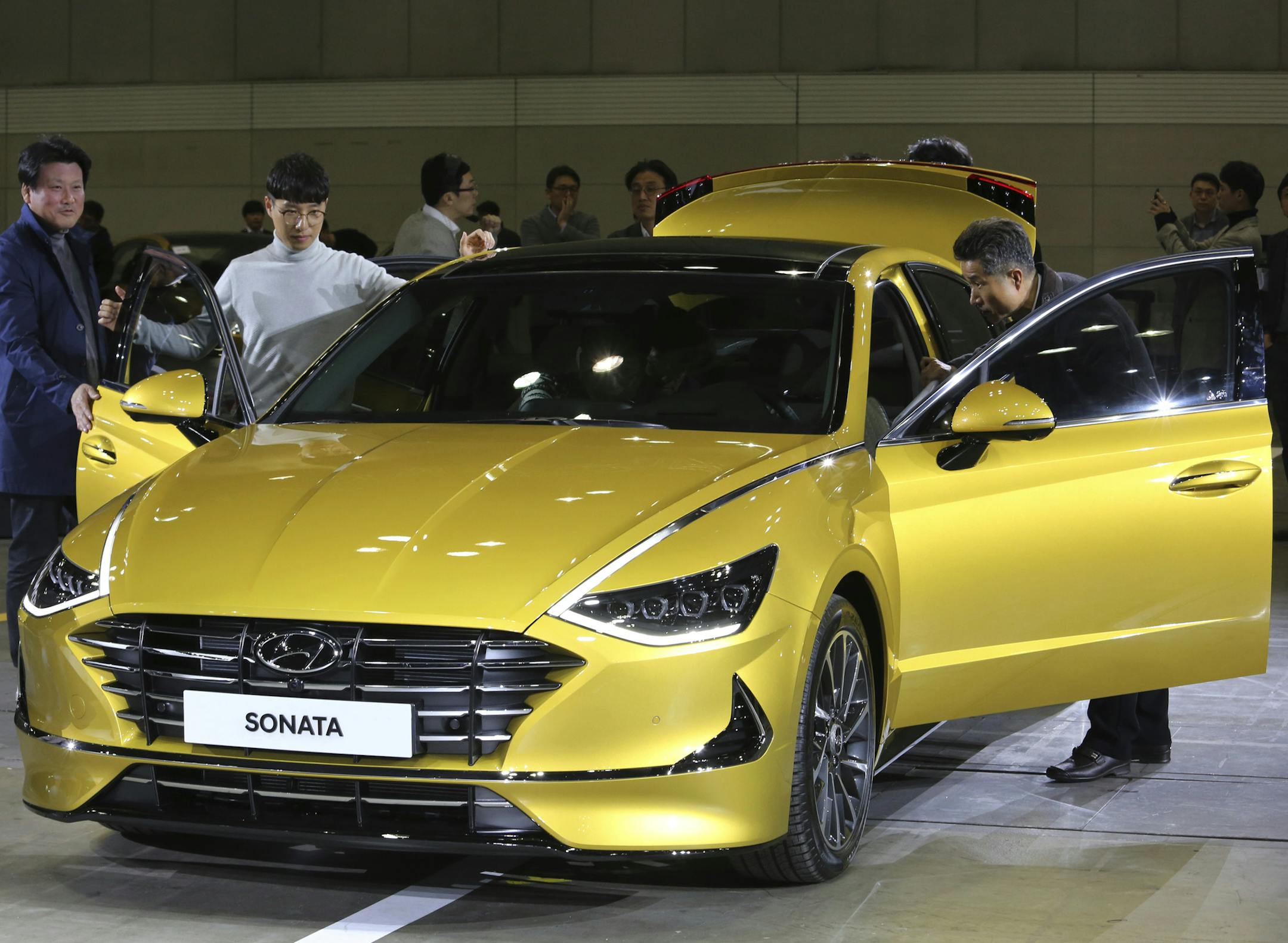
Participants watch a Hyundai Motors' all-new Sonata sedan during its unveiling ceremony in Goyang, South Korea, Thursday, March 21, 2019. The sedan, equipped with 2,000cc gasoline engine, is priced from 23.5 million won (US$21,150) to 32.9 million won (US$29,610). (AP Photo/Ahn Young-joon) ORG XMIT: SEL103
In 20 years, Hyundai Motor went from being barely known to the world’s fifth-biggest carmaker. But the company’s global sales and net profit have now stalled. (The Minnesota Star Tribune)
about the writer

about the writer

Economist

More from Business

See More
card image
Elizabeth Flores/The Minnesota Star Tribune

House hunters in need of down payment or closing cost funds have options, but they’ll need to apply early in the year to secure financial help.

card image
card image