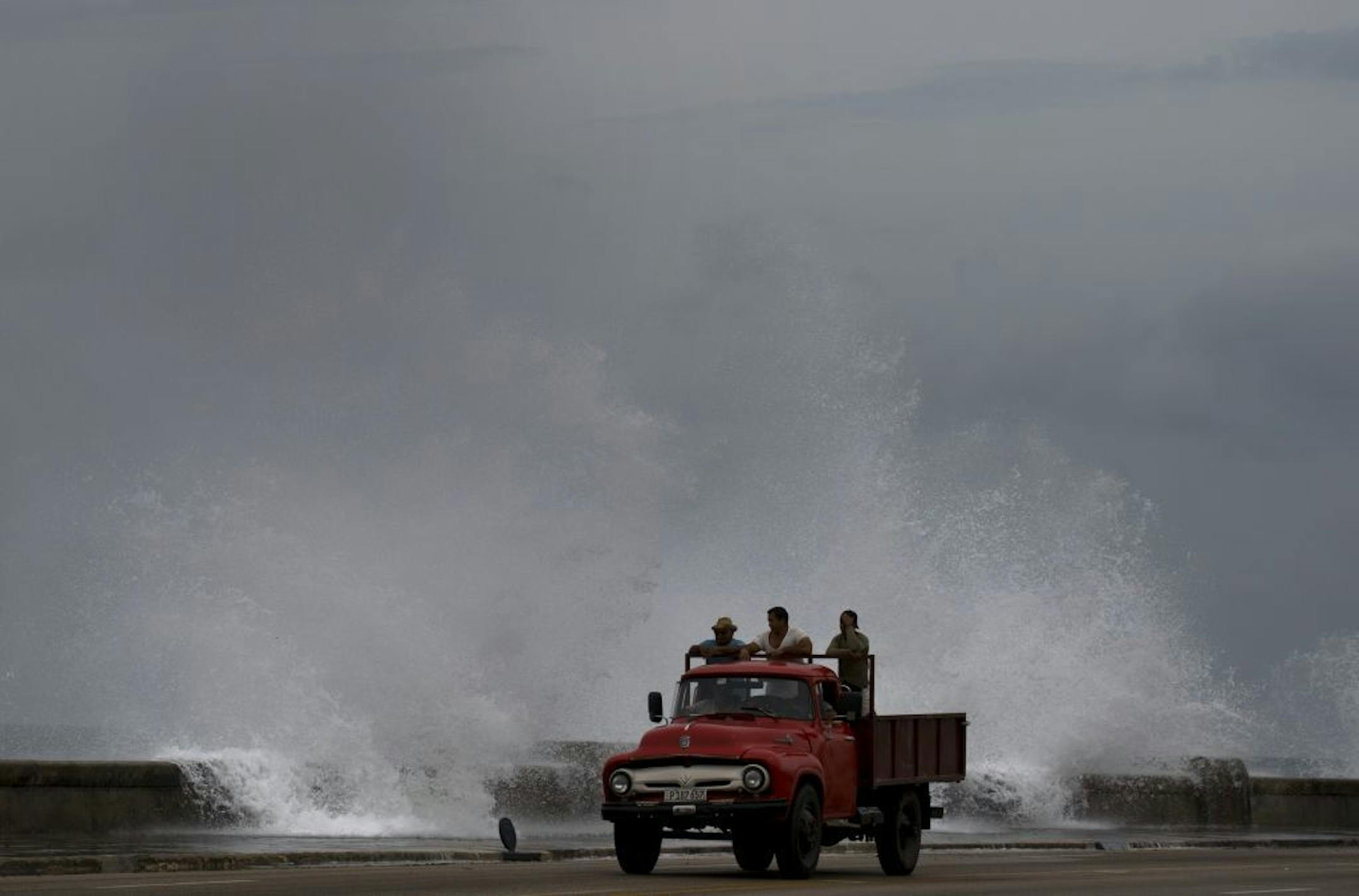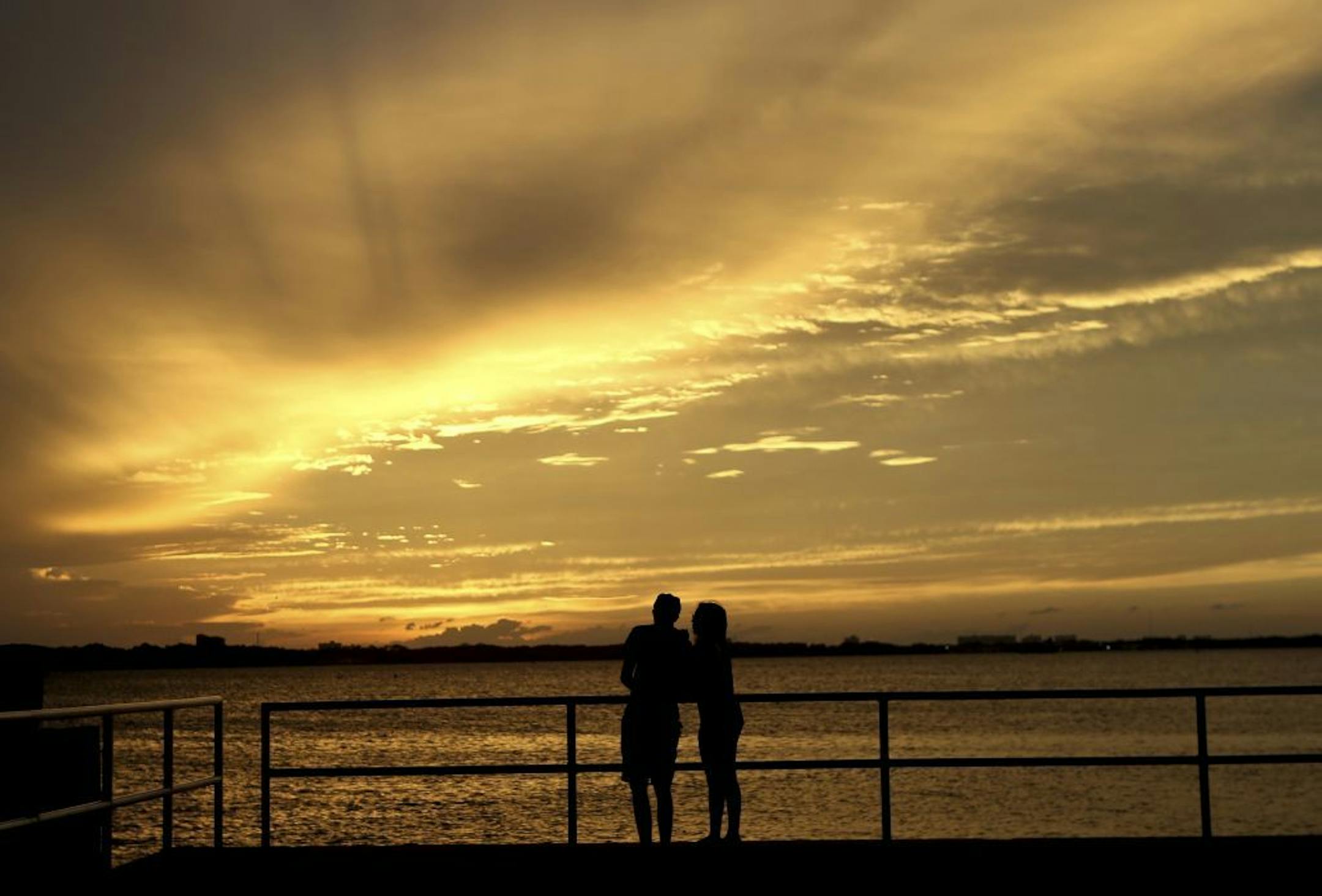
TALLAHASSEE, Fla. — Fast and furious Hurricane Michael barreled toward the Florida Panhandle late Tuesday night with 125 mph winds and a potentially catastrophic storm surge of 13 feet, giving tens of thousands of people precious little time to board up and get out.
Drawing energy from warm waters of the Gulf of Mexico, the storm strengthened rapidly into a potentially devastating Category 3 during the day and just kept getting stronger in the hours ahead of an expected Wednesday landfall. Forecasters said Michael was expected to strengthen further overnight and become a Category 4 brute before slamming ashore.
The core of the storm was expected to crash ashore around midday Wednesday near Panama City Beach, along a lightly populated stretch of fishing villages and white-sand spring-break beaches.
Florida officials said that roughly 375,000 people have been urged or ordered to evacuate. Those evacuations stretched across 22 counties from the Florida Panhandle down into north central Florida. But there were fears, however, that some people weren't heeding the calls to get out despite predictions of a life-threatening storm surge.
Franklin County Sheriff A.J. Smith said his deputies had gone door to door in some places along the coast to urge people to evacuate. "We have done everything we can as far as getting the word out," Smith said. "Hopefully more people will leave."
While Florence took five days between the time it turned into a hurricane and the moment it rolled into the Carolinas, Michael gave Florida what amounted to two days' notice. It developed into a hurricane on Monday, and by Tuesday, more than 180,000 people were already under mandatory evacuation orders.
"We don't know if it's going to wipe out our house or not," Jason McDonald, of Panama City, said as he and his wife drove north into Alabama with their two children, ages 5 and 7. "We want to get them out of the way."
At 11 p.m. EDT, the eye of Michael was about 220 miles (355 kilometers) south-southwest of Panama City, Florida. It also was about 200 miles (325 kilometers) south-southwest of Apalachicola, Florida. But forecasters said its winds and outer rainbands would begin to start lashing the coast hours ahead of the eye.