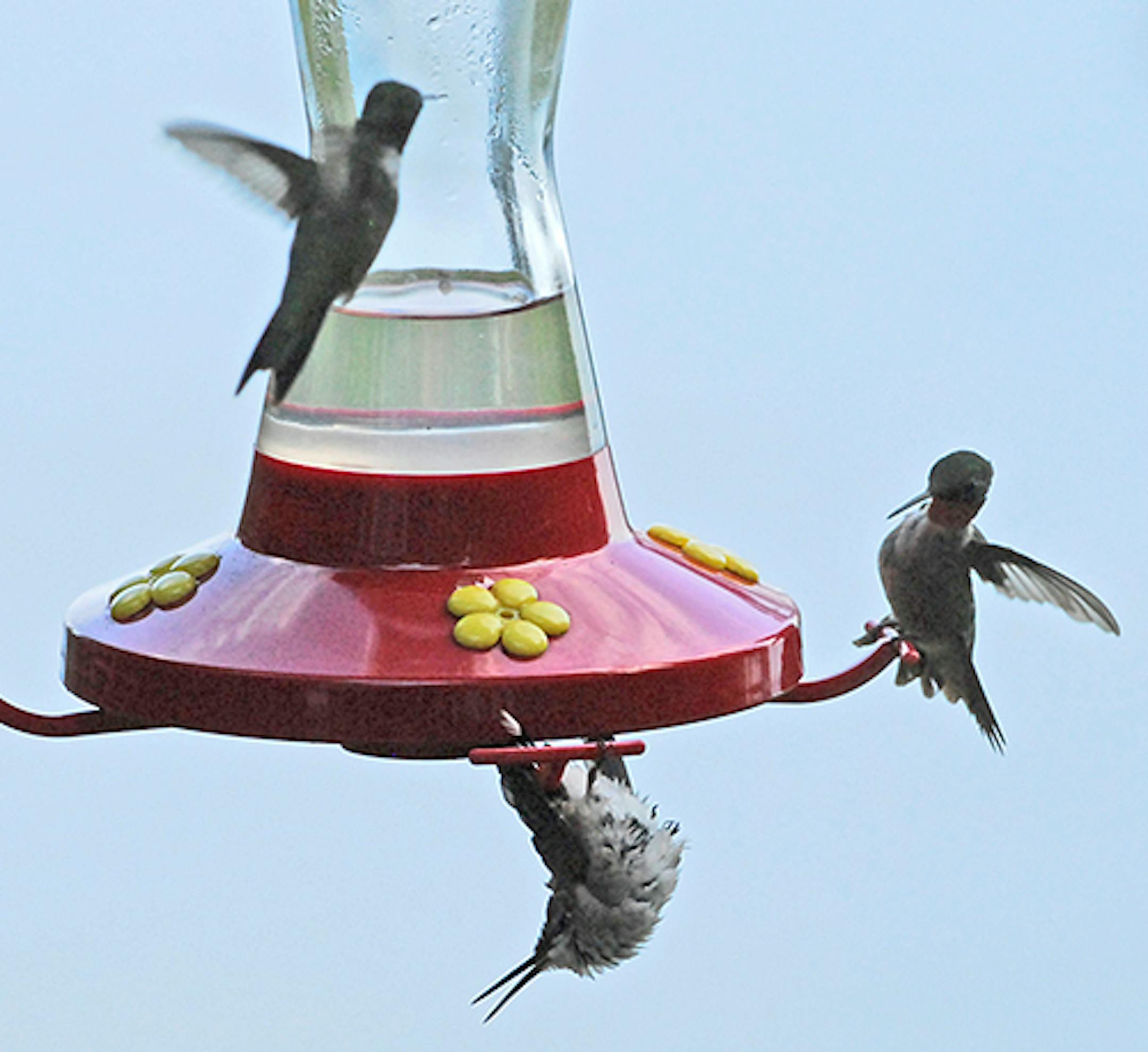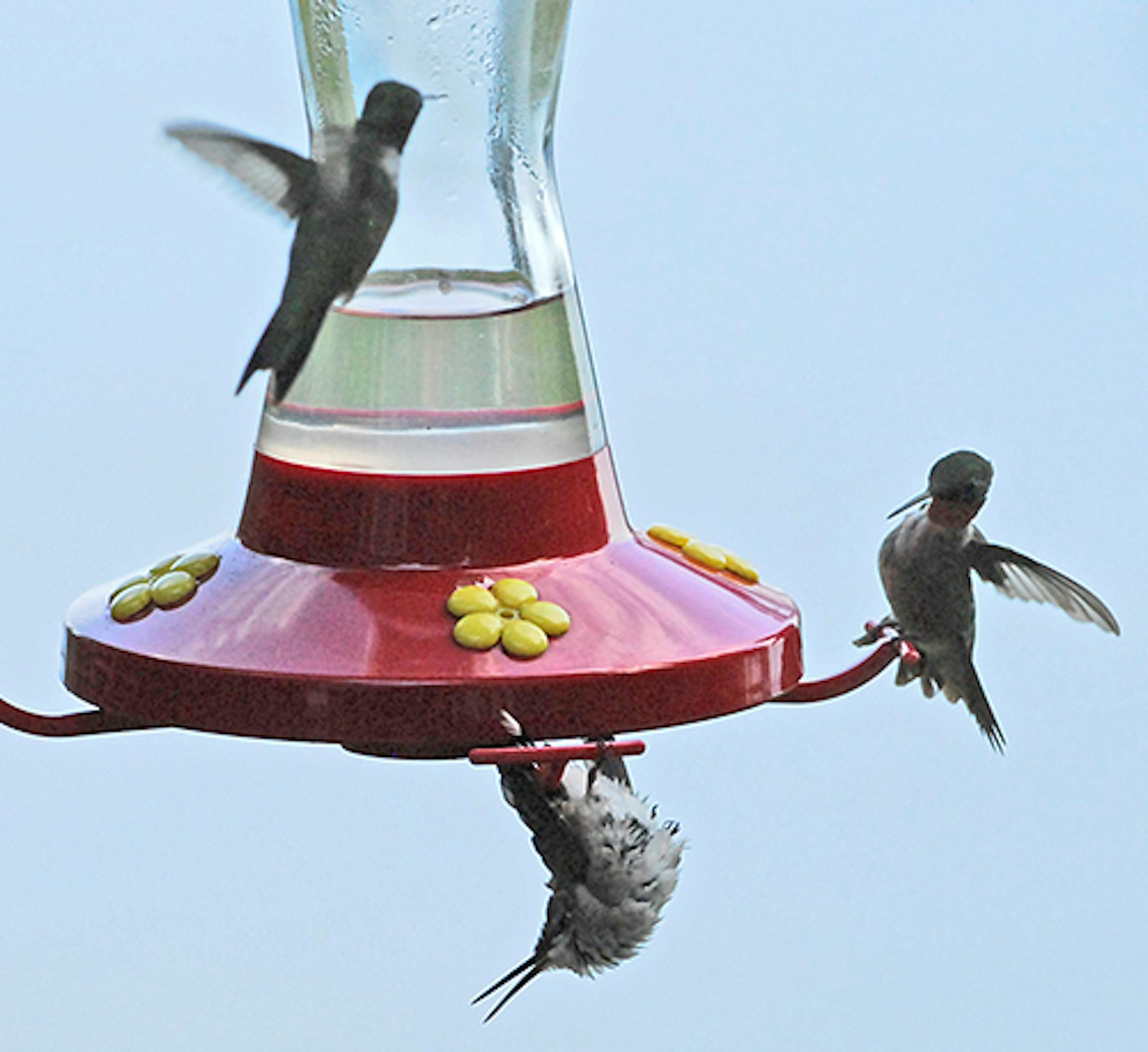
The hanging hummingbirds? Most likely juveniles too weak, too depleted of energy to hold themselves upright at the feeder. Nancy Newfield, who feeds, bands, and studies hummingbirds from her Louisiana home sent an email to answer my question.
As I wrote in this blog yesterday, these birds were seen at a sugar-water feeder at a home near Lutsen, on the North Shore of Lake Superior. I sent Ms. Newfield my question and a photo of the bird hanging from the feeder perch.
"The Ruby-throated Hummingbird appears to be a youngster. Many recent fledglings embark upon a rigorous migration before developing their full strength," she wrote. "During migration a certain percentage of them will seriously deplete their energy reserves (fat), and become weakened, at least temporarily."
Were we seeing the same bird on consecutive days? She doubts it. We most likely saw different migrants moving along the shore. Any bird that was hanging from the perch was having a problem finding a supply of food sufficient to continue migration.
The meadows between Lutsen and Grand Marais are filled with blooming wild flowers right now, but few that offer the nectar cup the hummingbirds seek.
Migration takes a toll on birds of all ages. "Especially during fall migration," Ms. Newfield wrote. "These energy-deficient youngsters are the most vulnerable. They're less able to force their way to a feeder, and are much more vulnerable to predators."
A dominant hummingbird guarding a feeder, and driving other would-be feeders away is a common sight.
And what I saw as an attack, one hummingbird clinging to another at the feeder, stabbing or poking with its bill, and pulling feathers?