

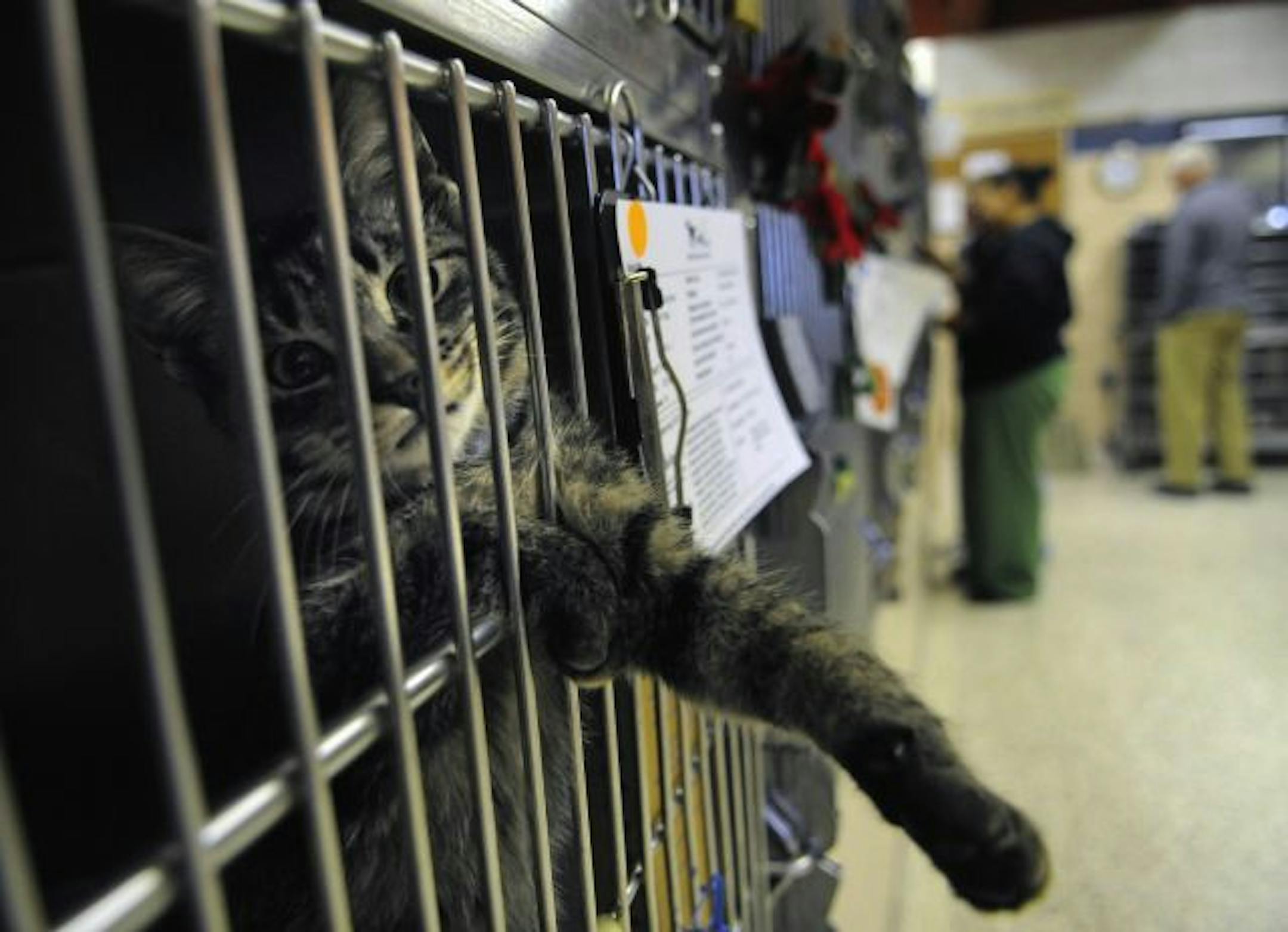
Ten thousand cats put down each year.
That's a big problem to the Animal Humane Society, and one that is motivating a larger overhaul.
The Humane Society, which serves the seven-county metro area, estimates that about half the cats that come in each year are placed for adoption. Among those that are left, some are ill. Some have behavioral problems that make them difficult to place. Some just lose out to the more sociable kittens that nearly always find homes. To avoid overcrowding in the shelters, those "surplus" cats are killed.
This seems to be a problem that's unique to cats, and not to dogs, which usually find homes. People seem to see cats as disposable; that attitude is visible in the number of strays wandering metro neighborhoods, said society CEO/President Janelle Dixon. Left on their own, cats can produce litter after litter, and wind up sick, wild and unadoptable.
A new program, Bound for Home, takes aim at the underlying problem, seeking to reduce the number of cats left homeless because of abandonment and unchecked reproduction. The methods: improving access to sterilization to reduce litters and working with pet owners to adopt wisely and keep their animals longer. One big change: Pet owners soon will need to make appointments before giving up animals.
The program is geared toward saving cats, but it will affect all animals.
When three animal welfare groups merged in 2007 to create the Animal Humane Society, officials examined their practices.
"We felt we were hitting some sort of plateau in addressing the reduction of euthanasia," Dixon recalled. "We took a step back to say, OK, we're feeling we're not having consistent, sustainable, positive change over time, so why?"


