

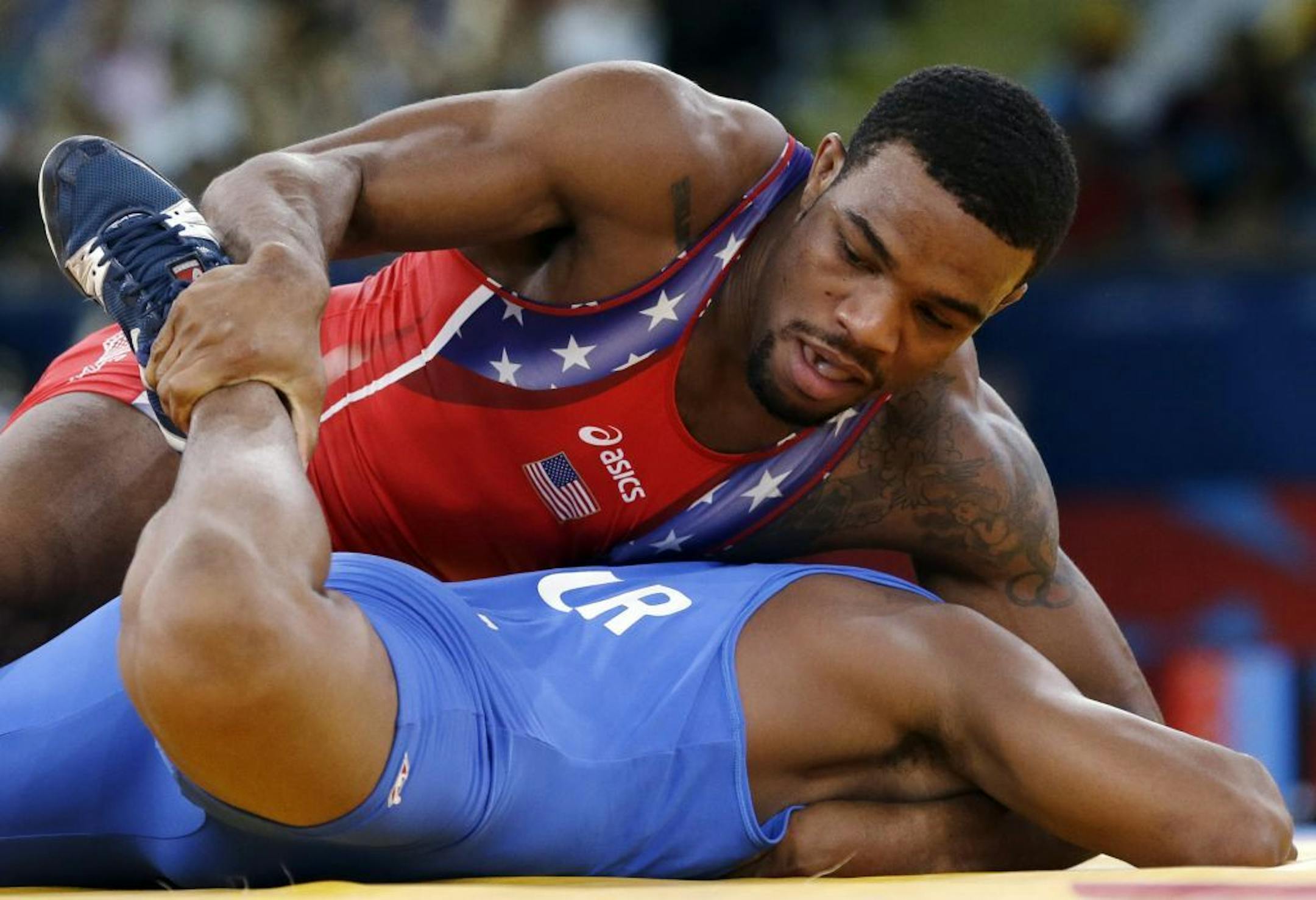
In A.D. 393, the ancient Olympic Games were abolished -- they had become too corrupt. Wrestling was among the first sports in those ancient Games; wrestling was also included at the start of the modern Olympics, in 1896.
Yet on Tuesday in Lausanne, Switzerland, the executive board of the International Olympic Committee voted by secret ballot to eliminate wrestling, starting in 2020. At the same meeting, it voted to keep the modern pentathlon.
You might have missed the modern pentathlon last summer in London, where only 26 countries participated in the combined shooting, horseback-riding, running, swimming and fencing event. In the same Olympics, there were wrestling medalists from 29 countries. In other words: More countries won medals in wrestling than competed in the modern pentathlon. Globally, the TV audience for wrestling averages 23 million viewers. The modern pentathlon averages 12.5 million.
An I.O.C. spokesman said of Tuesday's vote, "It's not a case of what's wrong with wrestling." It's a matter of what's right with the other sports, he claimed. But what to think about the board member Juan Antonio Samaranch Jr. of Spain? The son of a former I.O.C. president, he is also a vice president of the International Modern Pentathlon Union. In the international wrestling community, talk of his conflict of interests is understandably widespread.
The I.O.C. decision isn't the end. Wrestlers can appeal. There's an executive board meeting in May in St. Petersburg, Russia, and a final vote in September. But why didn't the sport of wrestling have sufficient representation before the secret vote in Lausanne?
Many in the wrestling community blame FILA, the sport's international federation. Bill Scherr, a former American wrestler who won a bronze medal at the 1988 Olympics, remembers talking to some I.O.C. members during his efforts to support Chicago as the host for the 2016 Olympics; based on those conversations, he told FILA that wrestling might be in trouble. Of his warnings, Scherr said, "In no way were they heeded."
He has also said, and I agree with him, that FILA probably presumed that wrestling's status as an ancient Olympic sport would protect it. FILA said it was "greatly astonished" by the I.O.C. vote.
Michael Novogratz, a New Yorker and former Princeton wrestler -- and chairman of the inner-city wrestling program Beat the Streets -- has said that FILA "just did not do a great job of selling the merits of the sport."


