

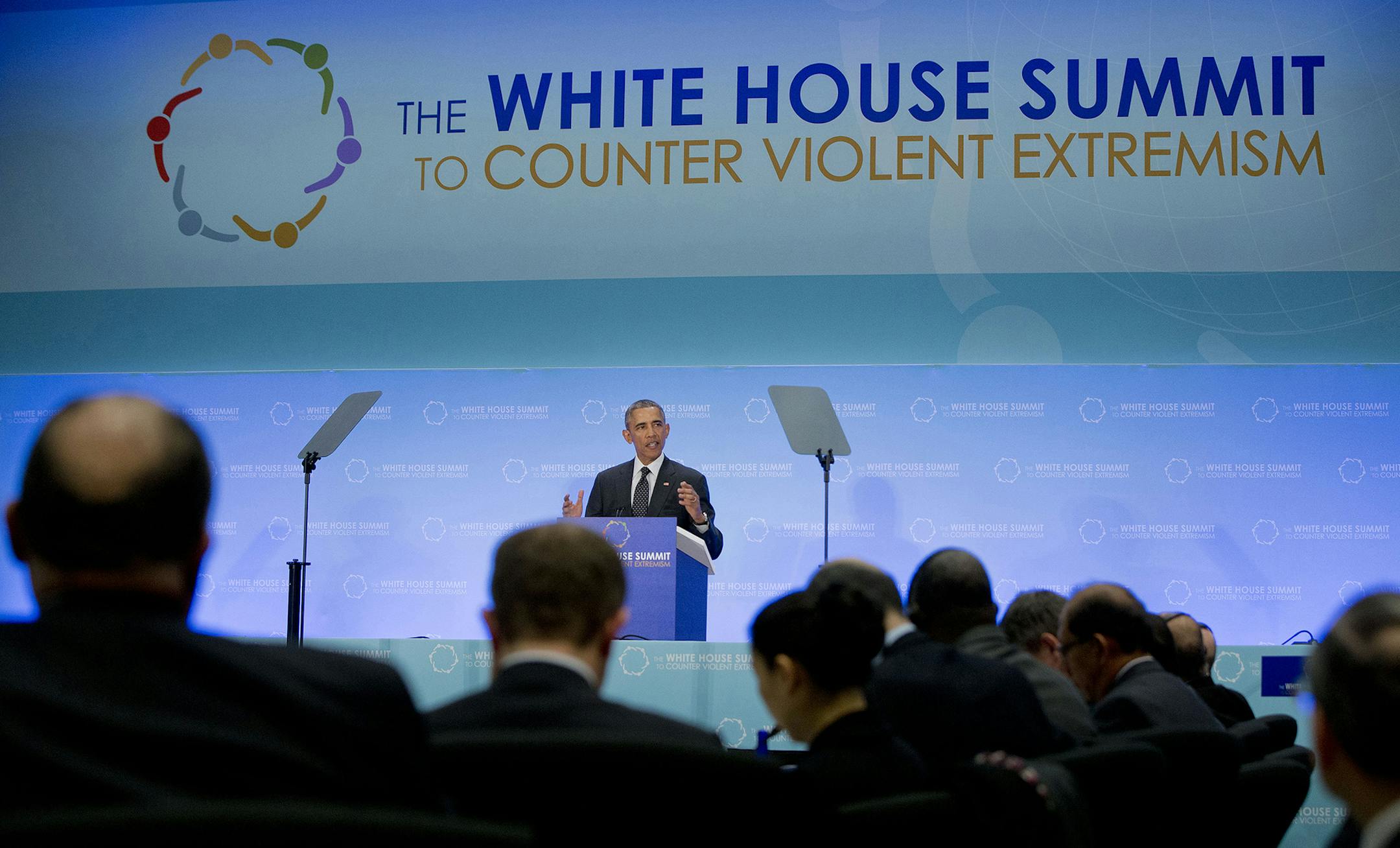
In February, the White House hosted an international summit to address violent extremism. President Obama invited a delegation to represent the Twin Cities at the summit and to present our community-led initiative to counter violent extremism. Seven members of the Minnesota Somali community joined government and law enforcement officials to present our plan, called "Building Community Resilience."
Since the summit, we, the Somali-American Taskforce, have been working to implement that plan. We are Minnesotans of Somali descent. We are mothers, imams, mental health professionals, youth leaders and community leaders. Though our stories are not unique, they are uniquely American. We live in America for the promise of peace and justice.
For our community of Somali-Americans, that means the same thing it means for all Americans: We want our young people to have a good education and job opportunities, and to live in a healthy and safe environment. Minnesota represents for us the promise of America; now we are fighting to fulfill that promise.
However, before we can move forward, we must address the past. Many in our community are suspicious of the government. There are those who say that the Building Community Resilience pilot project is a secret government surveillance program. These rumors are not true — the project has broad support of the community and it is a Somali community-led initiative.
We are the committee charged with leading the first phase of implementing the project. We do not want nor would we ever allow the government to use this pilot to compile information about law-abiding citizens in our community.
The purpose of the project is to prevent violent extremism by focusing on three pillars: prevention, support and engagement.
The first pillar of the plan is to address the community-identified root causes of radicalization to violence. We want to address the inequality and low social mobility that have persisted in the Minnesota Somali community for years. By focusing our attention on creating educational and professional opportunities for young people, and expanding after-school and other youth programming, we hope to prevent new terror recruitment by breaking the cycle of economic frustration that is at the heart of how, Al-Shabab and ISIL have successfully recruited from within our community.
The second pillar is to create community-led support teams to step in at the earliest signs that young people are becoming disengaged from their families and community. Community members including mothers, imams, teachers, coaches, youth advocates and mental health professionals will collaborate to provide support to families.


