

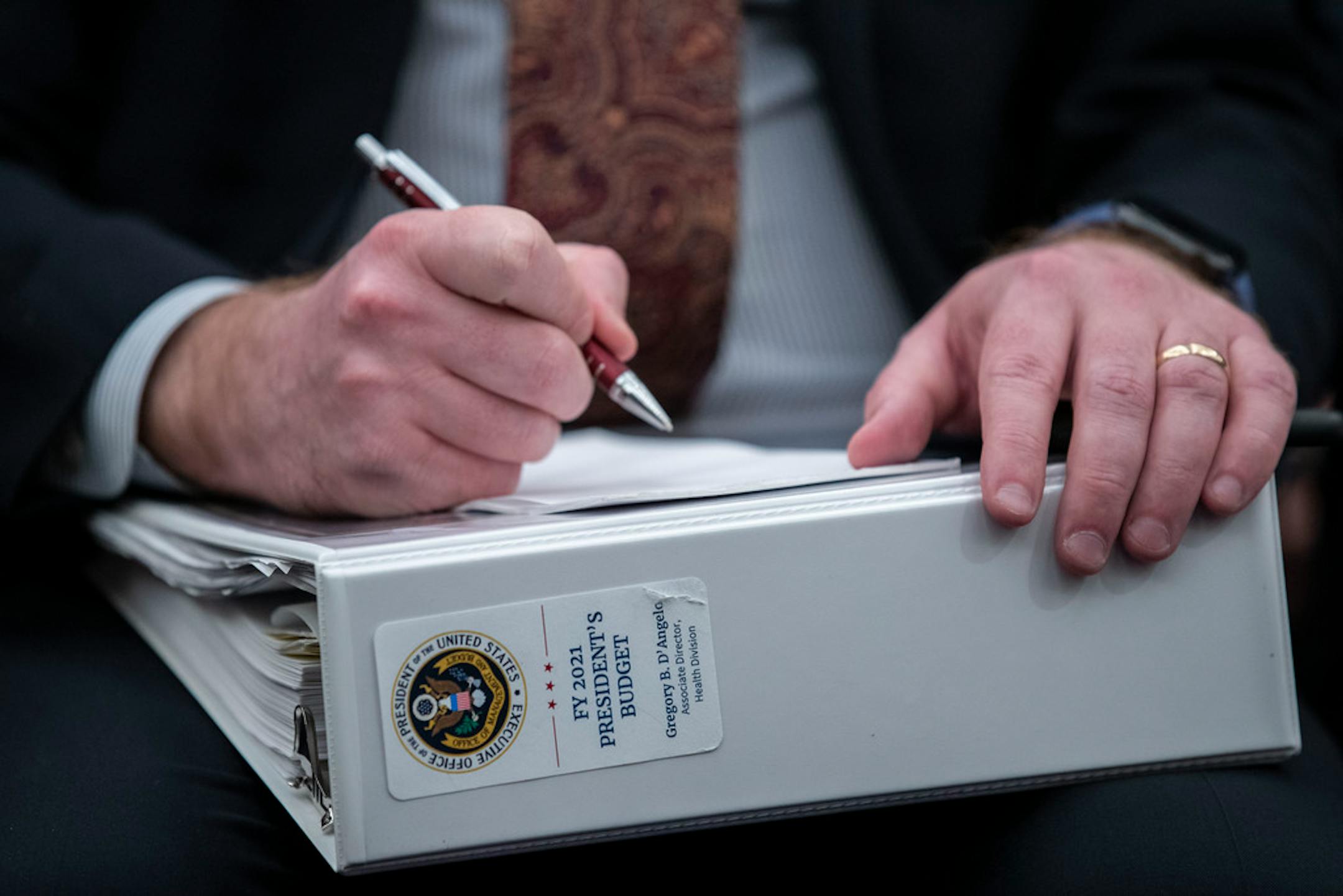
President Donald Trump's federal budget plan for fiscal year 2021, which begins in October, includes close to $1 trillion in cuts to Medicaid that analysts say could hurt access to health insurance and care for the millions of people covered by the safety-net program.
Politicians have tried for years to tamp down Medicaid costs, though soon after he took office, Trump said he would not cut the program.
Medicare — which covers seniors and the disabled — is a kind of third-rail to politicians wary of alienating a huge block of faithful voters. Trump has pledged to protect it too.
"I'm not going to cut Social Security like every other Republican and I'm not going to cut Medicare or Medicaid," he told the Daily Signal, a political news website published by the conservative Heritage Foundation, in 2015.
But his budget plan also includes changes to the way Medicare pays for services that, though the stated intention is to reduce unnecessary spending — not cut services for seniors — could also affect the care people receive.
Trump's proposal has gone to Congress, which ultimately develops and approves a budget it then sends back to the president for his signature. Yet the Trump plan provides important insights, analysts said.
"The president's budget isn't an action item — it's a statement of priorities," said Robin Rudowitz, a vice president at the health care policy think tank, the Kaiser Family Foundation.
But health advocacy organizations are concerned about the possibilities, said Lindsey Copeland, the federal policy director for the nonprofit Medicare Rights Center.

