

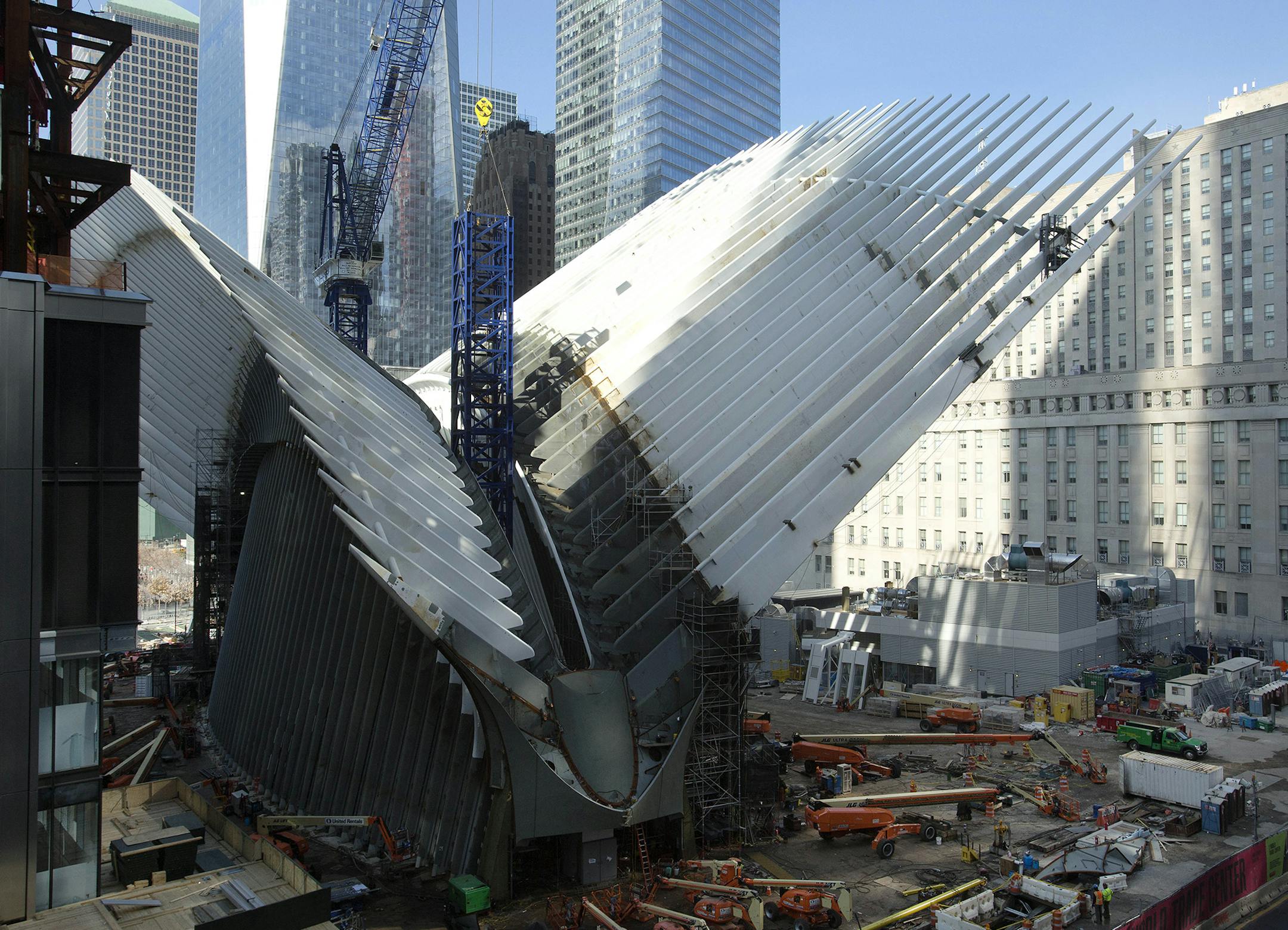
It's almost a cliché at this point — the United States needs to spend more on infrastructure. Other countries are running circles around us in the infrastructure department. It's fashionable to blame this on the Republicans' scorched-earth tactics against President Obama and on conservative distrust of government spending in general. And those are certainly factors. Problems with state and local government finances are another issue.
But there is a third big factor that many people ignore: America's abnormally high infrastructure costs. As in the health care industry, we pay through the nose but get very little bang for our buck.
A recent example is the price tag of the World Trade Center Transportation Hub in New York. The new train station's cost has soared to double the original estimate; it's now almost at $4 billion — and still climbing. That's $4 billion. For a train station.
If you think that's an isolated example, think again. Blogger Alon Levy has compiled an amazing list of rail projects in the United States and other countries, and found that U.S. costs are much, much higher than those of other rich countries. For example, New York's East Side Access project in Manhattan and Queens — connecting the Long Island Rail Road to Grand Central Terminal — has cost anywhere between $4 billion and $8.1 billion per kilometer (six-tenths of a mile) of rail line. The 7 train's subway extension to Manhattan's west side has cost about $1.3 billion per kilometer. By comparison, Tokyo's Toei Oedo subway line cost only about $350 million per kilometer. A train line in Denmark, by the way, cost only about $170 million per kilometer.
With costs like these, you don't have to be a small-government libertarian to throw up your hands and cancel an infrastructure project. If we don't figure out how to bring these costs down, we're going to continue to suffer from subpar infrastructure and all of the economic problems that result from that — slower growth, lower productivity and impaired urbanization.
What are the reasons for the insanely high costs? As with health care, there are a lot of causes. Blogger Scott Beyer rounds up a few suspects. These include:
1) The Davis-Bacon laws, which mandate high wages for infrastructure workers;
2) Government-labor agreements that mandate hiring union workers;


