

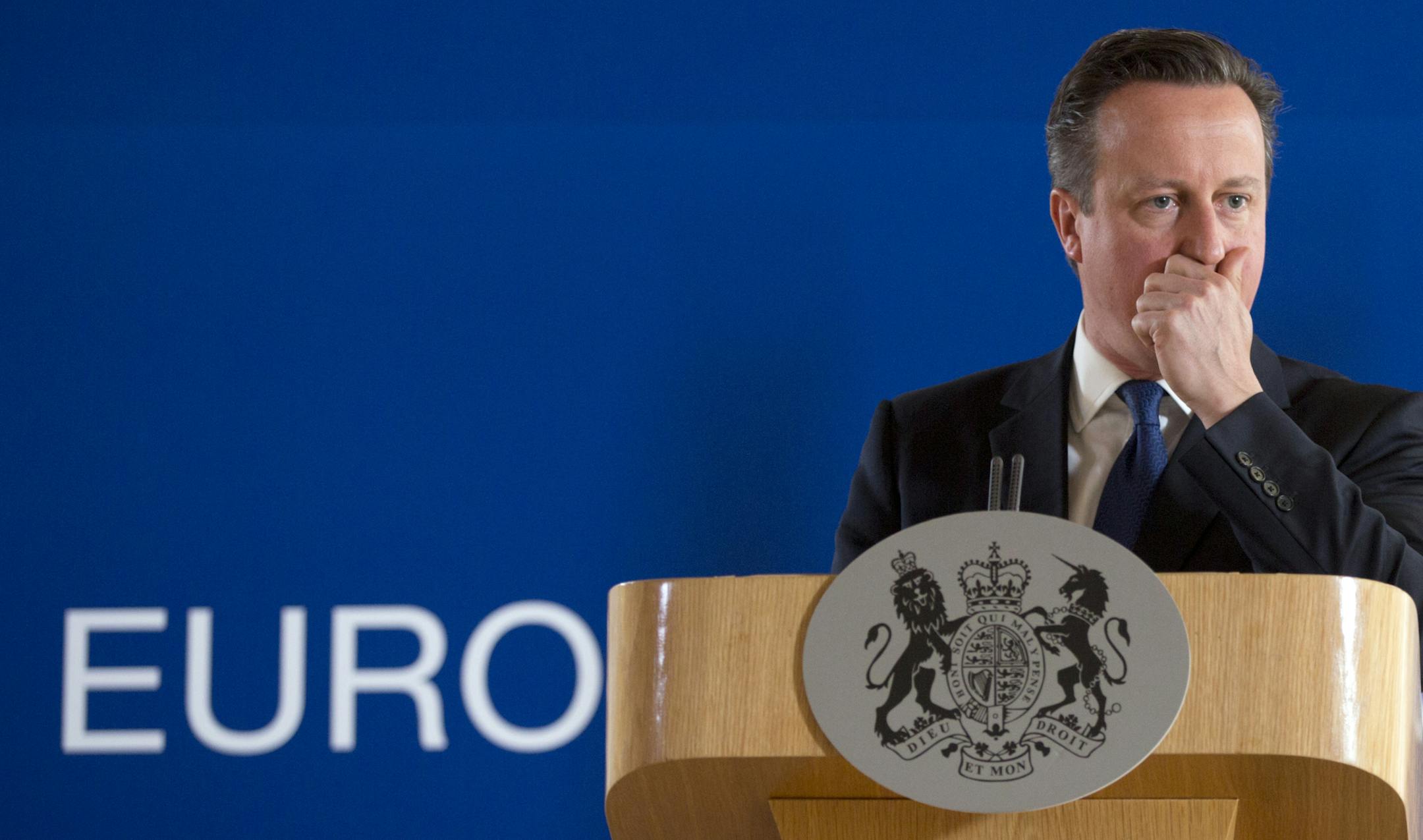
So Britain might actually do it. With a week to go before the referendum on June 23, recent polls say the campaign to quit the European Union is ahead. The government and its allies in the Stay campaign are alarmed.
Why is this happening?
The excellence of the Leave campaign certainly isn't the reason. Advocates of Brexit made a weak case, unable to say what leaving the E.U. would mean for the country's future trade arrangements or which parts of E.U. law would be readopted and which discarded. It wasn't because these issues can't be debated in advance — they can — but because Leave advocates are divided among themselves on what leaving the E.U. ought to mean.
But while the Leave campaign was bad, the Stay campaign was worse. Prime Minister David Cameron and his allies were more competent than the other side in technical terms — maybe to a fault. They bombarded voters with study after detailed study predicting dire results for the economy if the U.K. quits. But voters remember the earlier expert consensus that Britain should ditch sterling and join the euro system, and they see how that would have worked out.
The dismal record of expert insight on Britain and Europe created a credibility problem, and the endless repetitions and recyclings of Cameron's "Project Fear" were never going to solve it.
Failing to get traction, the Stay campaign then made things worse by trending toward hysteria. All signs suggest that life outside the European Union is possible; Switzerland isn't mired, so far as one can see, in perpetual poverty. Yet the emphasis on the Britain's bleak future without the blessings of the European Commission went on.
A television audience recently laughed at Cameron when an interviewer asked him, "Which will come first, prime minister, World War Three or the Brexit recession?" Donald Tusk, president of the European Council, went one better recently, declaring that "Brexit could be the beginning of the destruction of not only the E.U. but also of western political civilization in its entirety."
Project Fear was a potentially fatal mistake. The positive case for a British future in Europe needed to be made as well. But spare a thought for Cameron: Europe's other leaders left him little choice in this.


