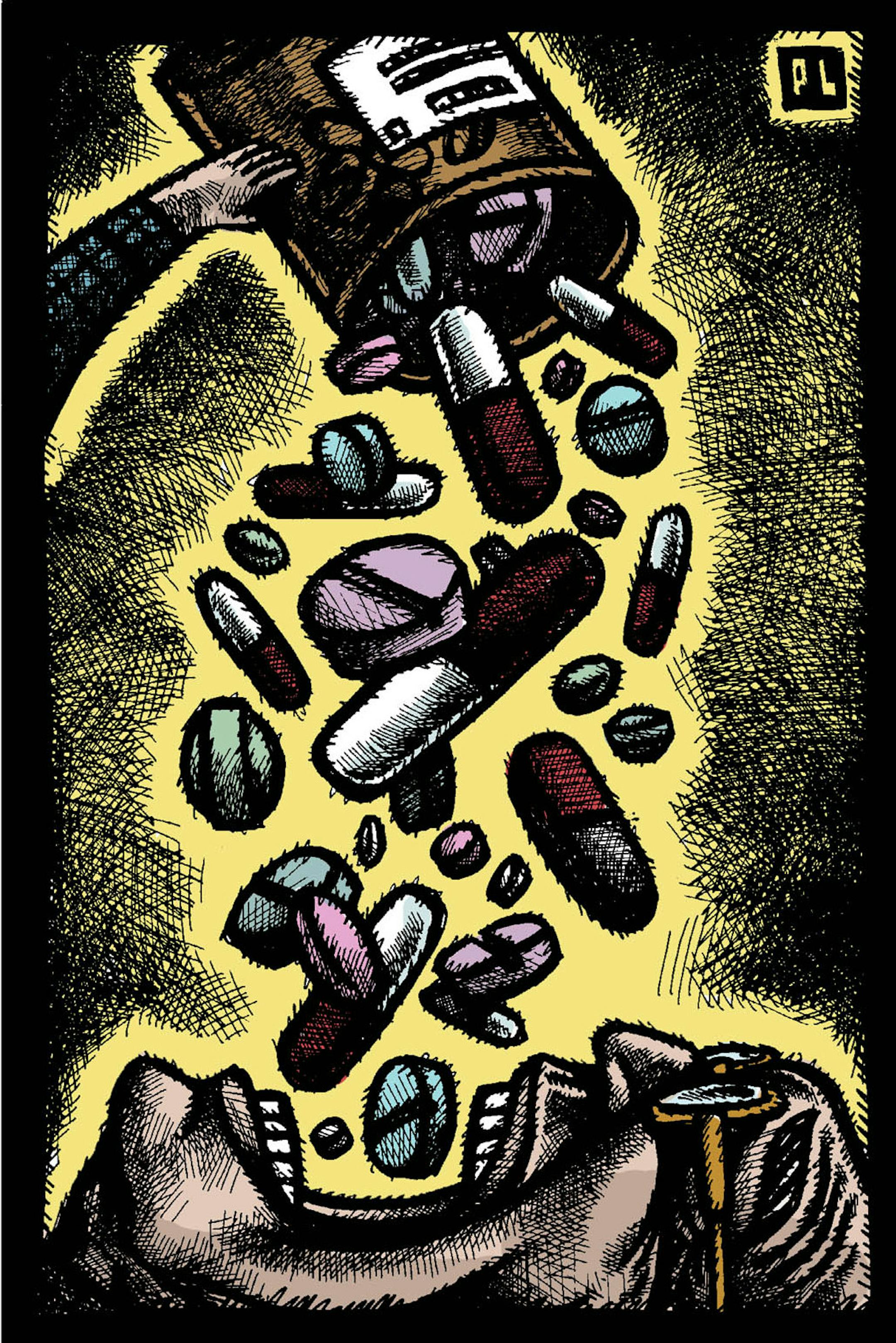
Great news, seniors: Armies of patient groups just protected your right to be put into a chemical straitjacket during your golden years.
Sorry if that sounds alarmist. It's hard to get people's attention about a health policy abstraction like the defeat last month of a fix in the way Medicare does business.
You could say the illness-awareness industry ensured Medicare beneficiaries unlimited access to questionable drugs. You could say the day we develop a smarter national conversation on health care — not to mention a rational single-payer system — just moved farther out of reach. But the alarming opener really does get to the point: Why did so many advocacy groups fight a move to curtail schizophrenia drugs in nursing homes?
The answer lies in decades of seductive narratives about the promise of prescription drugs, and in the power of their primary messengers — advocates who confuse fighting for pills with fighting for patients.
The rule change in question dropped early last January, and arrived for battle with the most artless of titles: "Policy and Technical Changes to Medicare Advantage and Medicare Prescription Drug Benefit Program, Contract Year 2015." Exactly … how could such a compelling call to action fail to galvanize support? A scheduled review of the way the government oversees the purchase of drugs for seniors and the disabled, the plan went public for a standard period of comment, and the launch was met with mass protest.
Talking points were mass-inboxed to the effect that Medicare had a 90 percent user satisfaction rating, so why fix something that is already working, mister man? That sad little riposte found an airing in places like Forbes and the Heritage Foundation, and on the floors of Congress. (Though if "user satisfaction" gets to determine which drugs are authorized to cover what illnesses, we can soon expect opioids for colds.) GOP lawmakers wrote an opposition bill they called the Keep the Promise to Seniors Act, a line they so enjoyed repeating they threatened to vote on it even after Medicare had gone home. A bipartisan group of senators signed a letter of protest. A combative hearing was held.
But the loudest protest came from the Healthcare Leadership Council, a Mount Olympus coalition of CEOs from all the big drugmakers, insurance companies, device firms and hospital systems, including those of Medtronic and my hometown champion of efficiency and health outcomes, the Mayo Clinic. (Wal-Mart sits in on HLC conference calls, too.)
Industry amassed the troops
The HLC corralled signatures from more than 350 businesses, clinical-practice associations and illness-awareness groups, but mostly the latter, including advocates for people with AIDS, ALS, Alzheimer's, arthritis, diabetes, epilepsy, hepatitis, kidney cancer, lupus, pain, Parkinson's and prostate cancer. Collectively, the patient groups sounded the alarm that patient choice, free markets and Medicare costs would all be at risk if the reform passed. Co-signers ranged from the Chamber of Commerce to LGBT-ers to drug-lobby Pharma and an all-hands-on-deck team effort from the National Alliance on Mental Illness (NAMI) — a group that put out alerts in Washington that reverberated through my local chapter in southeastern Minnesota.