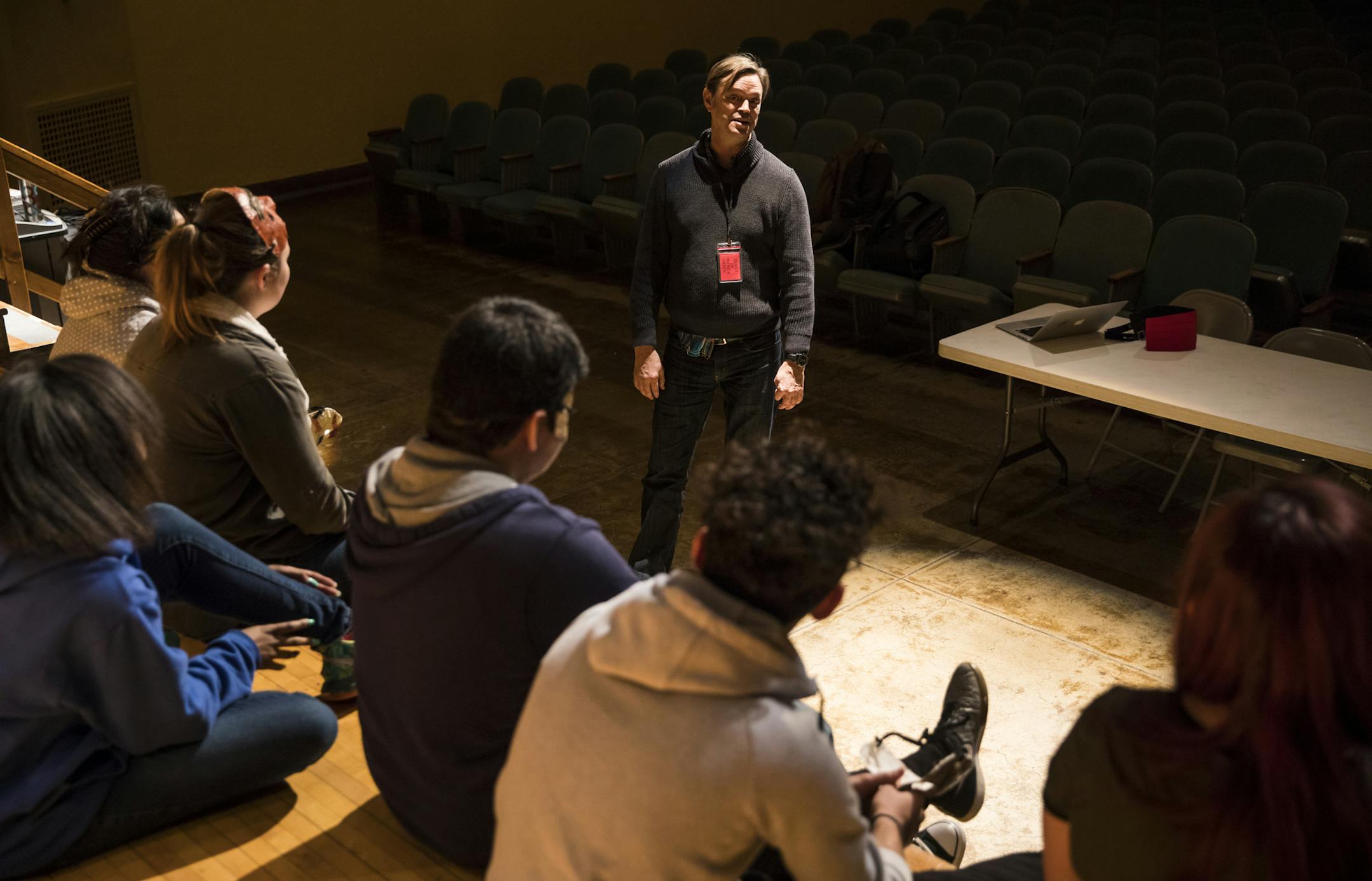
Dane Stauffer was finishing up an improv class when one of his students at Patrick Henry High School in Minneapolis had a question.
"I know you're an actor," the student said. "But what is your current job situation?"
Good question. Stauffer has been acting for more than 30 years, but to stitch together a living, he has expanded his definition of work — such as the gig at Henry, where he spent several class periods last fall teaching the techniques of commedia del arte.
Whatever it takes, he does it.
"If you are in this business, you are an entrepreneur — a hunter/gatherer," Stauffer said of a discipline that keeps artists hustling constantly to match their skills to the needs of a market. "An artist is always finding a balance between what people want and what I want to do."
For theater artists, the pursuit is neverending. Acting jobs can pay anywhere from a few hundred dollars a week to upward of $2,000 for elite roles, but once the show ends, the stars are out on the street. Long-term contracts, such as those at commercial venues, can keep an actor well-fed for months, although it's not impossible that you'll see the leading man waiting tables to supplement an income.
"You are the CEO of your own company," said Ansa Akyea, who like Stauffer actively pursues teaching residencies in public schools, works with Circus Juventas (the youth circus school) and was on his way to rehearsals for a show he's directing at SteppingStone Theatre in St. Paul when he spoke by phone. "I'm trying to build a diversified portfolio of things I can do — my own brand. I'm not just an actor — I want to be an artist in the truest sense."
Entrepreneurship is not limited to theater, of course. Musicians and composers have found it increasingly important to foster their own businesses. Dancers teach and choreograph in addition to performing. Visual artists sell their work. Nonprofit organizations are finding ways to use artists in community projects.