

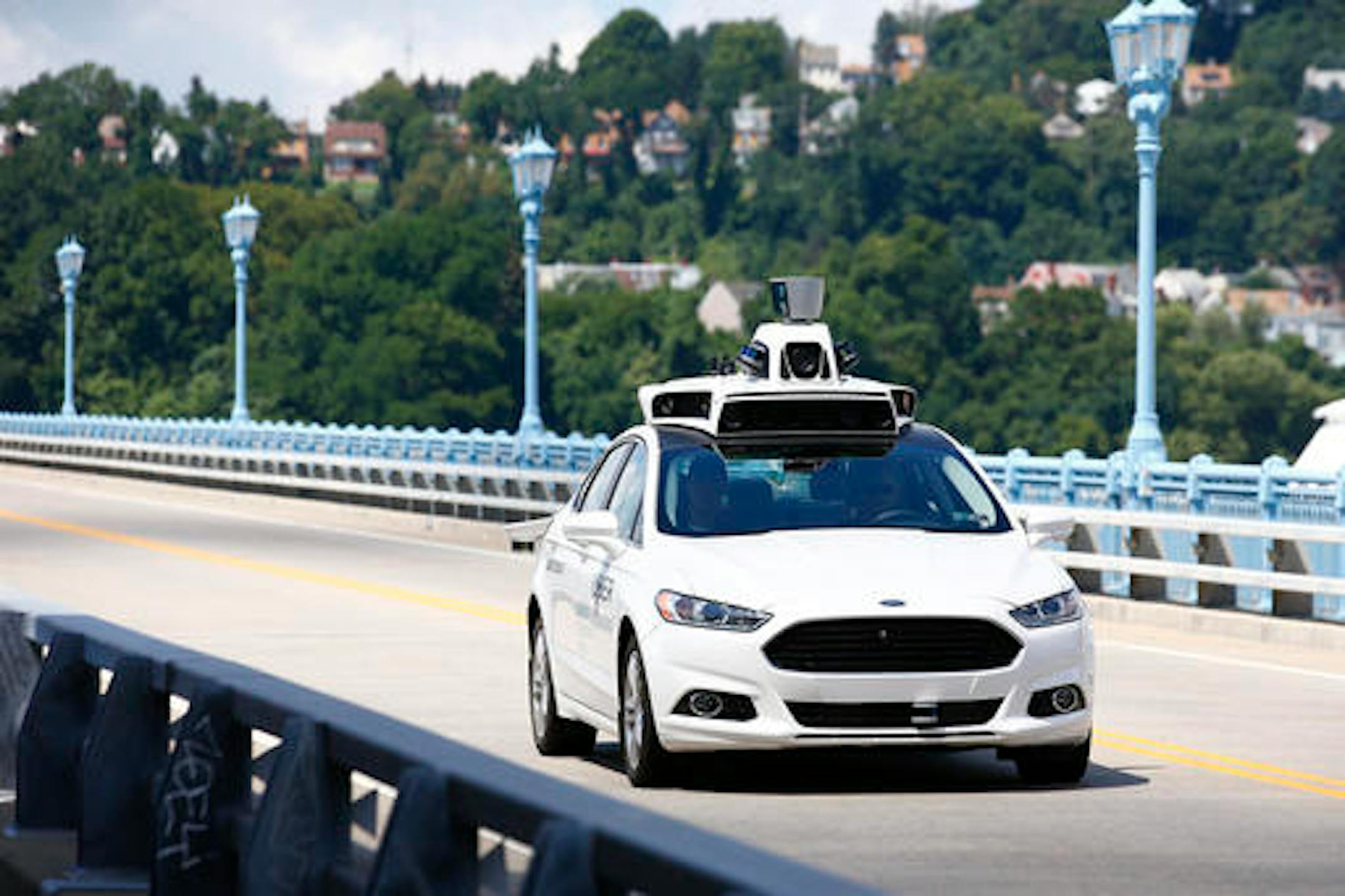
Michael Chui of McKinsey & Co.'s global research arm happened to visit the Twin Cities on the last (hopefully) snowy day of the season, and he pointed out a self-driving car would have had a rough day here.
Chui, a leader of the firm's research in "disruptive technologies" like artificial intelligence, sees autonomous vehicles on the streets of the San Francisco Bay Area, where he lives. But they have a ways still to go.
Recognizing a stop sign is easy for a machine, unless some person messes with the sign by putting stickers on it. Then it might be read not as an instruction to stop, according to a study a couple of years ago, but as a speed limit sign. That's obviously dangerous.
Chui described self-driving car technology as "amazing" as it is right now, but he knows mass adoption of this kind of technology isn't happening anytime soon.
But here's the equally important message he had last week: We need that time, before technologies like autonomous vehicles blossom, to figure out how to get millions of people into different kinds of paid work or how to pay them in new ways for what they do.
Chui is a partner with the McKinsey Global Institute, created by the consulting company McKinsey. He has a Ph.D. and described himself as a private-sector professor, but he also has experience as a problem-solver in other jobs.
He has lately been working mostly on the expected effect on work and business of artificial intelligence, a term that to him means "technologies that allow machines to accomplish cognitive functions, i.e., those that people associate with human minds."
It was research by Chui and his group a couple of years ago that made news by concluding that maybe half of the work people do could be taken over by machines with what they called "currently demonstrated technologies," which meant the invention phase was already over. And six out of 10 occupations could have up to 30% of their work done by machines.


