

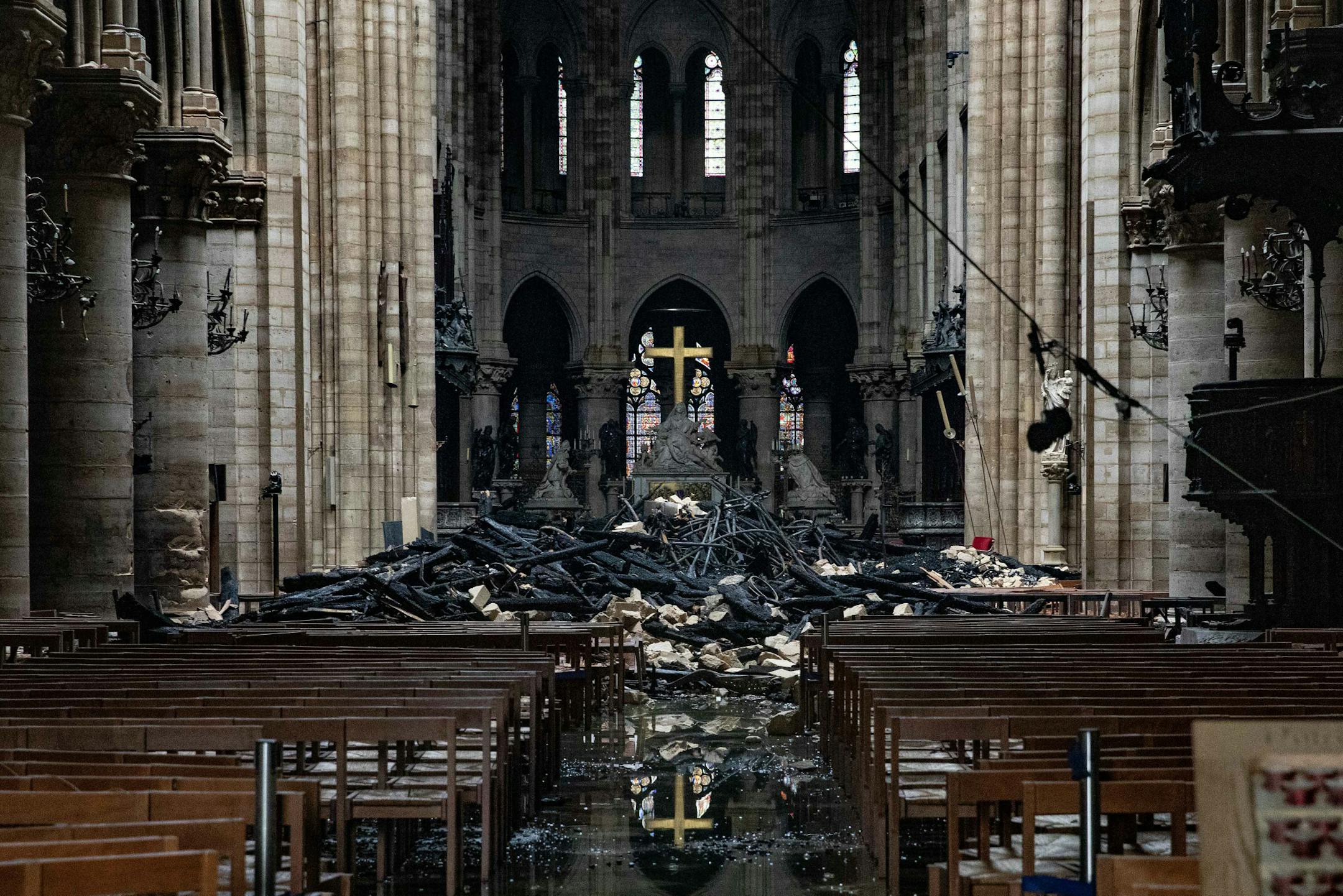
If there was any comfort to be taken from the tragic fire to befall one of Europe's great landmarks and Paris's most-visited, it was the speed at which the call for help was answered. With Notre Dame still smoldering, French President Emmanuel Macron promised to rebuild the great cathedral and called for donors. Pledges came flooding in.
France's luxury industry led the way, with Bernard Arnault, the billionaire founder of the LVMH fashion conglomerate, promising 200 million euros ($226 million) and Francois Pinault of rival fashion group Kering 100 million euros. Paris Mayor Anne Hidalgo offered money from city coffers and promised to organize an international donor conference. This is a heartening start.
But while Macron has rallied the troops, others will be writing the big checks. The French government owns Notre Dame Cathedral, but apart from a small annual maintenance stipend of 2 million euros a year from the ministry of culture, and some limited repair works, it had done little to maintain it. To do so would violate France's laws separating church and state, the government has argued.
As my colleague Mohamed El-Erian observed, the blame game around Notre Dame's gaping wound is likely to be ugly. The fire was no natural disaster; it may have been an accident, but it certainly wasn't inevitable. It is legitimate that questions will be asked about how to better ensure other landmarks don't go up in flames.
The state of Notre Dame's disrepair had been evident for years to the Archdiocese, the steward of the cathedral. Until a few years ago though, according to 2017 reporting by Vivienne Walt for Time magazine, the government had kept private areas — from which the decrepit upper levels could be accessed — off limits. Here's what Walt found in those upper stories:
"Here, the site seemed not spiritually uplifting but distressing. Chunks of limestone lay on the ground, having fallen from the upper part of the chevet, or the eastern end of the Gothic church. One small piece had a clean slice down one side, showing how recently it had fallen. Two sections of a wall were missing, propped up with wood. And the features of Notre Dame's famous gargoyles looked as worn away as the face of Voldemort."
A spokesperson from the culture ministry told Walt that Notre Dame's case wasn't the most pressing and the cathedral shouldn't expect much from the government. "France has thousands of monuments."
There were debates about whether Notre Dame should charge visitors to fund repairs — as St Peter's Basilica in Rome and St. Paul's Cathedral in London already do. But some in the French senate argued that this would effectively amount to a tax on a place of worship and would breach equality laws if synagogue, mosques and temples were free for entry. The entrance fees were never levied.


