

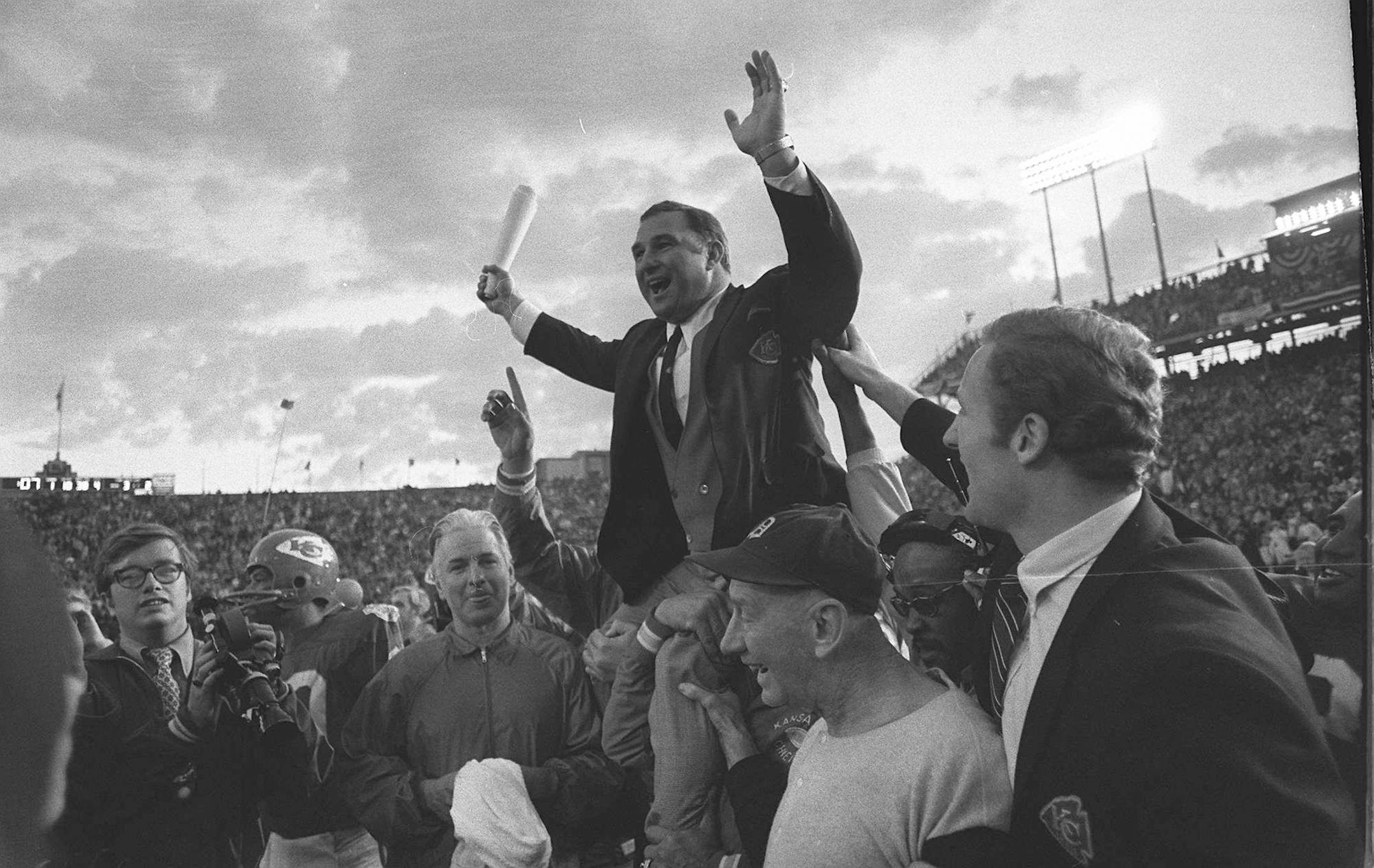
Bobby Bell vividly remembers standing on the Los Angeles Coliseum field that day in 1967, looking up and seeing all those empty seats, and asking himself, "Who in the hell is going to pay $12 for a ticket?"
Bell, the former Gophers great, is a Pro Football Hall of Famer. He is one of the best to ever play in the NFL. But, as a member of the Kansas City Chiefs, who lost to the Green Bay Packers in the first Super Bowl, he did not appreciate the history of what he saw that day: the beginning, the very first steps, of a cultural phenomenon.
Of course, just about everyone felt that way. The name Super Bowl — coined by former Kansas City owner Lamar Hunt and inspired by the Super Ball toy — wasn't officially adopted until the fourth of these games.
"It was another game," Bell said. "You went out and played. That was it. These days? Unbelievable."
The parties and galas, the pomp and circumstance. You can argue that the Super Bowl has become the last great mass American ritual. People watch for the game. For the advertisements. For the halftime show. And not necessarily in that order.
John Tauer is a social psychologist and professor at the University of St. Thomas. Each spring, he teaches a class in motivation and emotion, where the topic of Super Bowl ads come up.
"I'm always amazed at the number of students who don't know who won but can name their favorite commercials," he said.
But it wasn't always this way.


