

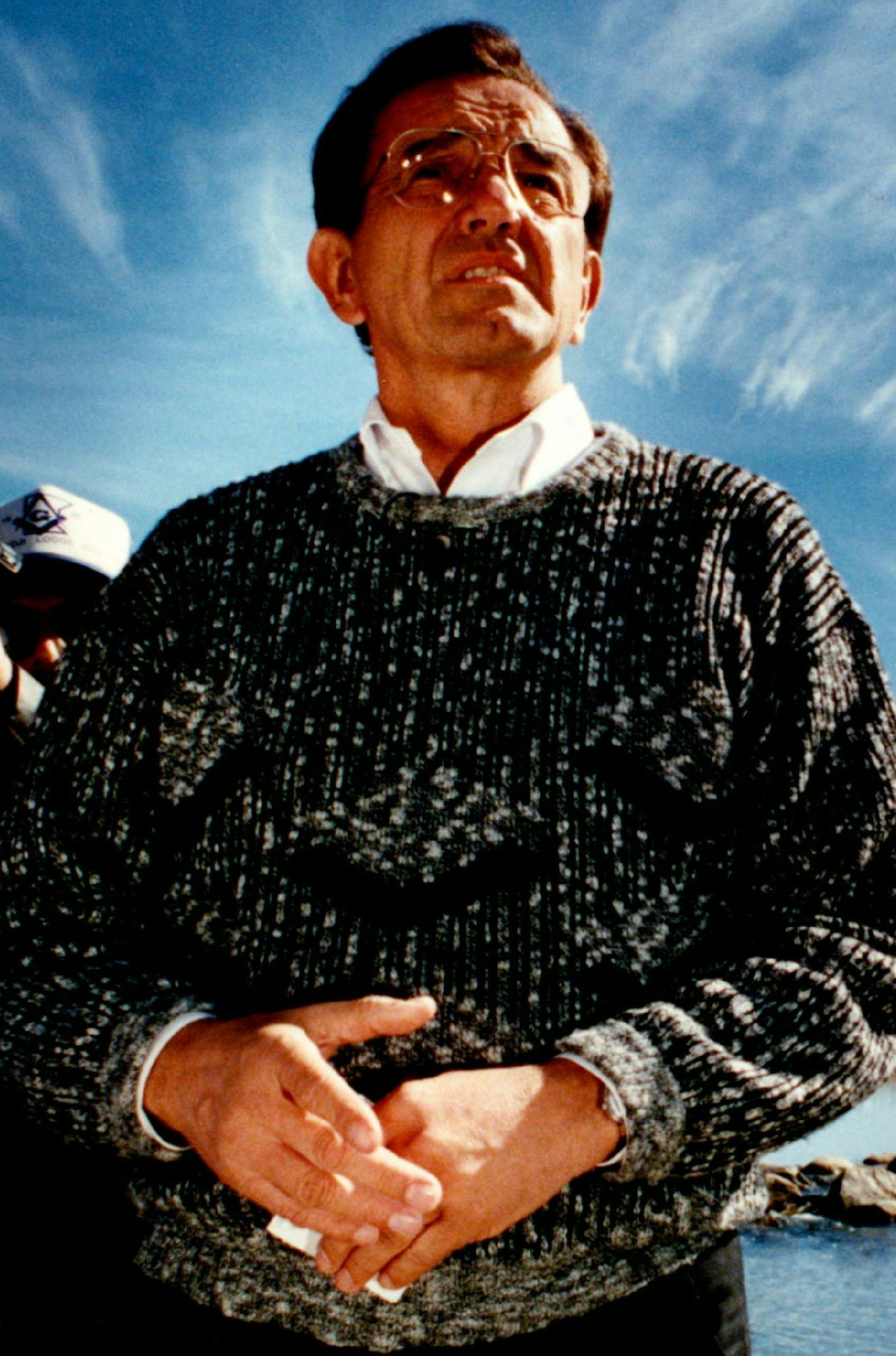
Once upon a time in Minnesota, there was a former governor who wanted his old job back. He had lived elsewhere and had been paid a handsome private-sector salary for years; his party had another candidate in mind; precinct caucuses were past and the calendar was edging toward spring — but none of that deterred him. He was sure he could convince the voters to take him back, and sure that he could make them glad they did.
And if you think I'm describing Tim Pawlenty in 2018, you must be too young to remember Rudy Perpich.
Dear millennial/Gen Z readers, be advised that Minnesota's longest-serving governor did not serve a continuous 10-year stint. Rather, he was in office first for two years in the 1970s, then, after a four-year hiatus, for eight more years in the 1980s.
Perpich, who served six years as lieutenant governor, completed the second half of the term of the governor he appointed to the U.S. Senate in December 1976, Wendell Anderson. He lost to Republican Al Quie in 1978 and went to work for Control Data, which dispatched him to Vienna. When Quie opted not to seek a second term in 1982, Perpich began to think about running for governor again. The thought nagged at him for weeks until, in early April, he headed home to test the political waters.
This newspaper sent a reporter — me — to New York, where Perpich was staying for a few days before returning to Minnesota, to quiz him about his intentions. He said something during our long interview (published April 11, 1982) that Pawlenty's recent water-testing brought to mind:
"Wendy Anderson said to me once, 'If a former governor could ever make a comeback, wouldn't he be a great governor?' He's right, I think," Perpich said, citing the insights about Minnesota's potential for a bigger role in the world economy that he had gained by representing a Minnesota high-tech company in Europe.
"Put that together with the experience I had when I was governor … I sometimes think it was meant to be this way."
Minnesotans may soon see whether Pawlenty, too, thinks gubernatorial greatness would be his destiny if he could claim the office one more time. The 2002-2010 Republican governor has been behaving like a comeback wannabe since on Feb. 6 — Minnesota's precinct caucus day, which probably was not a coincidence — he announced that he was walking away from his $2.7-million-per-year gig as CEO of the Financial Services Roundtable, the Washington lobbying arm for the nation's biggest banks.


