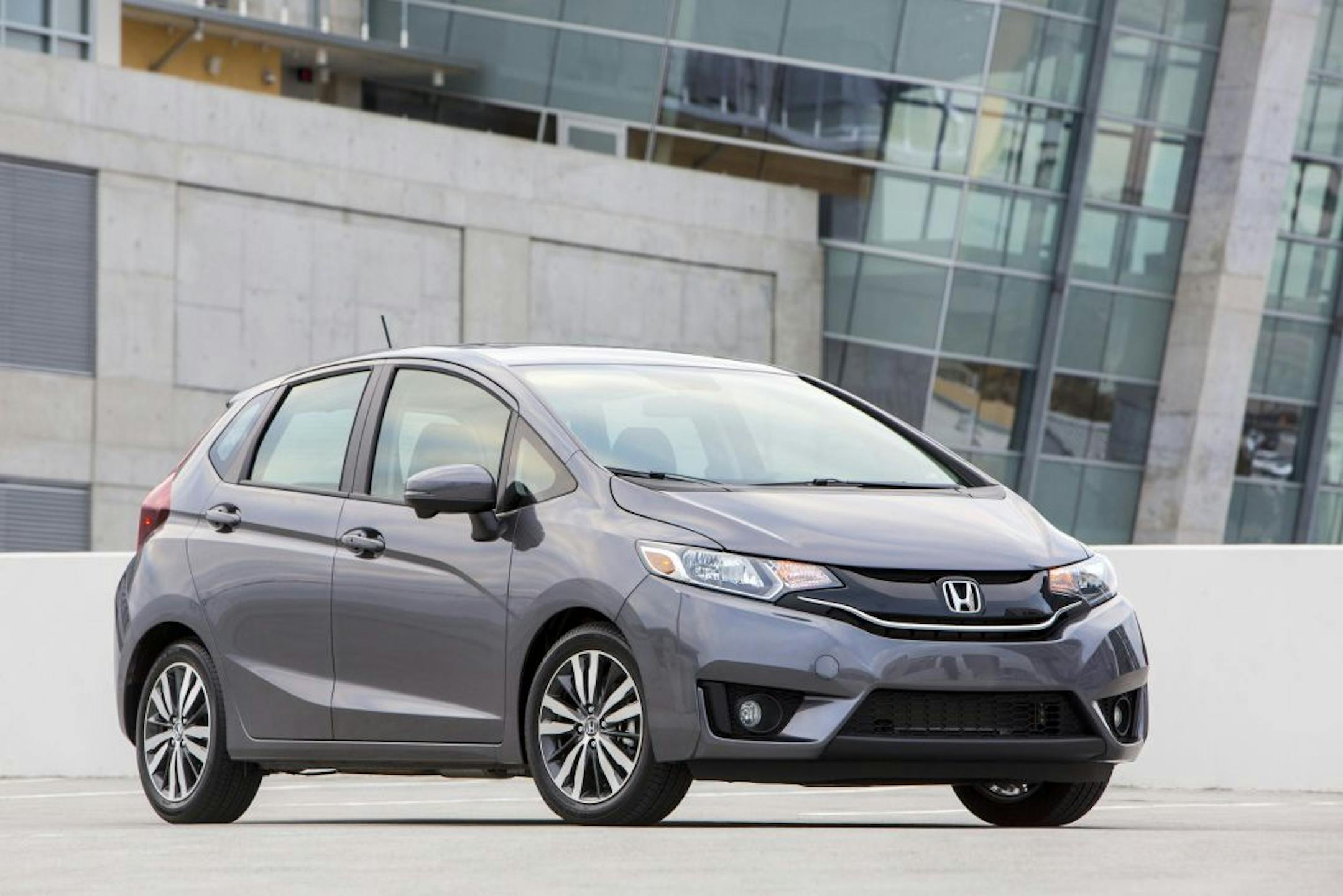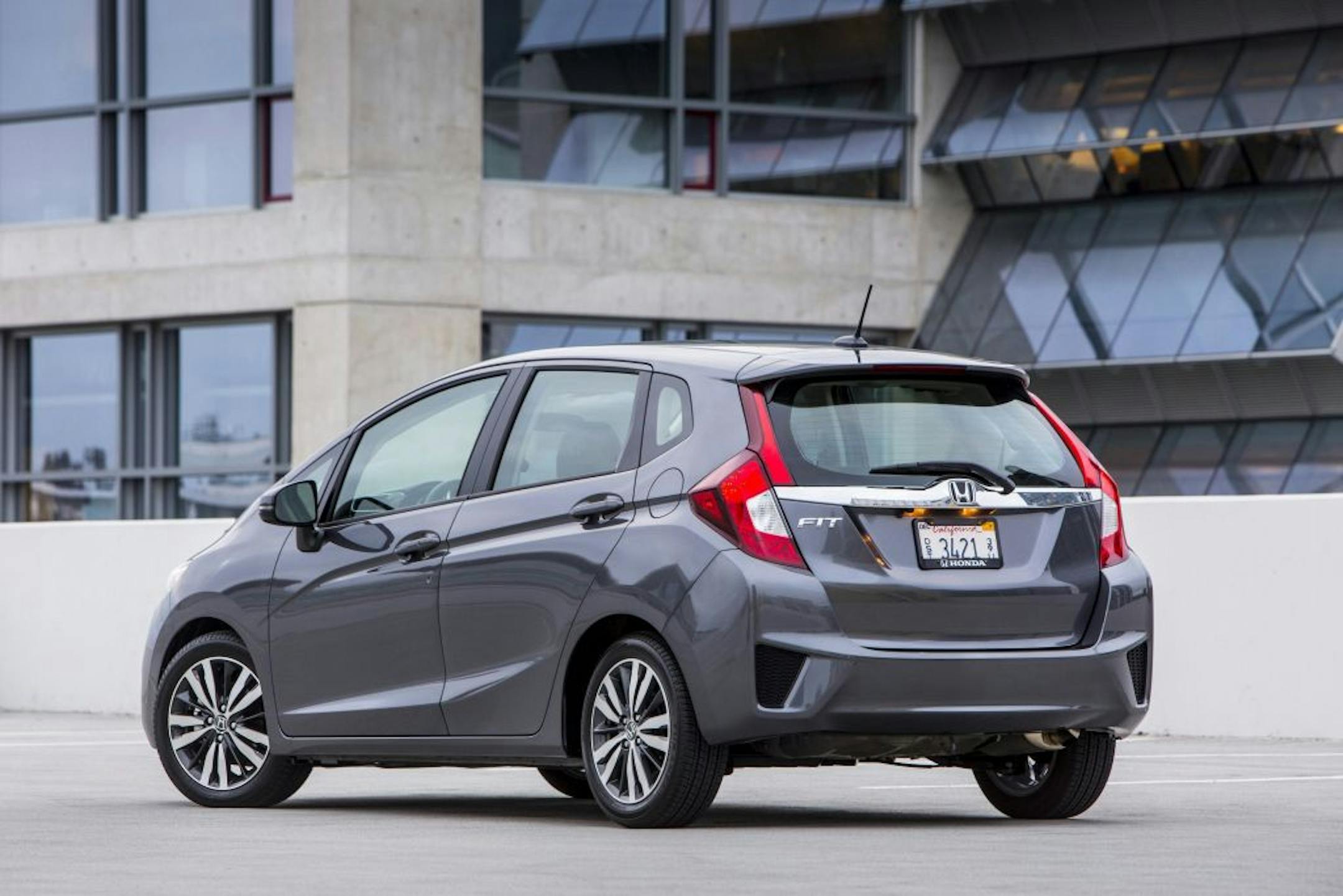
With its Fit, Honda hopes it will have a four-wheeled success story comparable to its bestselling vehicle ever — the Super Cub scooter, 76 million of which have been sold since 1958. If "you meet the nicest people on a Honda," as the Super Cub ads claimed back in the day, you'll meet the youngest and most safety-conscious, penny-pinching drivers ever behind the wheel of the 2015 Honda Fit.
For its third overhaul since its 2001 introduction, the Fit builds upon its most alluring attribute — a toppled-egg profile that belies an exceptionally roomy cabin — adding more fuel efficiency, standard safety features and technology without a significant increase in price. The 2015 Fit starts at $16,215, including destination charge.
Fuel economy and price being the most important factors in the subcompact market, the Fit re-do, like most subcompact updates, offers more power and more fuel economy. It's propelled with a new direct-injection 1.5-liter four-cylinder engine that ups the horsepower by 11 percent and offers 16 percent better fuel economy than the outgoing model. The fuel economy for the CVT version is 36 mpg combined.
A six-speed manual transmission is available, but most drivers will get the new continuously variable transmission that replaces the five-speed automatic of the outgoing model.
The CVT's greatest triumph is improved fuel economy. But from the driving perspective, it feels slow and, even worse, loud. Despite Honda's efforts to quiet the cabin by tightening the seams of the body panels and adding baffling, the sound of the CVT's groaning effort to accelerate from a dead stop is a sonic intrusion.
The manual version is less loud and more fun, though not as torque-y as the Ford Fiesta 1-liter I drove recently. The manual transmission Fit is less expensive, but it is also less fuel efficient than the CVT, at 32 mpg combined.
Outfitted with a completely new chassis that will also be used in the new compact SUV Honda will trot out at the New York Auto Show next week and sell later this year, the suspension has been upgraded front and rear.
After driving the outgoing Fit to and from Honda's introduction of its replacement in San Diego in late March, the new model felt more planted in the turns. But the more noticeable improvement was to the steering, which felt more precise and easier to move now that its electronic power steering has been equipped with a torque sensor to damp vibration, and the addition of the same motion adaptive feature used on the Civic and Accord. The motion adaptive EPS senses the vehicle's speed and driver's steering behavior and, if it detects instability during cornering or braking, enhances steering force in the direction the driver needs to turn.