
Hold your noses: U's stinky corpse flower about to bloom again

The flower stands tall as one of the stinkiest in its botanical family.

March 14, 2019 at 3:35AM
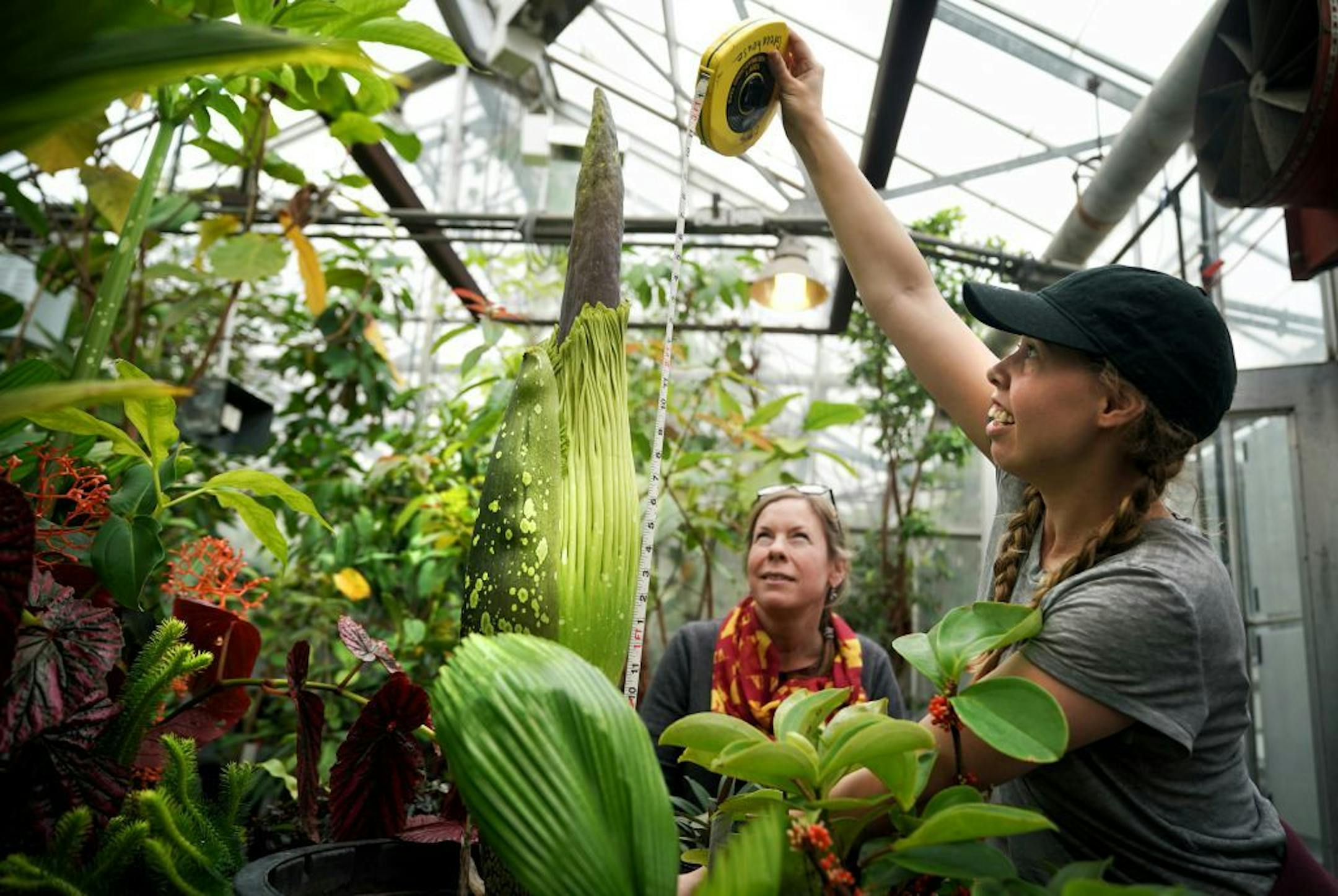
Kaci Atherton measured the corpse flower at 37 inches as University of Minnesota Horticulturalist Angie Koebler watched. Angie said it can grow between 3-5 inches a day and since it is a rain forest plant, it grows faster in warmth. She predicted that it could open this Sunday if warm sunny weather appears but could be as late as Wednesday if it stays cold. It will be its peak pungent smell for 24 hours. They have a live webcam watching the corps flower here: https://cbs.umn.edu/conservatory/cor
Kaci Atherton measured the corpse flower as University of Minnesota horticulturist Angie Koebler watched. When it blooms, the plant smells like carrion. (Star Tribune/The Minnesota Star Tribune)

Here's some news that stinks: The University of Minnesota's corpse flower is about to bloom and emit an aroma of prodigiously pungent proportions.

The College of Biological Sciences Conservatory, on the U's St. Paul campus, has scheduled special hours for public viewing and pee-yewing of the flower (named Chauncey) starting Thursday from 9 a.m. to 9 p.m. every day until the flower closes.

The notoriously noxious plant, native to Sumatra's equatorial rain forests, can be up to 6 feet tall and emit a scent often likened to rotting meat.

The corpse flower, listed as an endangered species, "has been a treasured collectors' item for botanical gardens around the world," said conservatory curator Lisa Philander.

The university has set up a live web stream for those who wish to keep their nostrils away from the main attraction at the time of blooming at the conservatory, located in Falcon Heights at 1534 Lindig St.

The first incidence of a publicized bloom was at London's Kew Gardens in 1889 after its discovery two years earlier.

In its native habitat, the corpse flower uses its strong smell to cut through the riot of scents competing for the attention of pollinators from miles away. The flower warms itself to a temperature comparable to humans. As it warms, its odor becomes more powerful.

When Chauncy last bloomed, in 2016, university scientists used pollen collected from a different corpse flower by researchers at Gustavus Adolphus College in St. Peter, Minn., to fertilize the plant. In all, 14 viable seeds were produced.
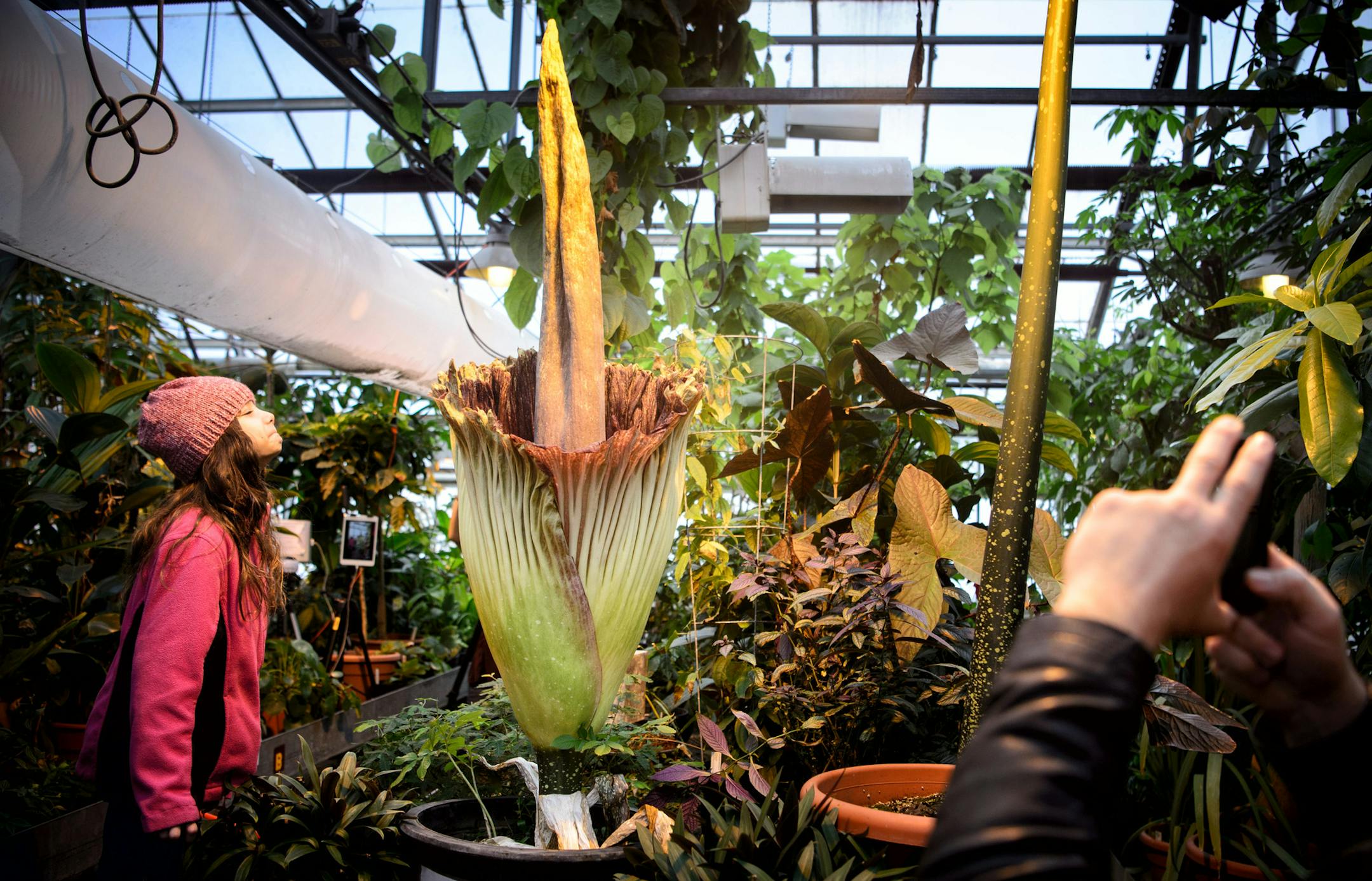
The last time the University of Minnesota's corpse flower bloomed, Rose McNary, 8, leaned in for a smell while her dad Brian took a photo. Afterward she said "it smelled like dead fish but not as bad as a three day old porkchop, I thought it would be worse."
The last time the University of Minnesota's corpse flower bloomed, Rose McNary, 8, leaned in for a smell while her dad Brian took a photo. Afterward she said "it smelled like dead fish but not as bad as a three day old porkchop, I thought it would be worse." (Star Tribune file/The Minnesota Star Tribune)
about the writer

about the writer

Paul Walsh

Reporter

Paul Walsh is a general assignment reporter at the Minnesota Star Tribune. He wants your news tips, especially in and near Minnesota.

See Moreicon