

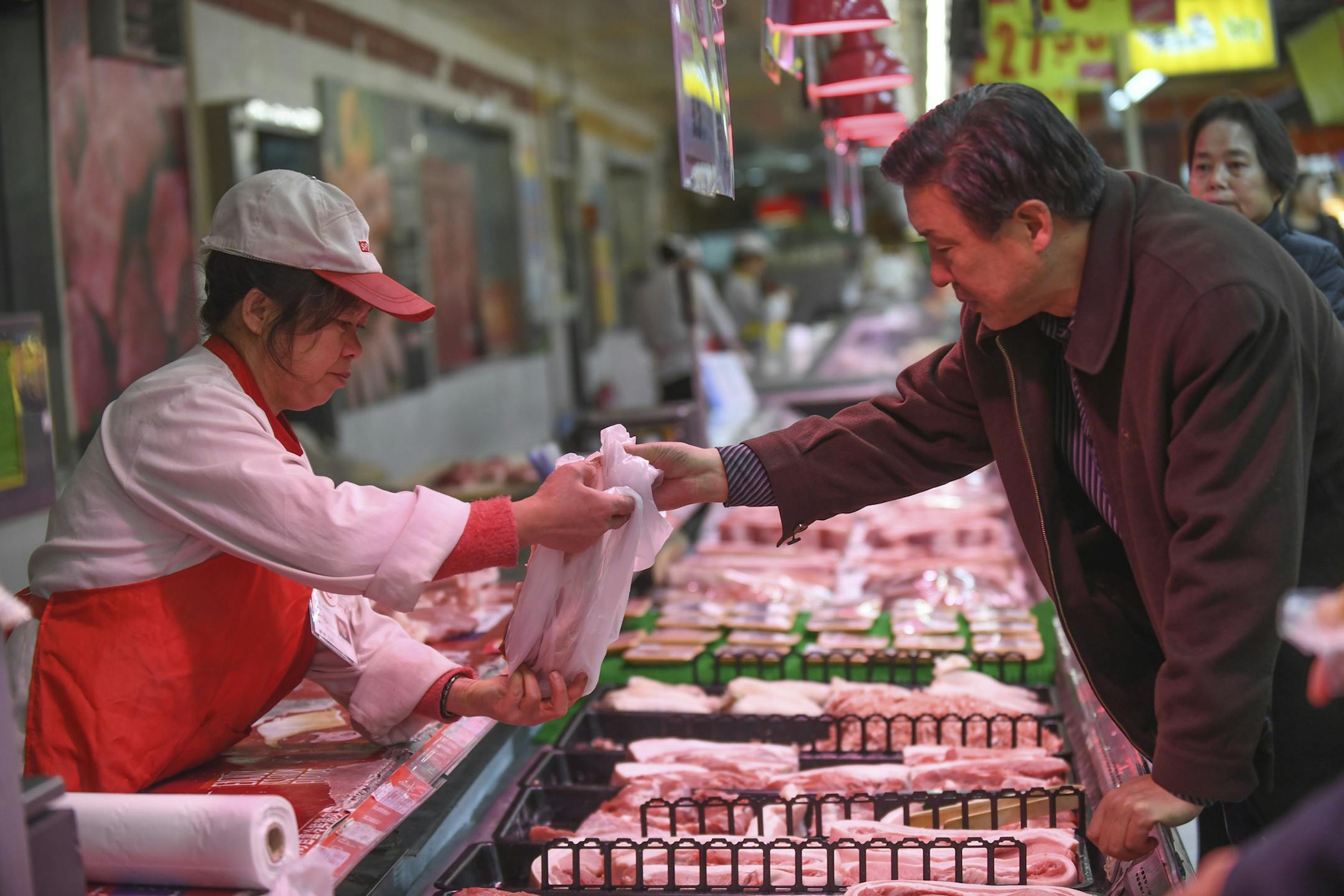
The spread of African swine fever in China has been a boon to hog farmers in the Midwest in recent weeks.
On reports that the lethal pig disease took out 17 percent of China's national pig herd over the past year, hog futures prices in the U.S. have skyrocketed, bursting out of a low-value trading range where they've been for about a year.
Farmers scrambled to lock in sales at the higher price levels.
"All the sudden there's a rumor that [the Chinese] are going to have to buy U.S. pork, and we've seen pork futures increase by about $40 a head," said Mark Greenwood, a Mankato-based executive at Compeer Financial, one of the largest ag lenders in the country. "We've been very busy on the hog side right now looking to lock up some profits for producers."
October futures for 100 pounds of lean hog — about half a pig — closed at $82.23 on Friday. That means hogs are selling for about $165 per head for October delivery. Three weeks ago, hogs for October delivery were selling at about $140 per head.
"2018 and most of the first quarter of 2019 have been pretty rough price-wise. Even the best farms struggle to break even," said Dave Preisler, director of the Minnesota Pork Producers Association. "Now with this pricing opportunity, the outlook certainly looks much, much better."
The outlook has been dim since President Donald Trump announced tariffs on Chinese imports last May and China responded by slapping tariffs on U.S. pork and soybeans. In the late summer, hog futures prices meant farmers who hadn't locked in better prices faced as much as a $40 loss on each pig they raised.
But African swine fever, a disease for which there is no vaccine, has devastated the small pig herds in China, where biosecurity measures are not nearly as tight as they are in the U.S.


