
Historical siblings: Minnesota and Matabeleland

Lessons about this state's frontier ambitions can be found in a native son's imperial exploits in Africa.

July 3, 2019 at 10:43PM
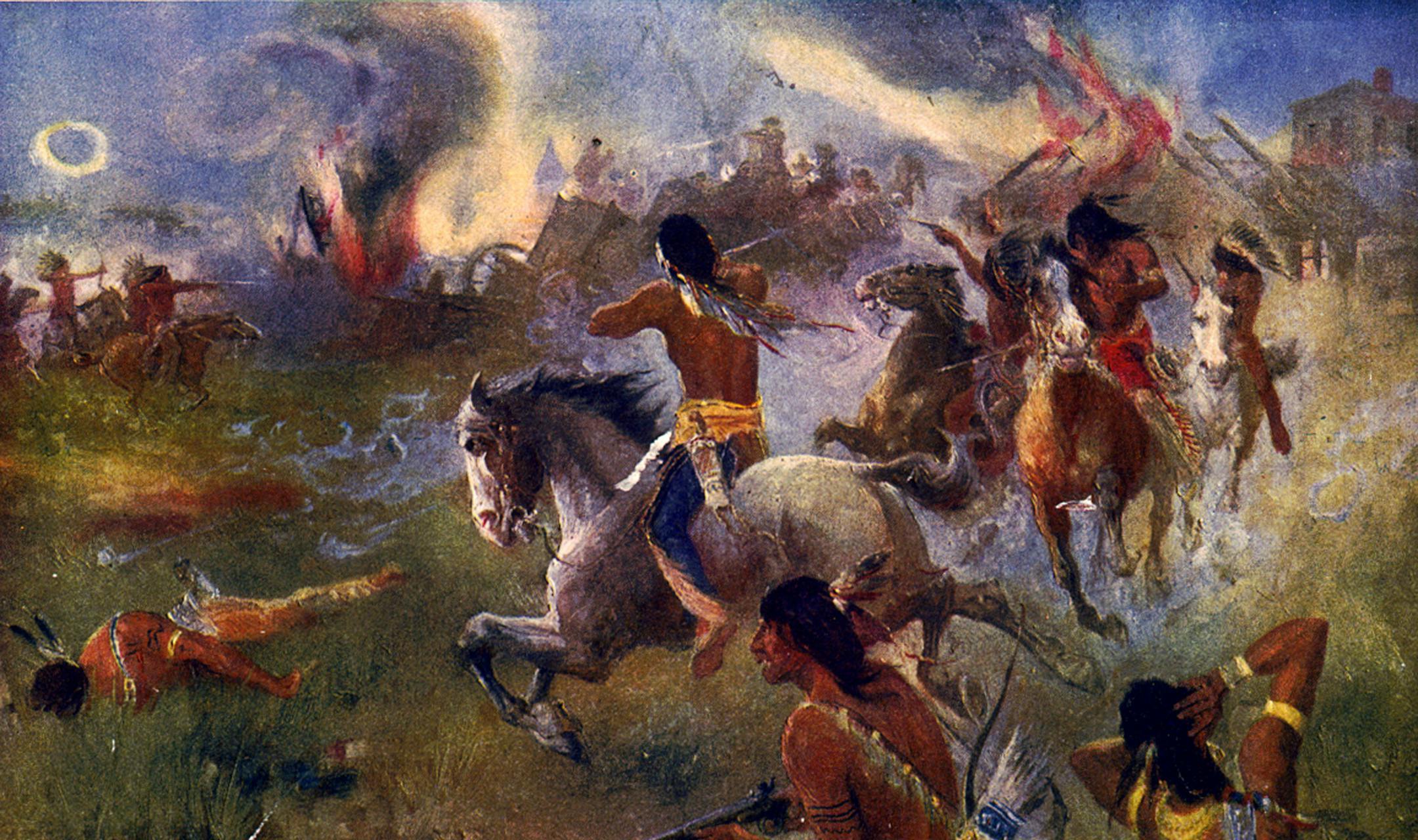
The siege of New Ulm, Minn., painted by H. Aug. Schwabe, ca.1902. Scene depitcts the U.S. - Dakota War of 1862. ORG XMIT: MIN1208101502520128
“The Siege of New Ulm, Minn.,” painted by H. Aug. Schwabe, circa 1902. The scene depicts the U.S.-Dakota War of 1862, which was the historical backdrop for Frederick Burnham’s childhood. (The Minnesota Star Tribune)

Just before his death in 1947, a famous frontier scout from Minnesota, Frederick Russell Burnham, reminisced about his childhood south of the Twin Cities. Burnham had risen to fame in the 1890s for his service to the British Empire in Matabeleland (part of today's Zimbabwe), and he credited his martial prowess to his earliest boyhood memories in Blue Earth and Waseca counties.

"The charm of that first old tale of Africa read to me as a boy on the frontiers of Minnesota never failed," he wrote. "Years later, when as a hardened scout I crossed into the lines of the enemy in the very region described in that book, the picture in my mind's eye of Katy Boardman reading by candlelight to a ring of pioneer children sprang before me as vivid as the rosy tints of dawn on the African veldt."

The connections that Burnham makes in his two memoirs between frontiers in Minnesota and Matabeleland offer historical insights in surprising ways.

For cultural historians like me, he provides rare smoking-gun evidence to connect the ideas and literature of an age to his actions on the battlefield. Burnham fully recognizes that the adventure literature he devoured as a boy influenced his actions later as a man. In other words, Burnham offers proof that dime novels about "cowboys and Indians" inspired his subsequent participation in warfare against amaNdebele warriors in southern Africa. Books led to bullets.

While this garnered him praise a century ago, we now recognize how troubling this is. Men like Burnham saw indigenous adversaries as interchangeable and expendable, as he and other soldiers of fortune fought on behalf of, in his words, "the conquering race." Burnham respected native warriors to a degree but felt that "the inevitable march of our modern civilization could not be stopped forever by a few semicivilized people, be they ever so brave and patriotic."

Minnesotans might read these quotes today and take interest that a native son born near Mankato went on to international fame for his imperial exploits. His story does have a fascinating "who knew?" appeal to it. But I think the real insight comes in reversing Burnham's international travels, to see what we might learn about Midwestern history from the case of Matabeleland.

Historians of Africa often speak of the "three C's" of empire: Christianity, commerce and civilization. In fact, these equally describe early Minnesota Territory history. Burnham's father — a Congregational preacher — arrived in the region in 1858, ready to serve townsfolk and indigenous people alike. He walked a triangular circuit between Wilton, Mapleton and Tivoli, passing through a Ho-Chunk (Winnebago) reservation. As the family grew, so did the region, newly connected by rail lines and commerce to urban centers back east. Land-grant universities taught scientific agriculture. "Civilization" flourished.

It's easy to acknowledge British imperial expansion and to wag a finger at the subjugation of indigenous societies, but the figure of Burnham — who embodies the connection between these frontier zones — reminds us of a similarly problematic history right here in the "heartland," of things many of us think are uniquely American.

Take the Boy Scouts, for example, an international movement begun, in part, due to Burnham's scouting prowess in southern Africa. There, he met and impressed Robert Baden-Powell of British imperial fame, who later published "Scouting for Boys" (1908) in England and ignited the worldwide movement. The Boy Scouts of America therefore emerged in an international setting defined by romanticized frontiers, hypermasculinity and imperial warfare. The organization is a living monument to the global frontier history that shaped our modern world. (In the 1950s, the Boy Scouts laid markers in California to commemorate two peaks, a mile apart, along the "Silver Moccasin Trail": Mount Burnham and neighboring Mount Baden-Powell.)

Understanding the shared imperial roots of a purportedly American institution like the Boy Scouts, then, can help us escape the constraints of nationalist frameworks. We can more capably recognize how other histories, like the present moment, might need reframing. How can we re-imagine, we might ask, the relationships between U.S. state agencies and indigenous peoples?

From my view as a history professor, the Minnesota Historical Society has done much work to address this question, recognizing the state's troubled history regarding the treatment of indigenous peoples. At the same time, the MHS must operate in the politicized present, when public opinion and federal judges wrangle with the nitty-gritty of place-names, like "Lake Calhoun" or "Bde Maka Ska." These specific issues are about more than a name. They are about reclaiming the past and acknowledging historical erasure, a destructive force common to all settler societies. Just ask the Ho-Chunk, or Winnebago, once Burnham's neighbors, relocated unjustly to Nebraska (and today in Wisconsin) after the U.S.-Dakota War of 1862.

To cover this theme in my class on the American West, I have students watch the documentary film "Dakota 38," which explores in part the commemoration of the war. Minnesotans rightly view this event as something that gives the state a unique, if grim, place in American history, but it becomes rather ordinary when thinking about men like Burnham and the global frontiers they connected in the late 1800s. The themes form the classic frontier tale: minerals found or land sought, settler colonialism, conflict with indigenous societies, and ethnic cleansing or removal, followed by capitalist development, the entrenchment of legal authority, historical erasure and the struggle for commemoration.

Ever the opportunist, Burnham claimed to have survived the U.S.-Dakota War as a 2-year-old hidden in a shock of corn. He often used this tall tale as an origin story to foreshadow his later frontier exploits dispossessing African societies. But this yarn, read today with a transnational view of American history, means more in the reverse, reminding us of how settler colonialism shaped Minnesota, just as it did Zimbabwe.

As the adventurer wrote to his mother in 1893 from southern Africa, "let the world class me as they choose[:] murderer, apostle, pirate, invader or what not[,] to you I am always Fred."

Such violence can lurk behind common names.

Andrew Offenburger is assistant professor of history at Miami University and author of "Frontiers in the Gilded Age: Adventure, Capitalism, and Dispossession from Southern Africa to the U.S.-Mexican Borderlands, 1880-1917," published this month by Yale University Press. He's at offenba@miamioh.edu. On Twitter: @offenburger.

about the writer

about the writer

Andrew Offenburger

More from Commentaries

See More
card image
Alex Kormann/The Minnesota Star Tribune

Instructors taught us that the facts on the left side of the equation — the person with a gun, the escaping felon in a car, the person running into a home or away from the agents — did not always equate to an authorized use.

card image
card image