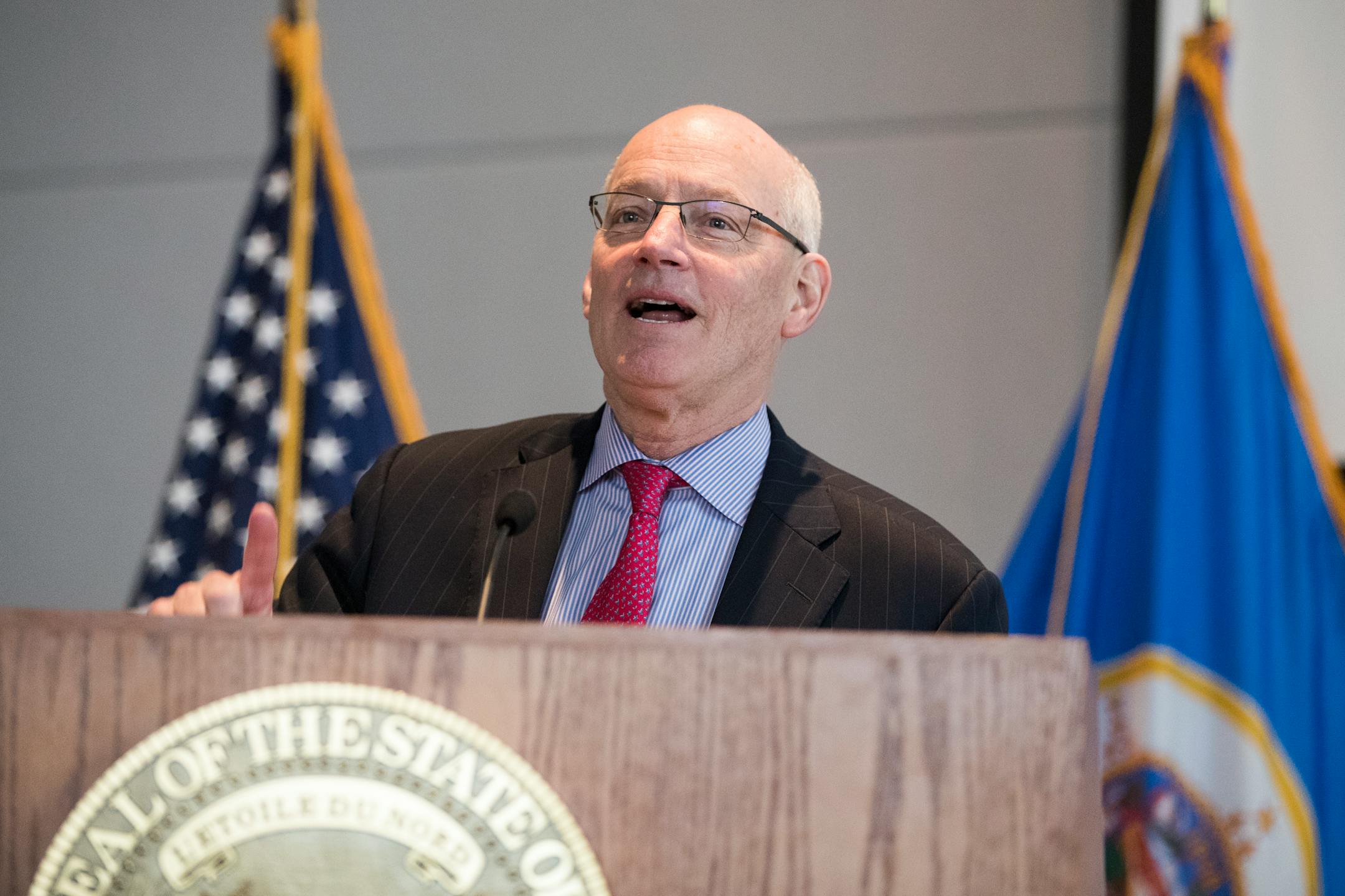
![House GOP Tax Chair Greg Davids pounded a copy of the tax bill and asked the governor to sign it. At a press conference today Republicans called on Governor Dayton to sign the tax bill and brought out a group of Minnesotans waiting for the relief offered in the bill. ] GLEN STUBBE * gstubbe@startribune.com Monday, June 6, 2016, At a press conference today Republicans called on Governor Dayton to sign the tax bill and brought out a group of Minnesotans waiting for the relief offered in the bill.](https://arc.stimg.co/startribunemedia/3D6AWJE7EHDHSVY7HJVGBQZ3DQ.jpg?&w=1080)
Lost in the debate over the vast overhaul of the federal tax code, some Minnesotans' state taxes could rise sharply while others would fall depending how the Legislature responds this year.
Minnesota is one of a few states that base state taxes on an income figure plucked from the federal filing called "federal taxable income." If Minnesota adapts its own tax code to the new federal law, some families — like those with lots of children — could see higher state tax bills, while others with certain business income could get a break.
But if lawmakers do nothing, the state Department of Revenue would have to administer the state's tax system based on the old federal law, leaving a complex maze for both tax collectors and taxpayers.
"It would be very complicated and challenging," said Joel Michael, a nonpartisan research analyst for the House Taxes Committee.
Revenue Commissioner Cynthia Bauerly said the Legislature could address these issues by bringing the state tax code into what's called "conformity" with the federal code. They have done so in recent years relatively painlessly, although not in the face of such a massive federal tax overhaul. Bauerly said she looks forward to working with lawmakers to find the best solution.
And the problem is more than just technical: Amid the arcane language of tax administration lies a debate about the size of Minnesota's government and the equity of its tax code. In other words, who gets what, and who pays what?
"There are a lot of philosophical questions that policymakers need to ask," said Minnesota Management and Budget Commissioner Myron Frans, who was previously the revenue commissioner and a tax lawyer in the private sector.
The debate comes at a time of political polarization: A debate over tax policy between DFL Gov. Mark Dayton and the Republican-controlled Legislature grew so contentious last year that they wound up at the Supreme Court, fighting over constitutional prerogatives.