

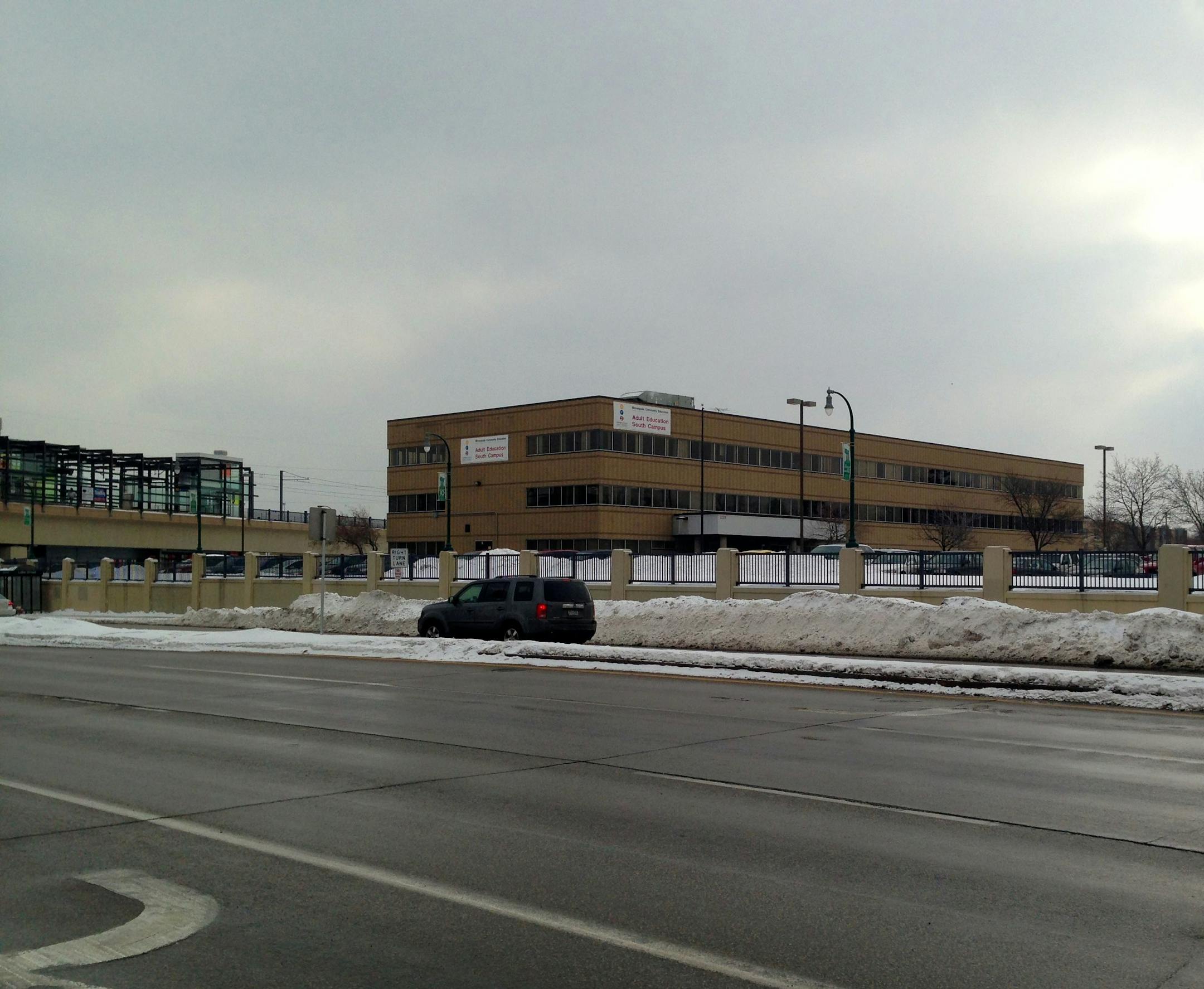
Before the Hiawatha light-rail line opened in Minneapolis 10 years ago, neighbors at one of the busiest stops sketched a vision for their area that included more housing, pedestrian-friendly streets and an enclosed public market.
Even as light-rail ridership has remained strong, little has fundamentally changed at Lake Street and Hiawatha Avenue, a busy commercial center that remains dominated by surface parking lots. New leadership at City Hall has helped spur renewed interest in the Hi-Lake area, however, particularly a 6.5-acre site used by the school district for adult education programs.
Busy bus and rail lines at the intersection make Lake and Hiawatha the third-busiest transit hub in the metro area, according to Metro Transit, a fact that has taken on new importance in light of Mayor Betsy Hodges' goal of increasing the city's population by 100,000.
"She's saying not just grow it to half a million, but grow it along transit lines," said Eric Gustafson, executive director of the Corcoran Neighborhood Organization. "And this is the biggest development opportunity along a transit line that we have."
Development efforts at the school district site, a building and parking lot adjacent to the light-rail station, have nonetheless been stymied over where to move the popular GED and English courses that many immigrants and low-income residents rely on.
"It's in a good spot because it's right where all the people who need to get to it can get to it," GED student Darryl Laney said as he walked out of the building recently.
Lake and Hiawatha remains a harsh environment for pedestrians, who must navigate curving highway offramps and a busy six-lane street to reach various shopping centers. Upon exiting the southern end of the light-rail station, passengers find themselves either beneath a highway overpass or climbing stairs into a surface parking lot.
Target, three grocery stores, a shopping mall, the school building and a YWCA each command their own surface parking lots — an inefficient land use that has a blighting effect on streets. Aerial images show there are more than 2,700 parking stalls altogether surrounding the station, which collectively take up more than 18 football fields of space.


