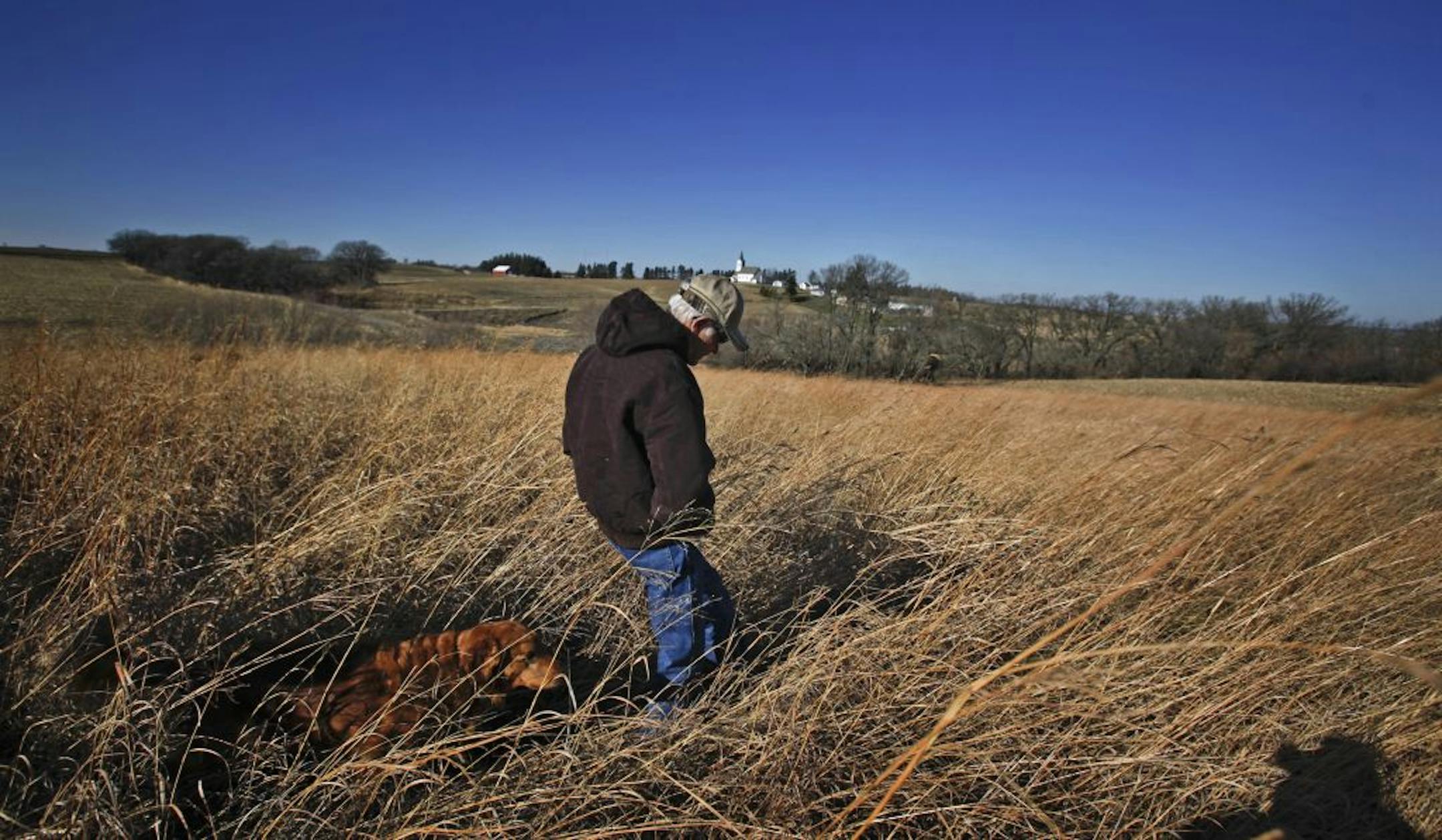
ZUMBROTA, MIN. -- The Indian grass that Larry Thomforde planted 15 years ago is up to his chin now -- tall gold spikes that sway in the sun as his dog, Gwynie, crashes through the field.
A year from now it might all be gold of another kind.
Thomforde, like thousands of other Minnesota farmers, is looking a painful decision square in the eye: cleaner water or the irresistible temptation of corn at stratospheric prices of $6 to $8 a bushel.
Next fall, Thomforde's 50 acres of native grassland, idled under the federal Conservation Reserve Program (CRP), could go under the plow. Renting it out or planting corn would pay him much more than the government pays him to keep it in grasses.
"I don't necessarily need the money," said Thomforde, 75, who farms 240 acres near Zumbrota. "But my personality is such that I am not going to leave it in CRP if I am losing $200 per acre."
Experts say 2012 is likely to be a tipping point for conservation across the Upper Midwest. Some 300,000 acres in Minnesota -- one fifth of the land now set aside through the CRP -- will be up for grabs as federal contracts come up for renewal.
In the following years, millions more acres in Minnesota, North and South Dakota -- critical prairie and wetland habitat for a fourth of the nation's migratory birds -- may also fall to the plow as farmers choose between leaving it to nature or converting it to cash crops. Many predict that nature will be the loser.
These choices loom just as concern about Minnesota's lakes and rivers is on the rise and the state is embarked on a decades-long plan to improve water quality from Lake Pepin to the Red River.