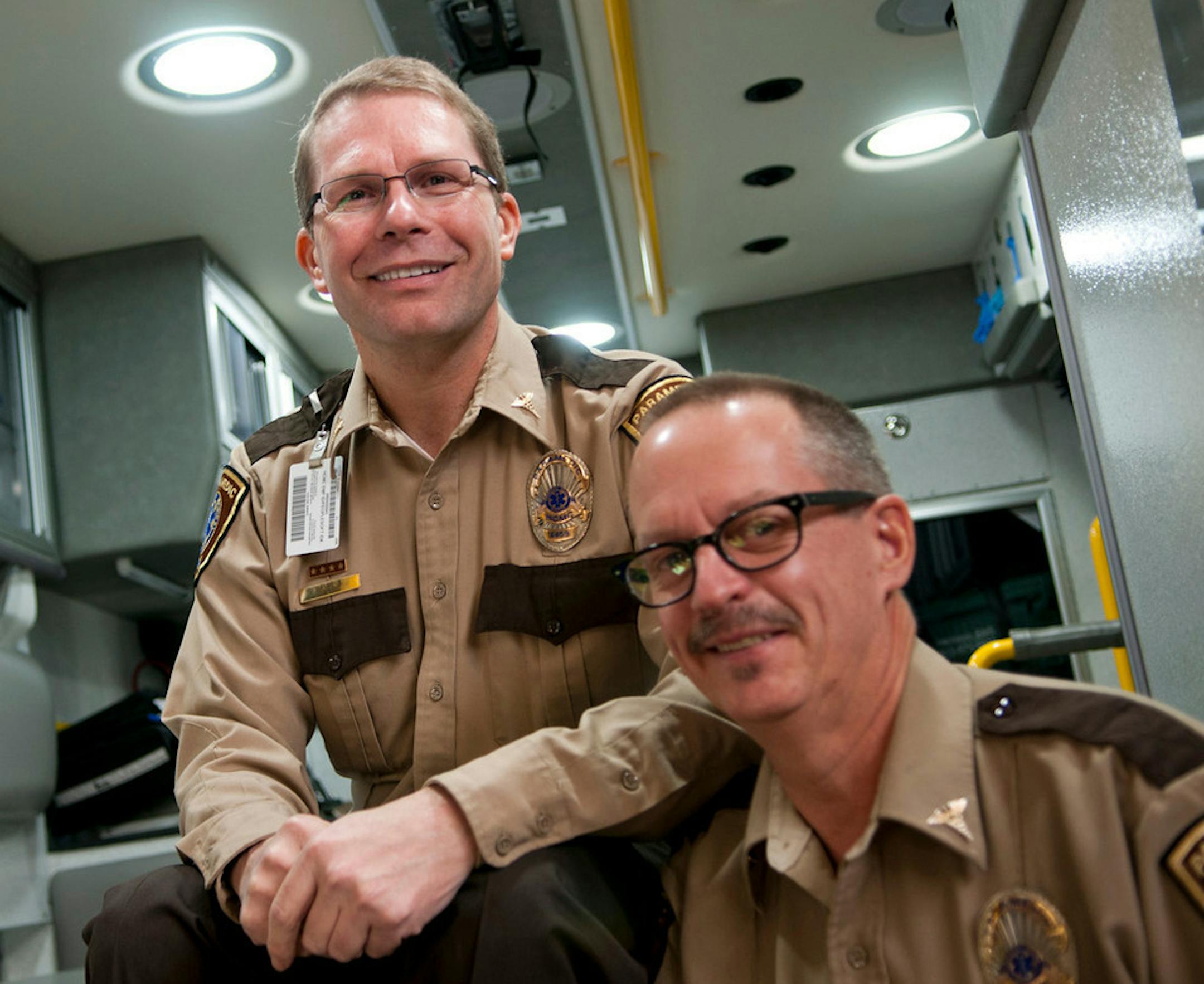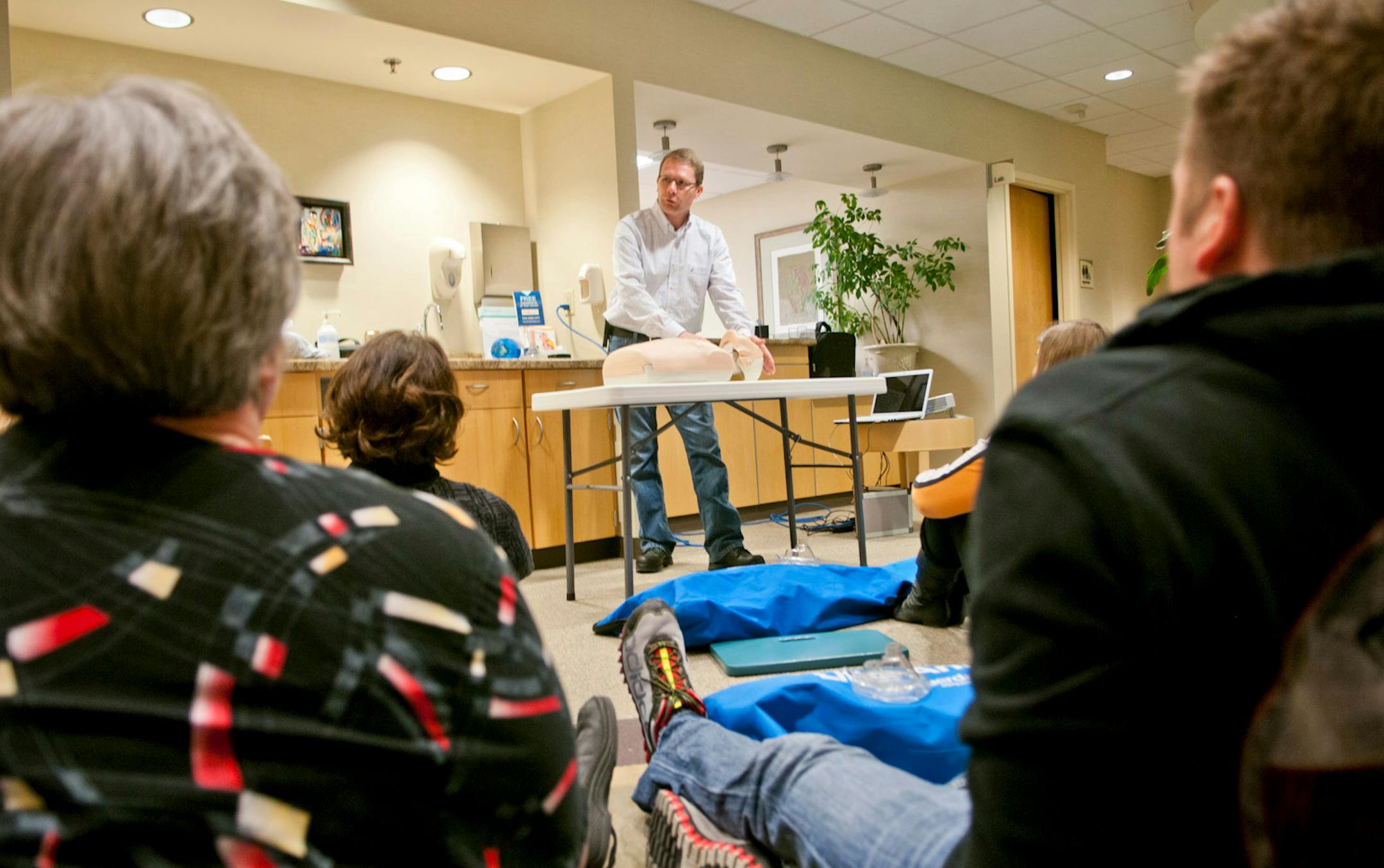
Wayne Schneider estimates that since 1986 he has taught 100,000 people how to perform CPR. Little did he know that one day he would be the one whose life depended on that knowledge.
Schneider, a paramedic for Hennepin Emergency Medical Services, was on a recent call tending to a man who had stopped breathing when he himself went into cardiac arrest. His partner, along with several police officers, firefighters and other paramedics, administered cardiopulmonary resuscitation to Schneider for 68 minutes. The average person responds to CPR in 12 minutes, according to an analysis done last year at the University of Washington.
"This isn't about me," Schneider insisted. "This is about the people who helped me. This is about people not giving up."
Schneider said the whole experience has been a serious reminder of what paramedics call "the chain of survival." After a heart attack, the first link in the chain is bystander CPR. Schneider, who typically works night shifts, teaches civilian CPR classes during the day through his company, First Response Training. Lucky for Schneider, the bystander on that fateful night knew CPR extremely well.
Schneider and his partner Greg Booth were on duty Dec. 17 when they got the call. A man had gone into respiratory arrest at a motel in Richfield, but as they drove to the scene, Schneider started to feel strange.
"I knew something was going on, but I didn't really know what it was," said Schneider, 56. "I know the symptoms of heart attack inside and out, and I wasn't having those. So I wasn't that concerned."
They revived the patient and brought him out to the ambulance. That's when Booth noticed that Schneider was missing. He mentioned the absence to a police officer, who said he saw Schneider walking toward the front of the ambulance and figured he was going to get the usual paperwork.
Booth wasn't buying it. They'd been a team for more than two decades, responding to between 1,200 and 1,500 calls a year.