

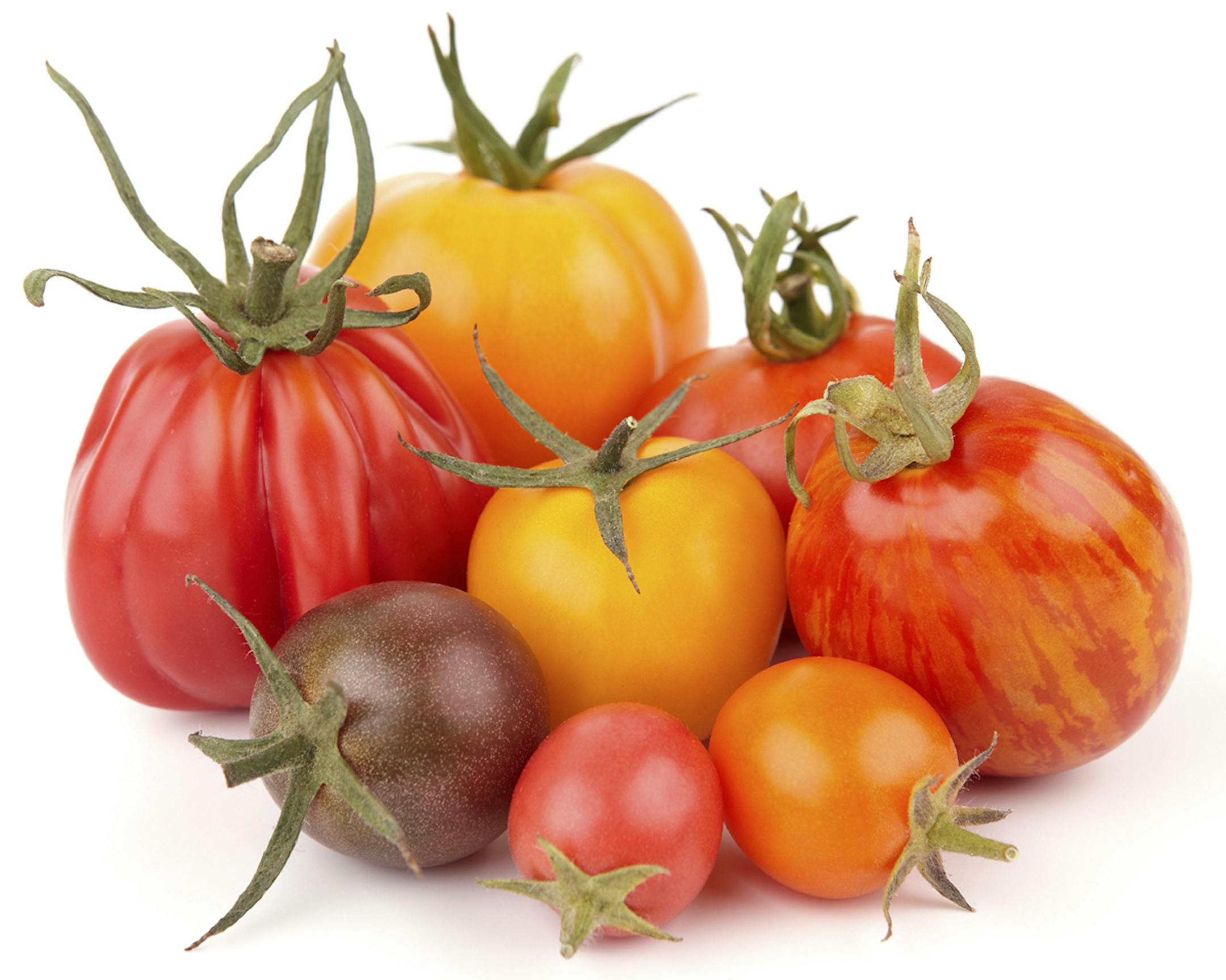
If I had a virgin plot of soil and could plant anything I wanted, I'd plant Brandywine and Pineapple tomatoes and Touchon carrots.
All three are heirloom vegetables. Heirlooms are old plant varieties that generally date from before World War II. They're usually open-pollinated, meaning they're pollinated by wind or insects, and come mostly true from seed. Gardeners could save Brandywine seeds knowing that next season, they'd be able to grow a tomato that was pretty much like the one they grew this year.
Old varieties like Brandywine began fading in popularity when plant breeders began hybridizing vegetables for better disease resistance, higher yields and fruit that didn't rot, bruise or tear during shipping. Hybrid does not mean genetically modified; it means people purposefully chose the parent plants to create a new plant with the characteristics they wanted.
But sometimes flavor fades when a tomato is bred for tougher skin or disease resistance. And a plant developed at a university, great though it may be, can't compete with the story of tomato seeds that came from Russia stuffed in the pocket of an immigrant.
In the 1970s, people began worrying about ebbing biodiversity and the disappearance of old plant varieties. A couple from Missouri founded Seed Savers Exchange (seedsavers.org). Now located in Decorah, Iowa, Seed Savers keeps a seed bank of more than 20,000 varieties of open-pollinated and heirloom plants.
Minnesota connections
Among their seed offerings is Minnesota Midget, a superb little melon that was developed at the University of Minnesota in 1948. Years ago, I grew this softball-sized melon in North Dakota, and was thrilled to get a bumper crop of fast-maturing sweet fruit.
Other seeds with Minnesota connections include the Swenson Swedish Pea, brought by an immigrant to Clinton, Minn., in the 1870s, and the Kanner Hoell tomato, originally from Germany.
A gardener can go dizzy with the variety that heirlooms offer. Tomatoes come in a rainbow of colors from purple and near-black to yellow and striped. Some have cores that look nearly fluorescent in their bright magentas and yellows. Beans and squash come in all kinds of crazy shapes and hues. Heirlooms are a window into the astounding variety of the plant world, and growing them takes a gardener off the boring beaten path into a different world.


