

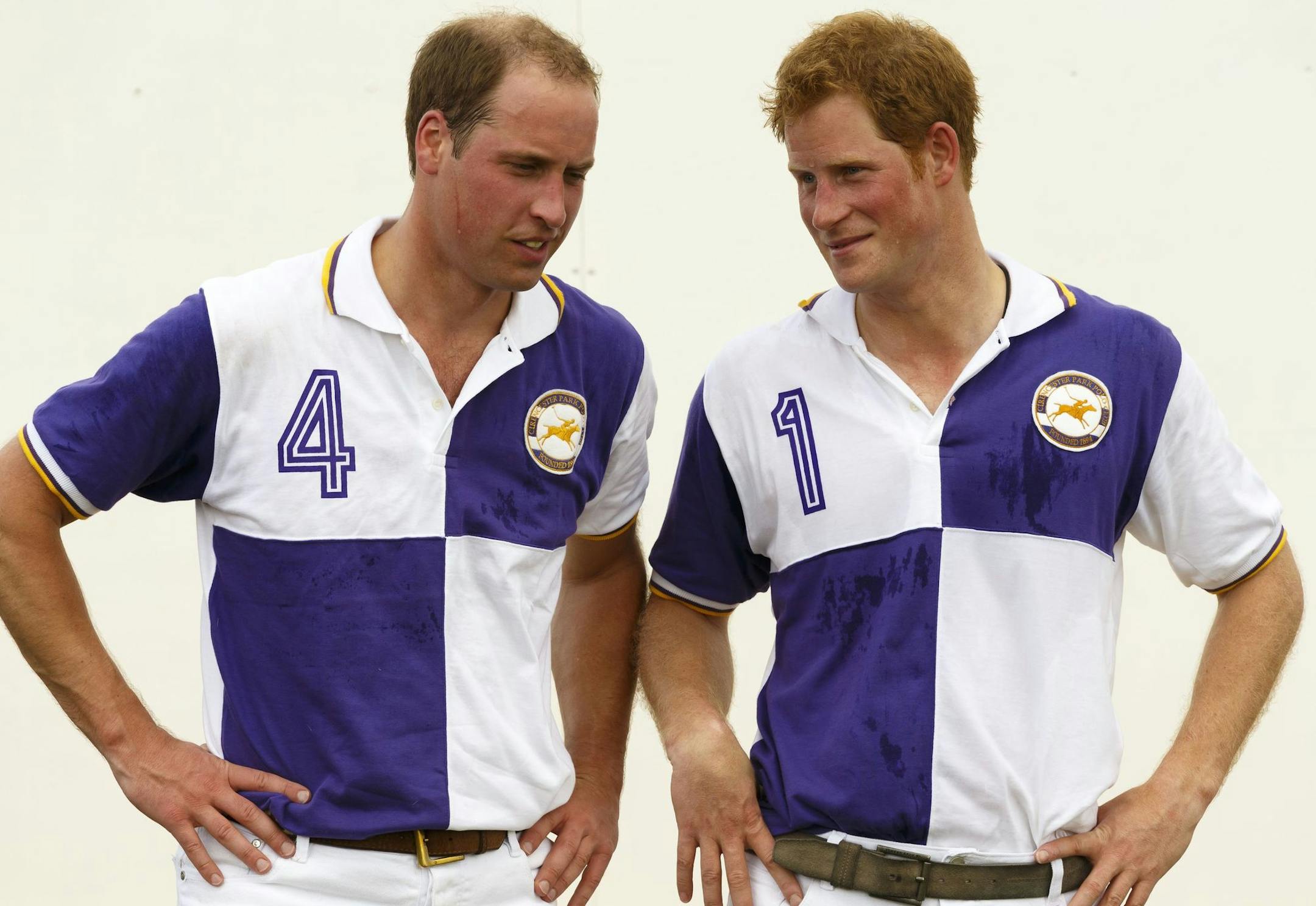
One interesting thing about the British royal family is the power of a still-wrinkled baby to render his swashbuckling, helicopter-piloting uncle somewhat superfluous.
Entering the world with such fanfare, Prince George Alexander Louis of Cambridge has just knocked red-haired Prince Harry, the younger brother to Prince William, a very big step back in the line of succession, from third to fourth. And Harry will continue to backpedal away from the crown if proud dad William and Duchess Kate decide to have more little Cambridges.
Or "spares," as they are called in the palaces.
In the old days, these extras were a bit more important than today. That was back when the royal cousins and such crowded into the wings of the court, keeping sharp objects about their persons, when princes could disappear in the Tower of London and when brood queens found their necks on the block for failing to produce a male heir.
It was wise then to keep an eye on all those Shrewsburys, Mortimers and Seymours. Today the biggest threat seems to be disloyal butlers, phone tappers and paparazzi.
Monarchs are hardly born every day, which explains the journalistic excitement about the royal wee one.
But as Charles, Prince of Wales, might advise the new grandson: Don't get the royal nappies in a twist. Being born near the throne doesn't mean you'll sit on it anytime soon. As Elizabeth's oldest child at 64, he has waited longer than anyone in English history for the crown to be plopped on his head, Charles is very much aware of the longevity gene of the House of Windsor — his mother is 87 and seems uninterested in abdicating her waving spot on the balcony; her mother made it to 102.
Think about this. If William, now 31, becomes king and lives as long as his grandmother, it might be 2069 before his son's coronation.


