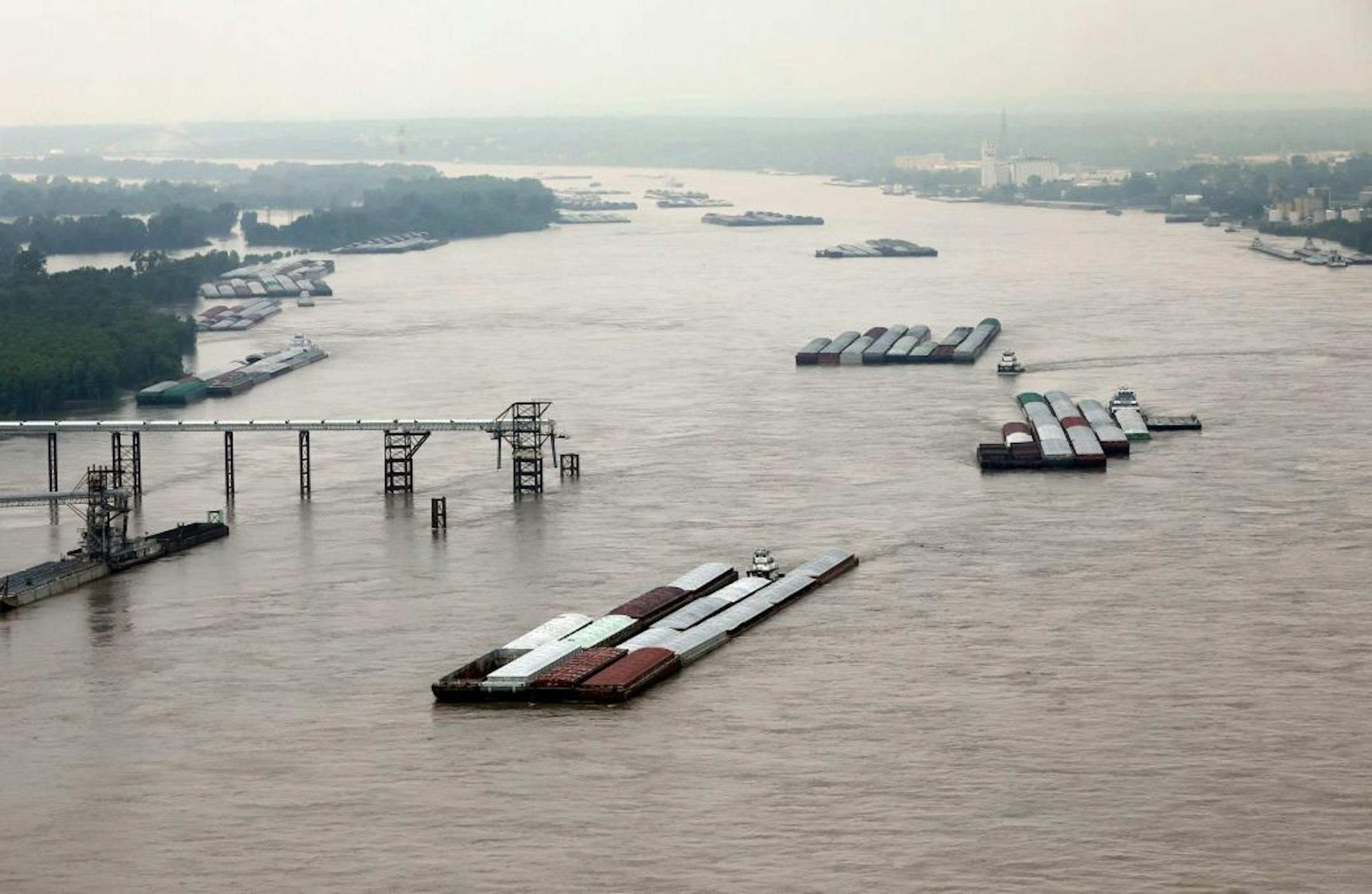
Hundreds of barges are stalled on the Mississippi River, clogging the main circulatory system for a Farm Belt economy battered by a relentless, record-setting string of snow, rainstorms and flooding.
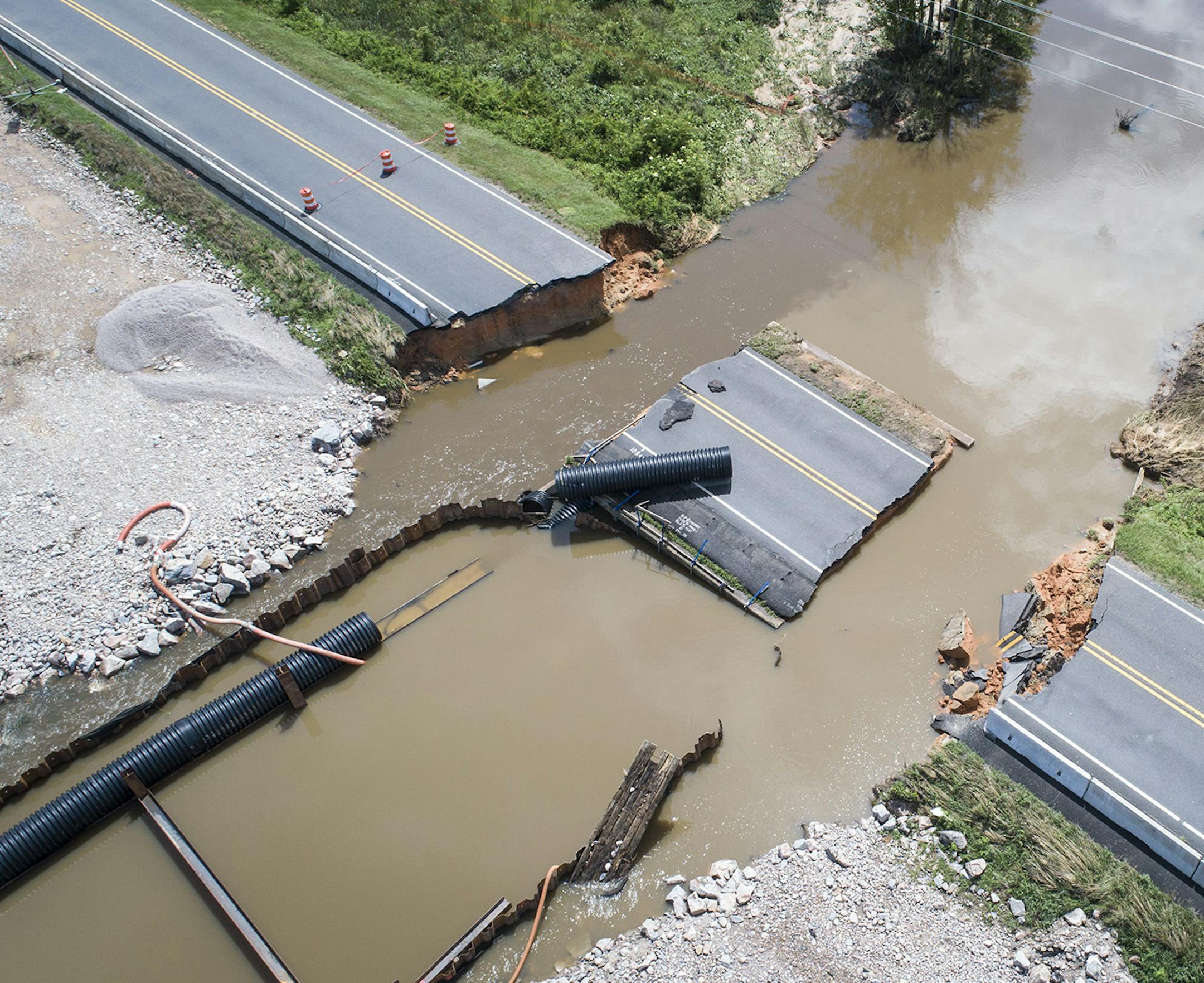
Railways and highways have been closed as well, keeping needed supplies from farmers and others and limiting the crops sent to market.
At just two locks along the upper Mississippi, nearly 300 barges are being held in place as a result of high water and fast currents, according to Waterways Council Inc., which tracks barge movements. And hundreds more are waiting in St. Louis, Cairo, Ill., and Memphis, Tenn., said Deb Calhoun, the council's senior vice president. "It's a big bottleneck," she said.
The contiguous U.S. had its wettest January to May on record dating back to 1895, according to the U.S. National Centers for Environmental Information in Asheville, N.C. Nebraska, Kansas and Missouri had their rainiest May on record, the center's data show, while Arkansas, Oklahoma, South Dakota, Wisconsin and Illinois were all in the top 10.
While the rain will ease in the next few days across the central U.S., the deluge will get started again next week, Don Keeney, senior agricultural meteorologist at Maxar in Gaithersburg, Md., said in a telephone interview.
As of Monday, 203 points along U.S. rivers were at flood stage, the majority of those on the Mississippi, Arkansas and Missouri rivers and their tributaries, according to the National Weather Service. The Mississippi at Baton Rouge, La., is forecast to rise about another foot this week, within less than 2 feet of its record crest in 1927.
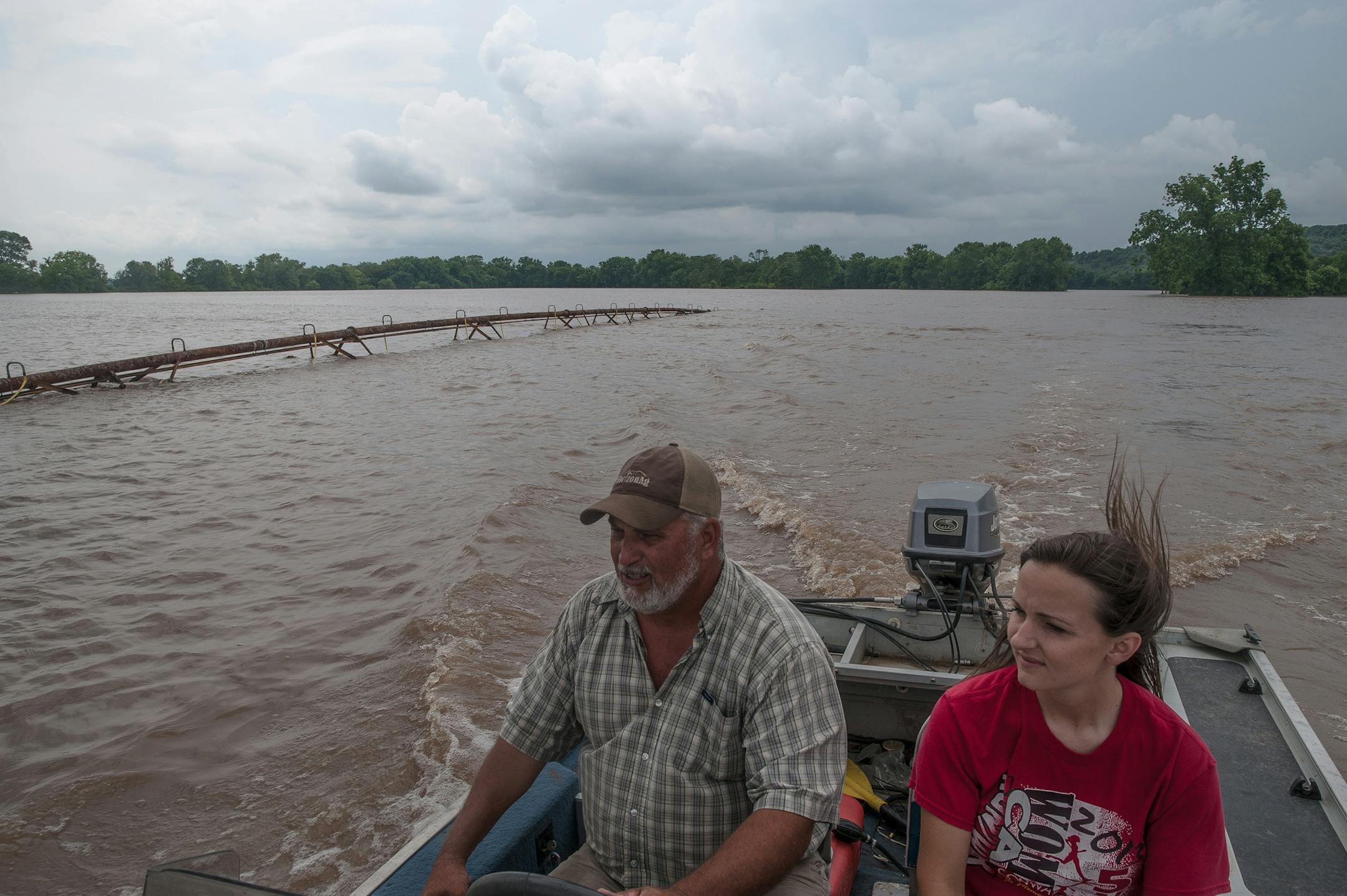
While high waters stop barge traffic, they also carry other dangers. Floodwaters have closed off interstates and water itself. That overwhelms farm fields, sewer and septic systems and industrial plants along its banks, which can become toxic as water flows away from the river beds.
"We dealt with a wet fall and then record snowfall in many places," said Tim Eagleton, senior engineering specialist for FM Global, an industrial insurer. "Of course, all that melts and comes down the Mississippi. Not only that, but we have had 200%-plus rainfall over a large part of that basin for months, and then a record-wet May in a lot of places."