Gov. Tim Walz and the Republicans who control the Minnesota Senate are hurtling toward a big dollar showdown over dueling health care proposals to reshape the state's insurance markets and check the rising cost of prescription drugs.
For Walz and House Democrats, the most pressing issue is a 2 percent tax on health care providers that expires at the end of the year, leading to the potential loss of hundreds of millions of dollars for health programs, including Medical Assistance for low income and disabled people and MinnesotaCare for the working poor.
Republicans, on the other hand, are focused on re-upping an important subsidy for health insurance companies that has driven down premiums for the 160,000 Minnesotans who buy their insurance on the open market.
The debate is further complicated by President Donald Trump's renewed push to kill the Affordable Care Act, which guarantees consumers can buy health insurance even if they have pre-existing conditions. Minnesota health programs would be further jeopardized if the law is overturned.
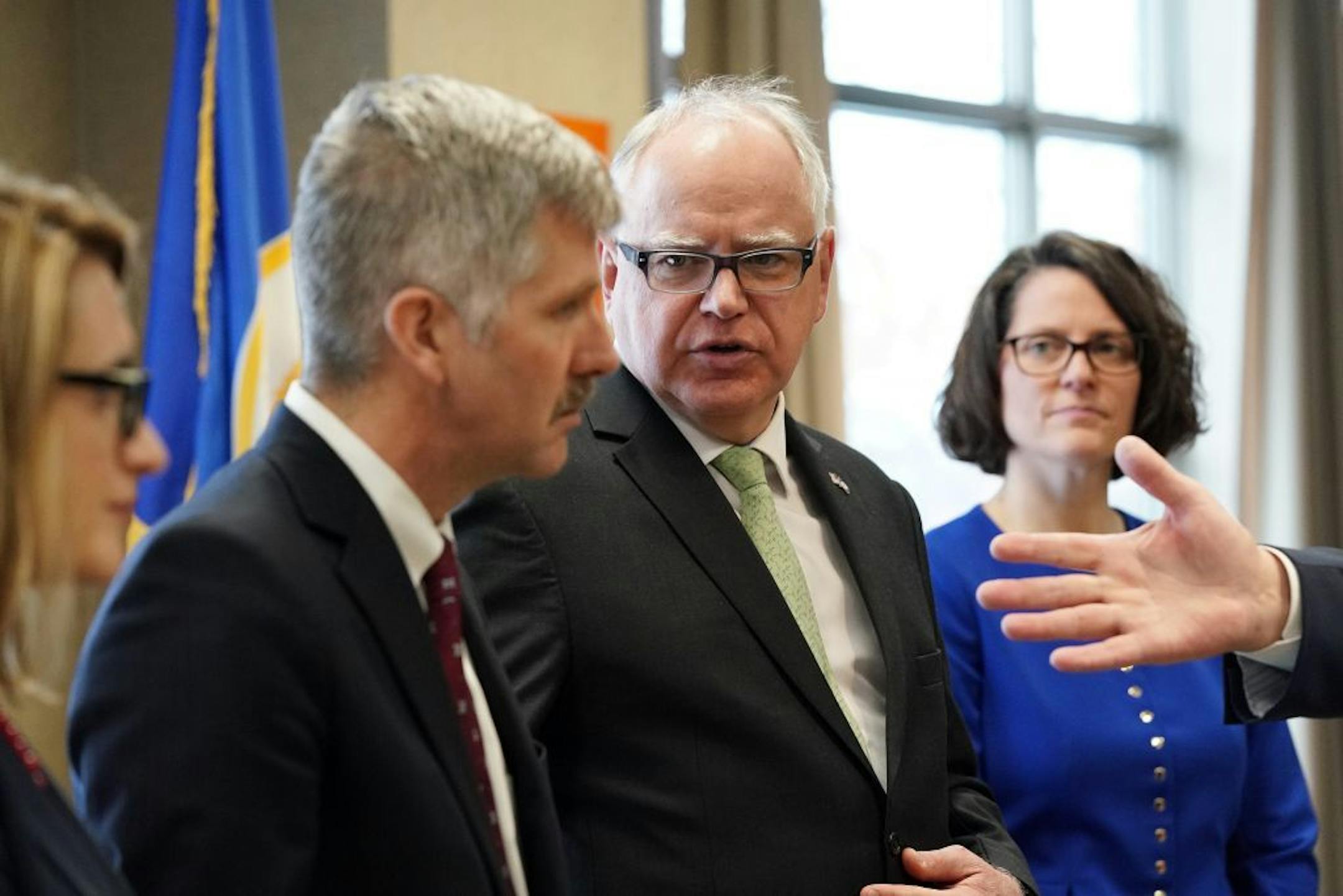
"Having an unreliable federal partner puts the responsibility back on the government of Minnesota," Walz said during a health care roundtable last week. "My first responsibility is to the protection of the health of the citizens of Minnesota."
As lawmakers face off, Minnesotans have flocked to the State Capitol to share personal stories about teetering on the brink of financial and physical ruin, either for lack of reliable insurance, rising drug costs, or both.
The stakes are high for Walz and the new Democratic majority in the Minnesota House, who ran on protecting access to quality care and curbing out-of-pocket costs. Republicans in the Minnesota Senate also are nervously looking ahead to 2020, when several senators will face difficult re-election campaigns after a 2018 election where Democrats used health care to deliver an electoral drubbing to the GOP.
"Health care costs have been identified over and over again as the big issue" for voters, said state Sen. Scott Jensen, R-Chaska, a physician active in the health policy debate. "I think both the House and the Senate are following up on that."