

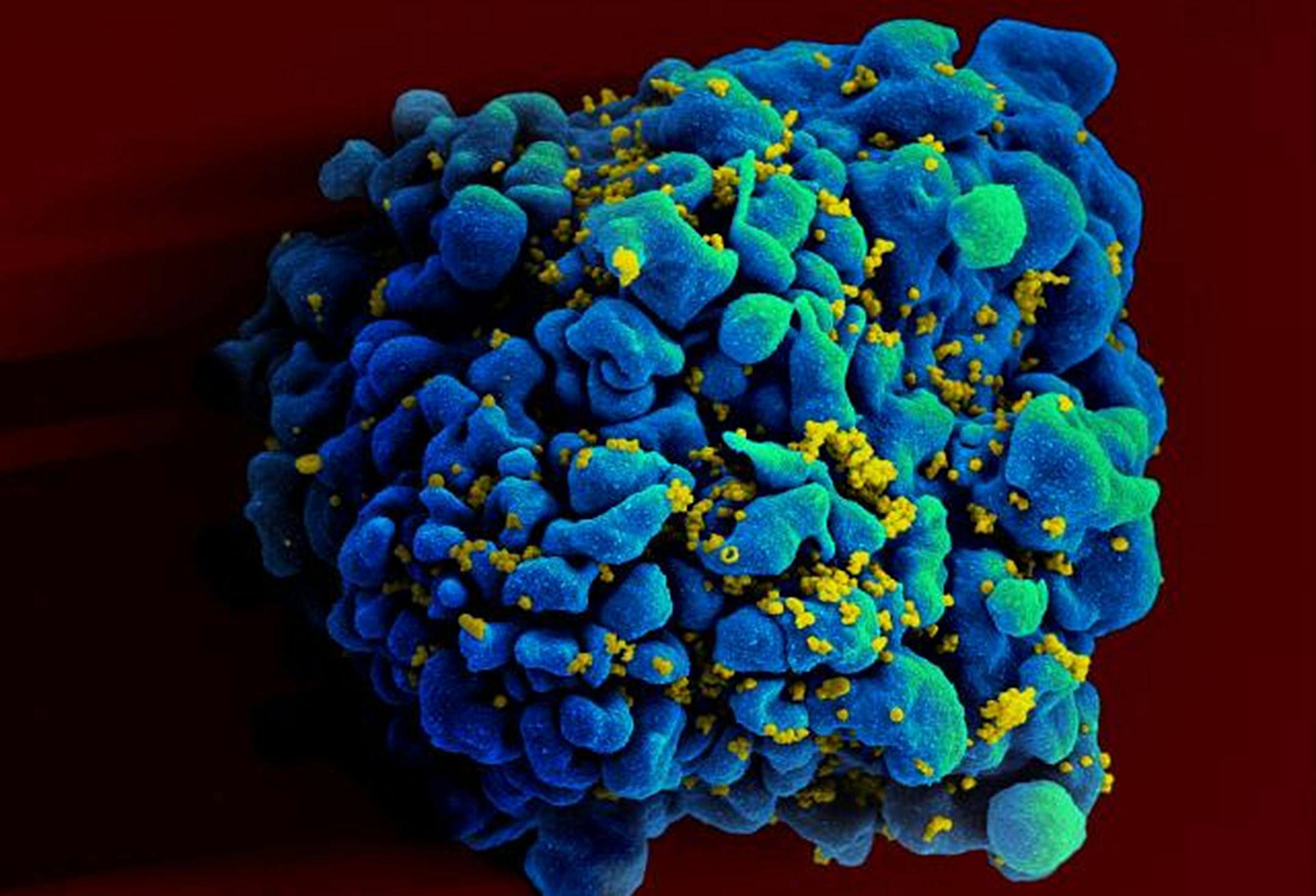
Advance in search for HIV vaccine
Small advancements make big waves in the decades-long search for an HIV vaccine, and University of Miami researchers are optimistic that their latest findings are significant: They have developed a vaccine that triggers an immune system response strong enough to kill a model AIDS virus in mice.
The vaccine is still in the early stages, said Geoffrey W. Stone, an assistant professor of microbiology and immunology who led the research study published in the Journal of Virology. "But in those modest beginnings, we have had some very dramatic results."
The vaccine developed by Stone and his team can prevent mice from becoming infected with HIV, he said, by targeting a specific receptor in the immune system to trigger a significant T-cell response to the virus.
The receptor is called CD40, and the vaccine uses a form of the receptor's natural binding protein to enable the immune system's dendritic cells to signal the presence of HIV. "We're trying to get a magic bullet," Stone said, "that can bring information about HIV to dendritic cells."
Unlike standard vaccines, which use untargeted antigen to generate an immune response, this approach attaches an HIV antigen to the binding protein, which then generates the better immune response. The next step is trials on larger animals.
Blood Pressure as sign of heart risk
It may be a good idea to get a blood pressure reading in both arms rather than just one. A difference in those readings, a new study suggests, is an independent risk factor for heart disease.
Using data from a health study, researchers examined 3,390 people 40 or older who were free of cardiovascular disease, following them for more than 13 years. During the study period, 598 participants had a first heart attack, stroke or other cardiovascular problems. More than a quarter of those had a difference in systolic blood pressure, the upper number in a blood pressure reading (which is measured in millimeters of mercury), of 10 or greater between one arm and the other.
The study, in the American Journal of Medicine, found that a difference of 10 or more between the two readings increased the risk for a cardiac event by about 38 percent. The increase was independent of age, cholesterol, body mass index, hypertension and other known risk factors.


