

The Federal Reserve just signaled that the financial world is not going back to normal, not yet anyway.
For those too young to remember the details of interest rates and money markets before the financial crisis and Great Recession a decade ago, the old normal was that interest-bearing investments paid a meaningful amount of interest.
The 10-year Treasury note is one of those famous benchmark-interest rates, and at the end of the last economic expansion in the summer of 2007, it had a yield of about 5 percent. This week it was closer to 2.4 percent.
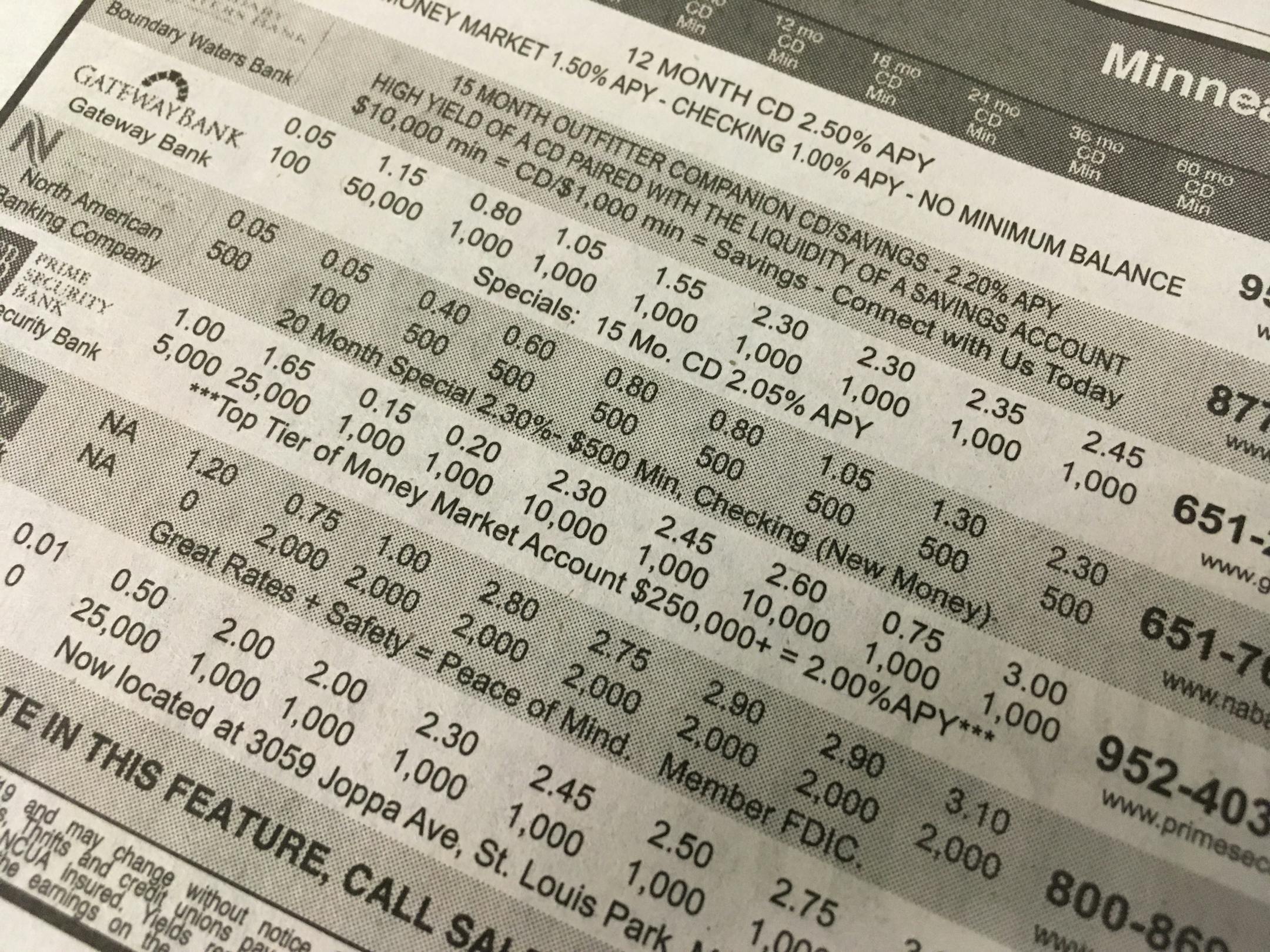
Small savers are more likely to think about banks as a place to put their money, and certificate of deposit rates on offer don't seem that enticing this week. The average rate was just over 1.5 percent for two-year CDs, according to Bankrate.com, although where this financial website found rates that high was a mystery.
CDs rates published online at a handful of brand name Minnesota banks didn't come close to that.
It's true that earning 1.5 percent beats keeping money in a Folger's coffee can in the backyard, but the real interest rate isn't what the bank pays the saver for a $10,000 CD. What's important is what the dollars buy when the CD matures, given that what things cost will probably increase in the two years that the money is put away.
To get the real rate of interest, subtract the inflation rate from the interest rate. In this example, at least, the calculation is simple, since inflation over the last 12 months was also about 1.5 percent, according to the most recent figure from the U.S. Bureau of Labor Statistics. If that inflation rate holds over the next two years, no one will need to reach for a calculator to see the real rate is about zero.
"At some point math matters," said Bryce Doty, a senior vice president and senior portfolio manager with Sit Investment Associates in Minneapolis, who also finds this new normal very odd. "Dislocations like that can persist way beyond what would seem logical or reasonable. But at some point people require some kind of return after inflation."


