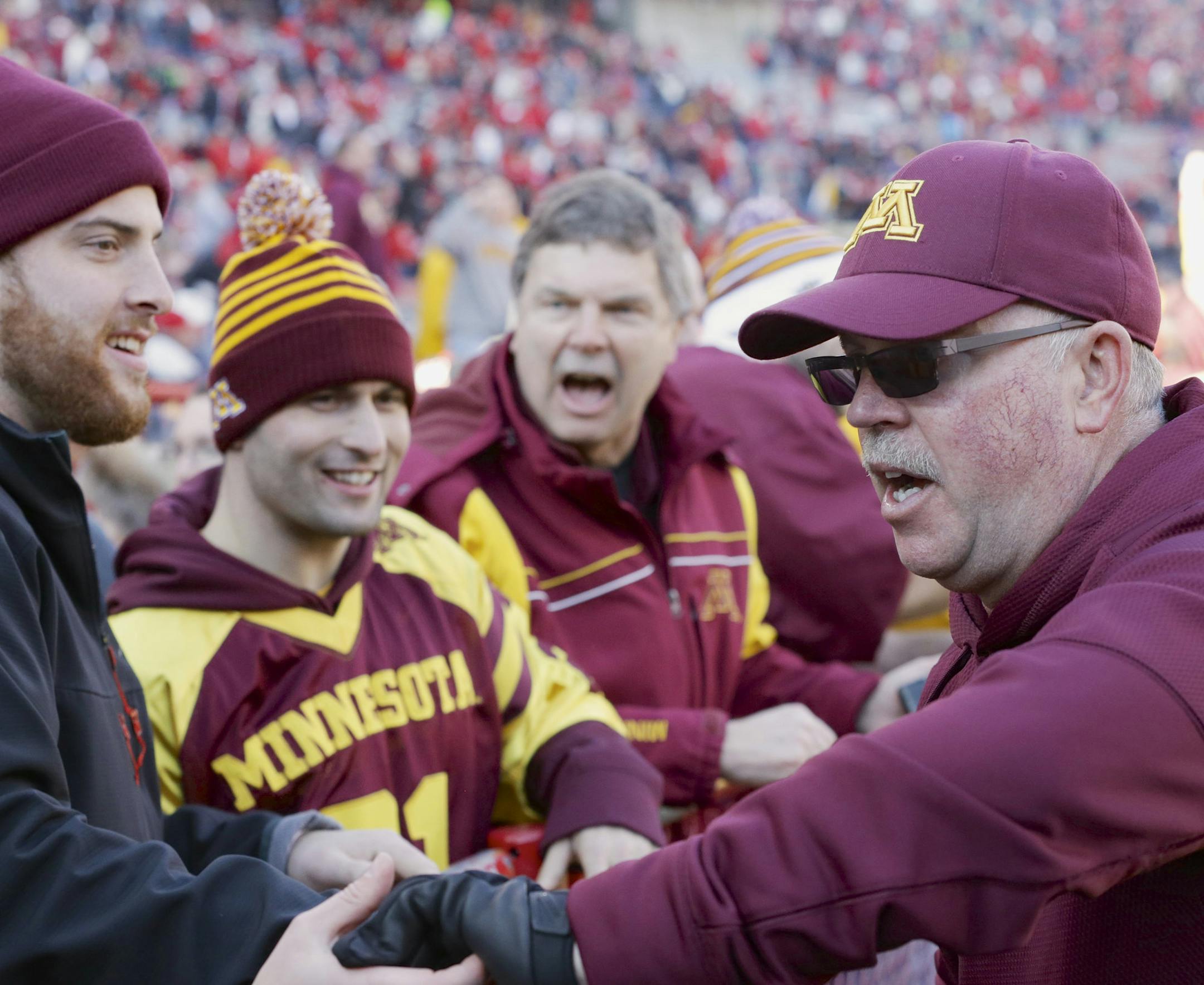
While Jerry Kill will likely remain with the Gophers next season after posting an 8-4 record, I'm sure he got some calls to find out if he was ready to move on from the program. There is no doubt in my mind that if he has another good season and a football practice facility is not a reality, there's a good chance he would accept another position.
When Kill took the Gophers coaching job in 2010 — Saturday was the four-year anniversary of his hiring — he inherited a really bad situation when it came to his roster. The number of players academically ineligible was unbelievable.
Joel Maturi, the former Gophers athletic director, was getting turned down by every top coach he approached, including Brady Hoke, the recently fired Michigan coach. The Gophers got lucky in Northern Illinois' Kill being available. And after he had been on the job for a while, there was some doubt in his mind whether he should have taken it because of the problems he faced in turning the program around.
The fact that he has turned the program around in four seasons is something that other candidates would never have accomplished.
Kill is being paid an average of $2.3 million a year on his current salary and is one of the lowest-paid coaches in the country at a major program.
For example, look at Iowa's Kirk Ferentz. He signed a 10-year contract in 2010 extension that paid him approximately $4 million this season. If he were to stay on through the end of his contract in 2020, he is due an additional $21 million.
The bonuses that Kill will receive this year will be $50,000 for being named Big Ten Coach of the Year, and another $50,000 for reaching five Big Ten victories. Those are minimal compared to what other coaches, such as Urban Meyer at Ohio State, earn for similar accomplishments. Kill will also earn $50,000 for taking the Gophers to a bowl game, and he could earn another $50,000 if the team beats an opponent from the ACC, SEC, Big 12 or Pacific-12 in that bowl game.
If the Gophers administration wants to maintain attendance with the new announcement of rising season ticket prices over the next three years, which are outlandish, they better find a way to build a football facility and compensate Kill. If Kill were to leave, he would owe the university $2.4 million, but another team would easily pay that cheap of a buyout.