
Harmon Killebrew's start to his career comes with asterisk

Sid Hartman, the GOAT of Minnesota sports writing, had a moment of heresy recently when mentioning Miguel Sano in the same sentence as Harmon Killebrew as a slugger of baseballs.

June 24, 2018 at 2:10AM
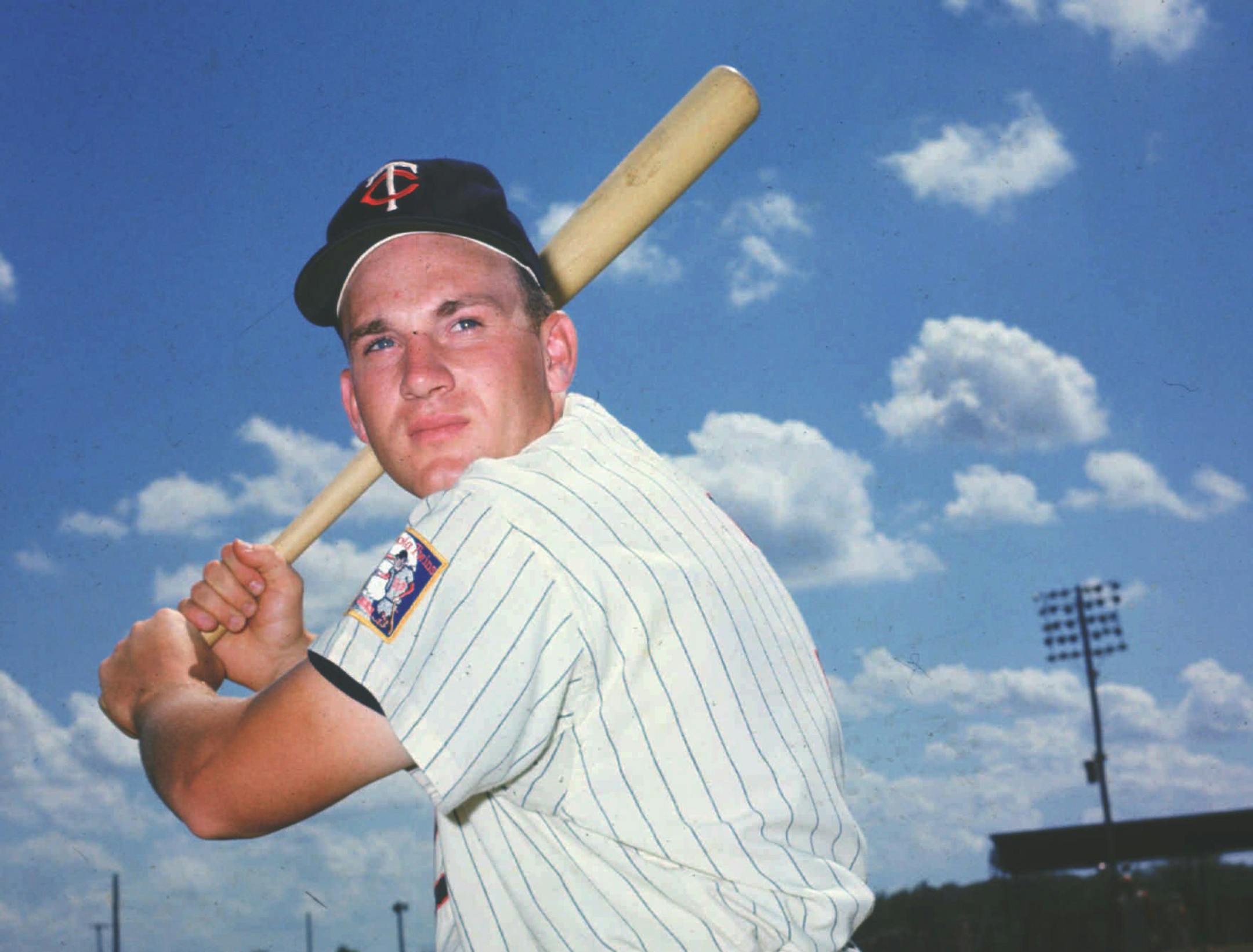
Still muscle-bound more than 20 years after retiring from baseball, Hall of Famer Harmon Killebrew, shown in this undated photo, thinks even he could join the legion of hitters jacking balls beyond stadium fences this season. ``If I was playing right now, I think I could probably hit 20 home runs,'' said Killebrew, whose 573 rank him fifth on the career list. ``I could hit more, but you got to remember I'm 60 years old.'' (AP Photo) ORG XMIT: NY176 ORG XMIT: MIN1406132333030454 ORG XMIT: MIN1411
Still muscle-bound more than 20 years after retiring from baseball, Hall of Famer Harmon Killebrew, shown in this undated photo, thinks even he could join the legion of hitters jacking balls beyond stadium fences this season. ``If I was playing right now, I think I could probably hit 20 home runs,'' said Killebrew, whose 573 rank him fifth on the career list. ``I could hit more, but you got to remember I'm 60 years old.'' (AP Photo) ORG XMIT: NY176 ORG XMIT: MIN1406132333030454 ORG XMIT: MIN1411261451111843 (Mike Nelson/The Minnesota Star Tribune)

Sid Hartman, the GOAT of Minnesota sports writing, had a moment of heresy recently when mentioning Miguel Sano in the same sentence as Harmon Killebrew as a slugger of baseballs.

Impressive though it was for Sid to pour through Baseball Reference to come up with a 343-game comparison that showed Miguel producing at a greater clip than did Killebrew, there was a possible distortion:

Sano was 22 and had played four minor league seasons when he debuted for the Twins on July 2, 2015. Killebrew was six days shy of his 18th birthday and freshly graduated from high school in Payette, Idaho, when he made his debut for the Washington Senators on June 23, 1954.

Sano arrived as an everyday player. Killebrew was a victim of what stands among the dumbest actions ever taken by baseball owners, which is high praise for dumbness.

It was 1947 and the major leagues were about to be integrated by Jackie Robinson with the Brooklyn Dodgers — traumatic for many of the baseball oligarchs. There was also the issue of the Yankees and others offering substantial bonus money to sign coveted players.

The low-spending teams passed the "Bonus Baby'' rule: Any player that received $4,000 or more to sign had to go immediately to the big-league club and spend two full seasons there.

The Senators found Killebrew in a small town in Idaho, signed him for a $30,000 bonus June 20, 1954, and three days later, he was pinch-running for Clyde Vollmer in a game at Chicago's Comiskey Park.

That was the Senators' 63rd game. He didn't have his first at-bat until Game 111 on Aug. 18. He didn't start until Aug. 23, playing second base and going 3-for-4 with two RBI in a 10-3 victory at Philadelphia.

ADVERTISEMENT

Killebrew had to stay on the roster until June 22, 1956. At that point, he had appeared in 81 games with 192 at-bats, rather than the 325 games and 1,300-plus at-bats he could have been compiling as a teenager developing in the minors.

Sid, you're the man, you're the GOAT, but I must reject the Miguel/Harmon comparison.

PLUS THREE

More "Bonus Baby'' notes:

• Ohio State's Vic Janowicz, the 1950 Heisman Trophy winner, signed for $25,000 as a catcher with the Pirates. Minnesota's Paul Giel, the 1953 Heisman runner-up, signed for $60,000 with the Giants (then in New York).

• Other Gophers Bonus Babies: Shortstop Jerry Kindall, $50,000 from the Cubs in 1956; George Thomas, $25,000 from the Tigers in 1957.

• Al Kaline signed for a $35,000 bonus as an 18-year-old with Detroit in June 1953. He never played in the minors and was 20 when he hit .340 to win the AL batting title in 1955.

about the writer

about the writer

Patrick Reusse

Columnist

Patrick Reusse is a sports columnist who writes three columns per week.

See Moreicon

More from Twins

See More
card image
Aaron Lavinsky/The Minnesota Star Tribune

FanGraphs and ESPN view the Twins roster as one that is flawed, but currently projected to win around 80 games.

card image
card image