

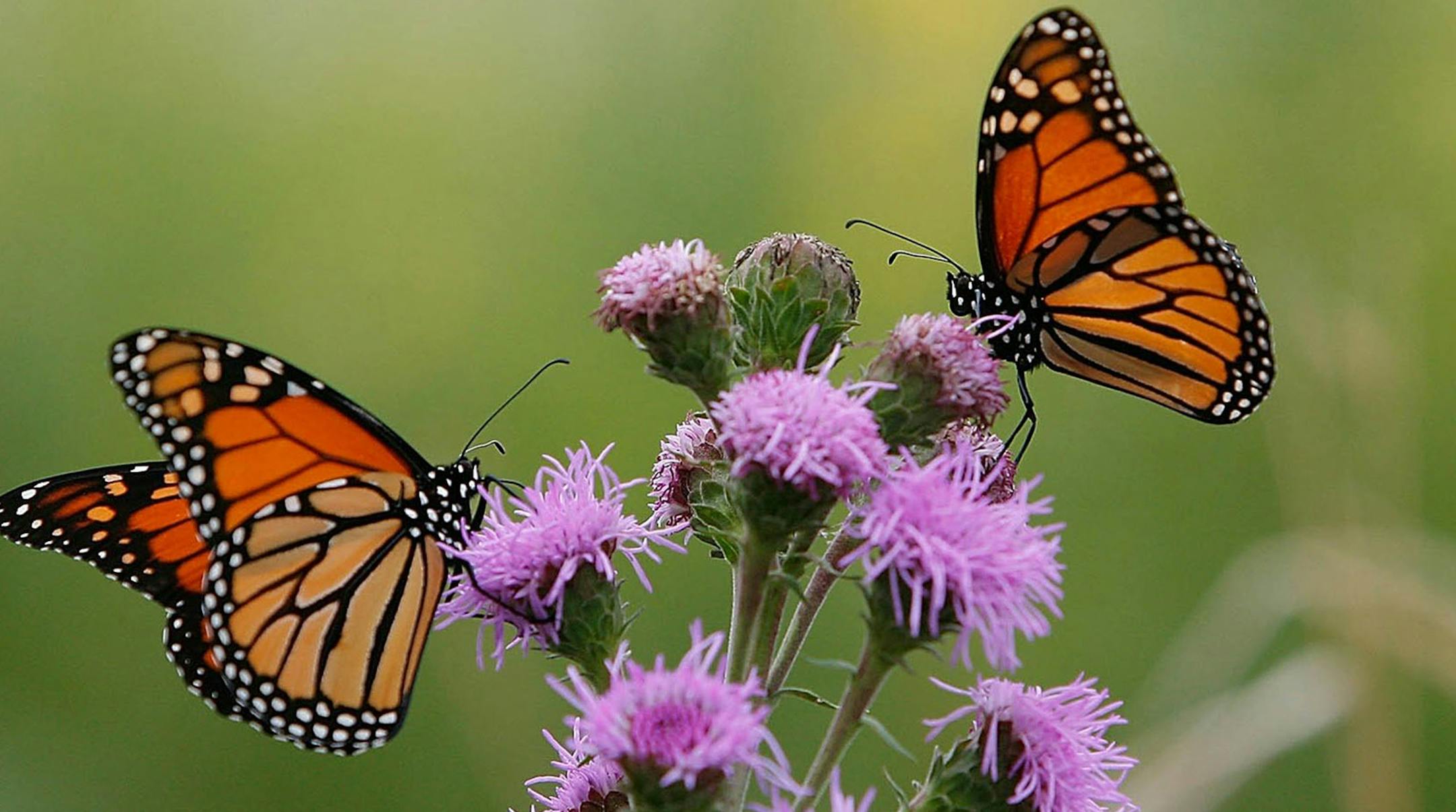
WASHINGTON – A coalition of environmental and food-safety groups is asking the Fish and Wildlife Service to grant endangered species protection to the monarch butterfly, whose U.S. population fell last year to 90 percent below its 20-year average.
In a petition asking for the designation, which would allow the federal government to more aggressively protect the butterfly and its habitat, the petitioners blamed Monsanto Co.'s Roundup herbicide and Roundup Ready crops for much of the decline.
They called it a "uniquely potent killer of milkweed, the monarch caterpillar's only food." The statement said that the "butterfly's dramatic decline is being driven by the widespread planting of genetically engineered crops in the Midwest where most monarchs are born."
In an e-mailed response, Monsanto spokeswoman Charla Lord said: "Scientists think a number of interrelated factors are contributing to the decline and year-to-year variation of monarch butterfly populations. While weather events (snowfall and frost) at mountaintop overwintering sites and logging in Mexico continue to be factors, experts are also focusing on agricultural practices and land use changes that have reduced milkweeds along the migration path in central regions of North America."
She said Monsanto would help "restore habitat that supports the monarch migration."
Environmental and food-safety groups say that the butterfly's population has fallen from a high of 1 billion in the mid-1990s to about 35 million last year, and that that number is only about a tenth of the 20-year average. The monarch is also threatened by climate change, drought and heat waves, urban sprawl and logging on their wintering grounds in Mexico, the petitioners said.
St. Louis Post-Dispatch


