Plate after plate arrived at my table from a stylish kitchen called Tishreen: beautiful salads of tabbouleh, fresh greens tossed with honeyed walnuts, a pizza of grilled onions and tender chicken pulled from a mosaic-tiled wood oven. I couldn't help but think that I could be in San Francisco. Or New York City. Instead, I was in Nazareth — Jesus' hometown.
Most visitors to Israel come to revel in biblical lands, to trod paths followed by Jesus or Abraham, to witness the glorious heart of so much history. Few give much thought to the food. But while I was there last winter to experience all the country had to offer, I was surprised to find gourmet meals and wine tasting rooms that were, well, divine.
Travel advisories were less than glowing when I arrived in the politically upheaved country (see the sidebar for information on the State Department's most recent travel warning), but it hardly felt conflicted during the sunshine-filled morning I visited Ein Karem. In biblical days, this place was a small country village "in the hill country of Judah." Today, it's more like an upscale Jerusalem suburb, filled with artists' galleries, sidewalk cafes and a music center.
John the Baptist was born here, and besides its churches named after him, the area is famous for Mary's Spring, the one where Mary was said to have drawn water while visiting her cousin Elisabeth. These days, I thought, the two women probably would have met at the town's chocolate shop. Or they may have chosen the beautiful brasserie a few steps down the street from the well, where my latte was served with a decorative swirl in the foam and a croissant arrived warm and fresh from the oven.
In Jerusalem, I discovered a well-made cappuccino or a good "Cup'o'Joe" (a real Israeli chain) is actually incredibly easy to find. Israel has a big coffee culture these days, nothing like the 1970s when Nescafé was the norm.
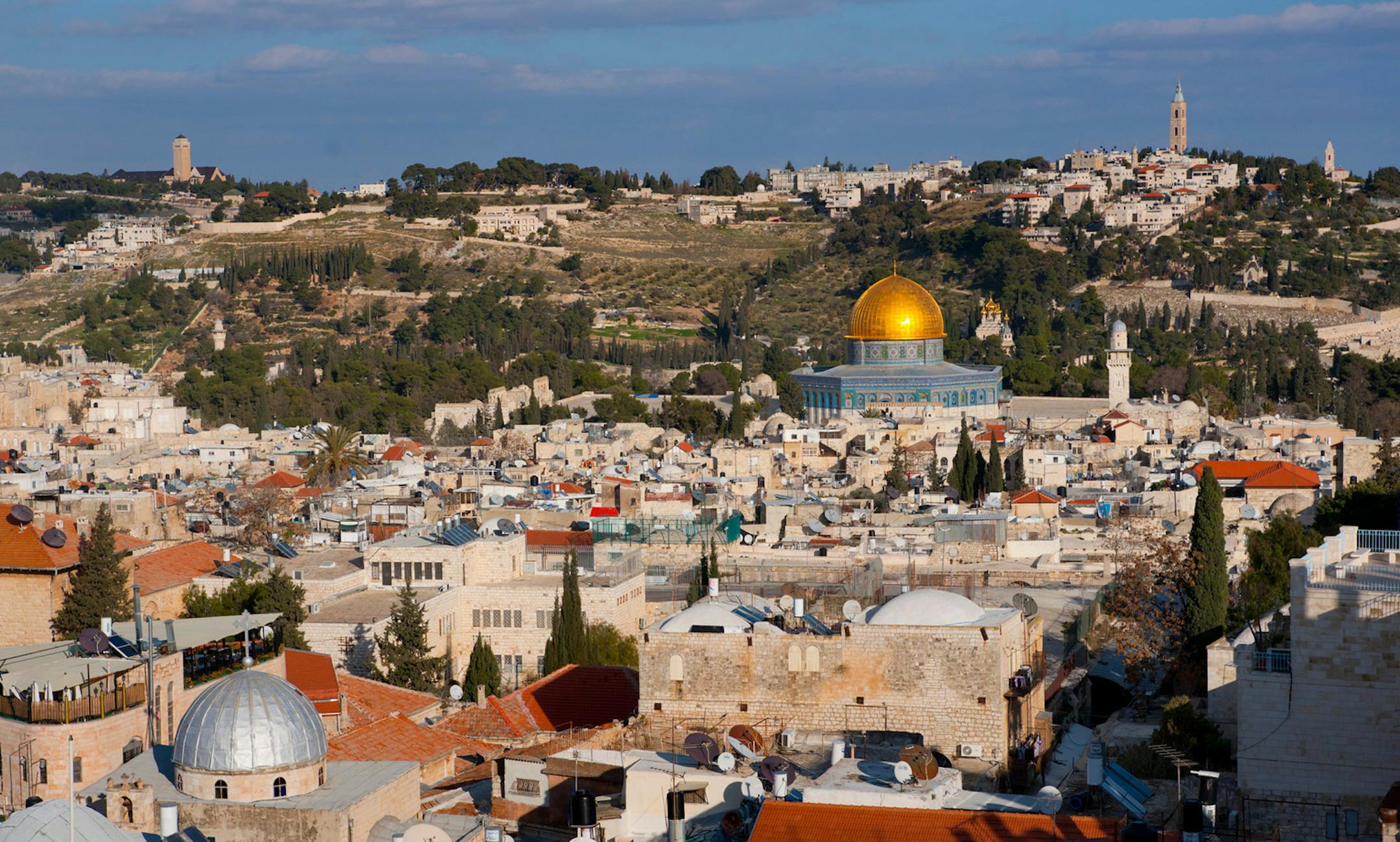
Still, not even a big dose of caffeine prepared me for the barrage of senses I encountered upon passing through one of the 16th-century gates into Jerusalem's Old City, with its kaleidoscopic warren of winding streets, tiny shops and cafes. Exotic smells, strange languages, chaotic color — while astonishing to me, it is just a part of life there.
During lunchtime, residents and tourists settled into plastic chairs at bare plywood tables. Longtime family-run places like Abu Kamel Restaurant (the word "restaurant" is used loosely) served up delicious hot falafel balls, freshly made pita, hummus and accompaniments on mismatched china.
That day I also followed the Way of the Cross to the Church of the Holy Sepulchre, visited the Western Wall, and the Temple Mount and eventually ended up back in the throbbing present of traffic and technology, outside the gates again.