

It's so painful to watch. The Twins spend a first-round draft pick on a Southern high school center fielder who is a spectacular athlete but never faced a quality breaking pitch until he started playing in the minor leagues.
The kid comes to the big leagues once, and fails, and comes up a second time, and fails, and there is no more sure way to tell that a top prospect is going to become a bust than seeing him fail a second time.
Unless it's seeing him fail a third time. Or a fourth. Or seeing him not take a big-league at-bat until five years after he was drafted. Or not become a regular until six years after he was drafted. Or not become a star until eight or nine years after he was drafted.
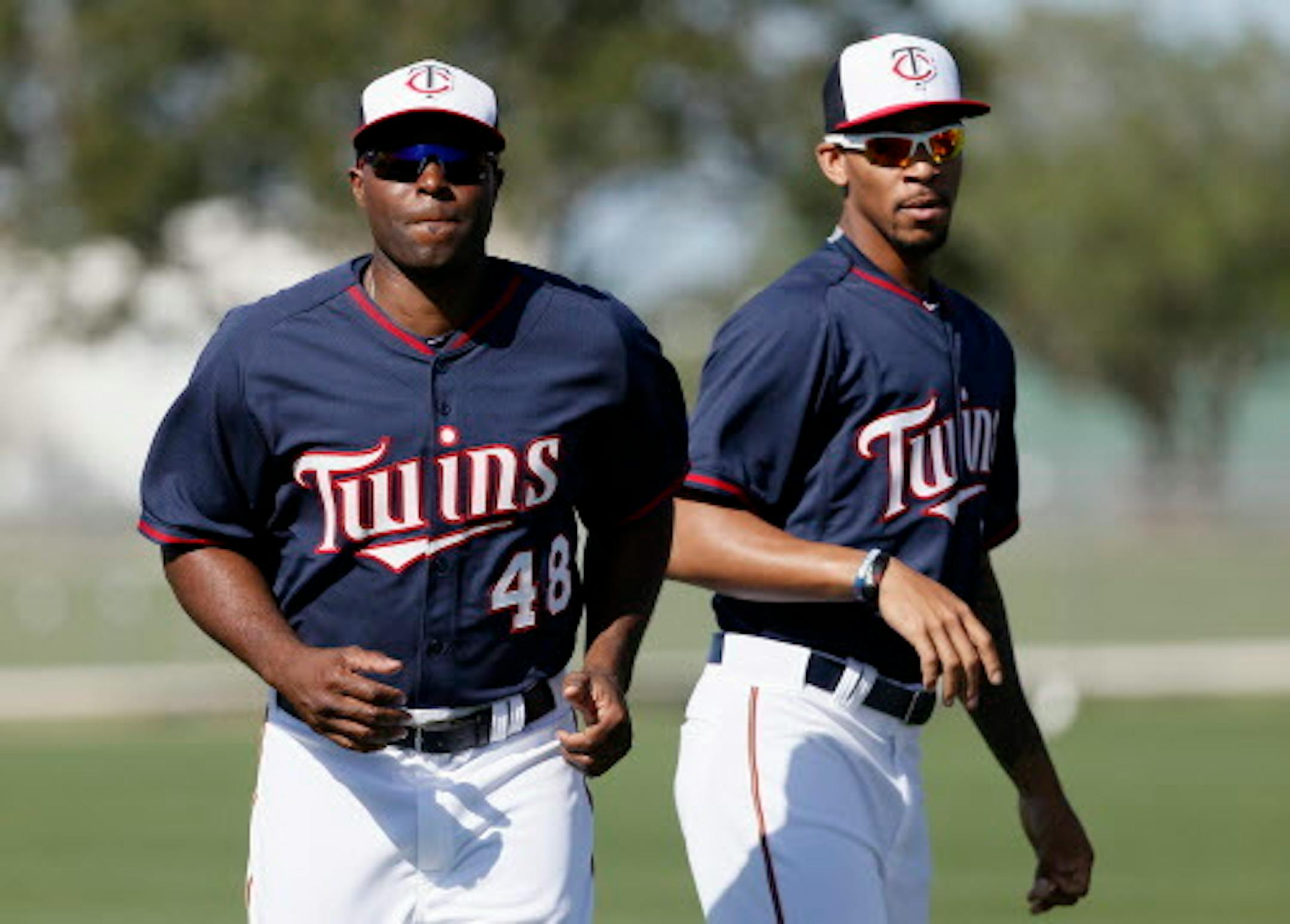
The above chronology describes not struggling Twins rookie Byron Buxton, but Torii Hunter, who is proof that any judgments made about a raw prospect early in his career can wind up looking foolish.
Hunter isn't an outlier, at least not in recent Twins history. Many of the players who made the Twins competitive throughout the 2000s earned as many frequent-flier miles as they did big-league checks in the early years of their careers.
Hunter not only failed on his first few trips to the major leagues, he never dominated minor league pitching until he was sent down during the 2000 season at age 24, seven years after the Twins drafted him.
Hunter never hit .300 in the minors or amassed an .800 OPS (a good benchmark for offensive productivity) until 2000. And he became an All-Star just about the time when most organizations would have cut him loose.
Unlike Hunter, Justin Morneau crushed minor league pitching. He was called to the majors in 2003, four years after the Twins drafted him in the third round, and hit .226. In 2004 he hit .271 with 19 homers in 280 at-bats. Certainly, he had figured out how to hit big-league pitching.


