As the world continues to shrink and bucket lists of exotic places become "been there, did that," the word Patagonia still has the capacity to excite even the most intrepid traveler. The name conjures one of the wildest regions on Earth, a place inhabited by strange creatures, with rugged terrain and mercurial weather. A wilderness of mountains, steppes, glaciers and lakes, Patagonia lies at the end of the Andes in southern Chile and Argentina, covering an area the size of Texas. It has become more accessible, but no less mystical.
Explorer Ferdinand Magellan called it Patagon, meaning "giant," because of the tall natives his expedition encountered. As seamen recounted the tale, the natives grew taller until it was considered fact that the region was inhabited by 12-foot-tall savages. The "giant" myth was not debunked until 250 years later, in the 1800s.
In the 1950s, Chile took steps to protect exceptional areas of Patagonia, giving rise to the Torres del Paine National Park — 600,000 acres now recognized as a UNESCO World Biosphere Reserve.
It's a four-hour flight from Santiago, Chile, south to Punta Arenas, and almost three hours by road to Puerto Natales, the nearest town to Torres del Paine. Visitors from all over the world arrive in this simple fishing village. From October though April (spring and summer in the Southern Hemisphere), there's a babble of mixed languages in the narrow streets, small restaurants and modest inns. Excitement is in the air, and a pulse-quickening anticipation. Strangers grin at each other, as if recognizing members of a secret fraternity.
After a night in one of the town's small hotels, my tour group of 10 piled into a van for the 72-mile drive into the park — most of it on dusty gravel roads that dictate a leisurely pace. In the flower-speckled fields, gauchos and their dogs trailed a flock of sheep. We stopped to explore the Milodon Cave, where a giant prehistoric sloth was discovered in the late 1800s, causing a stir akin to finding the Abominable Snowman. In the grotto is a life-size statue of the 12-foot-tall critter, standing on its back legs. Maybe there was something to that "giant" legend.
Hiking amid guanacos
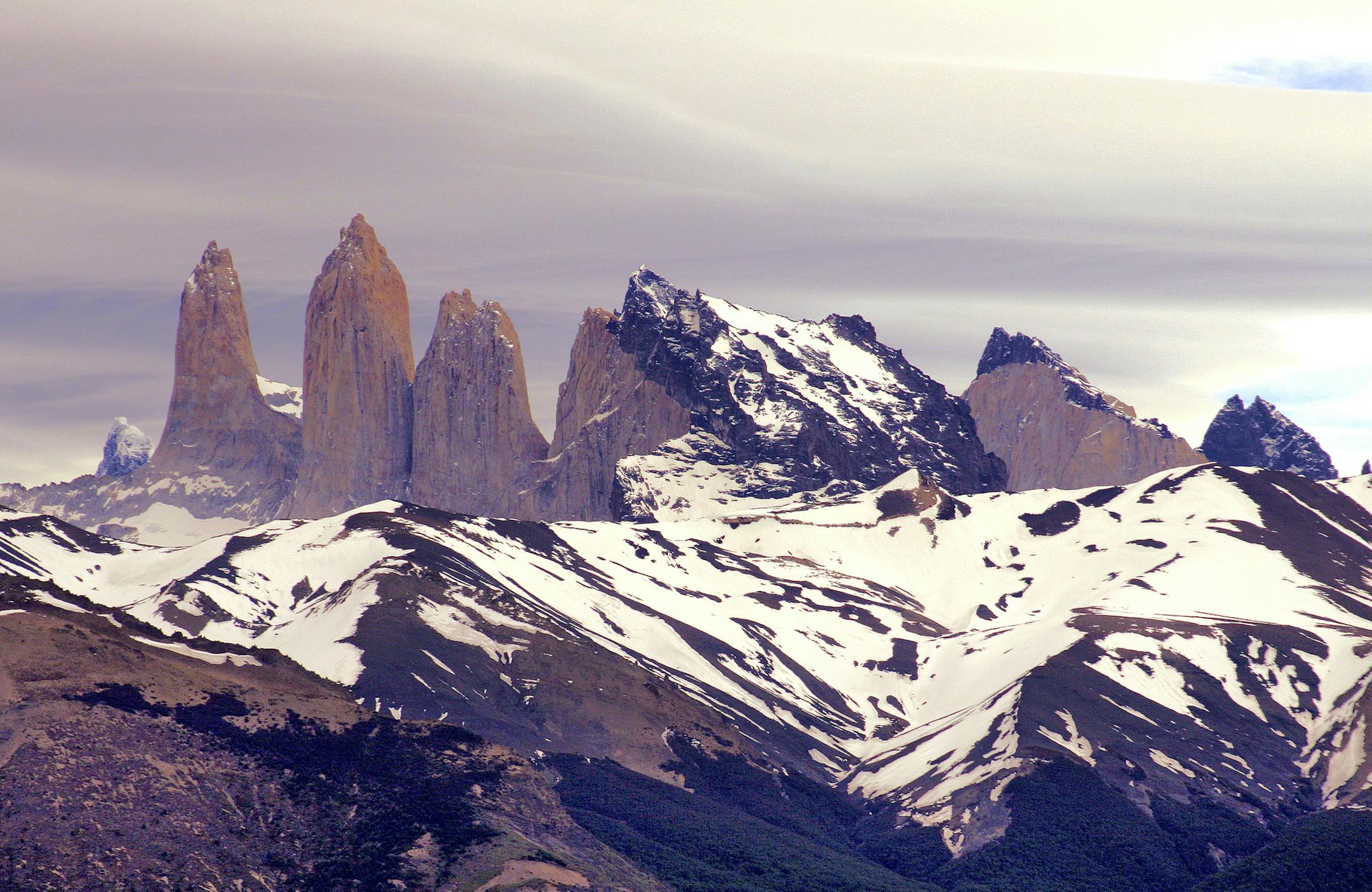
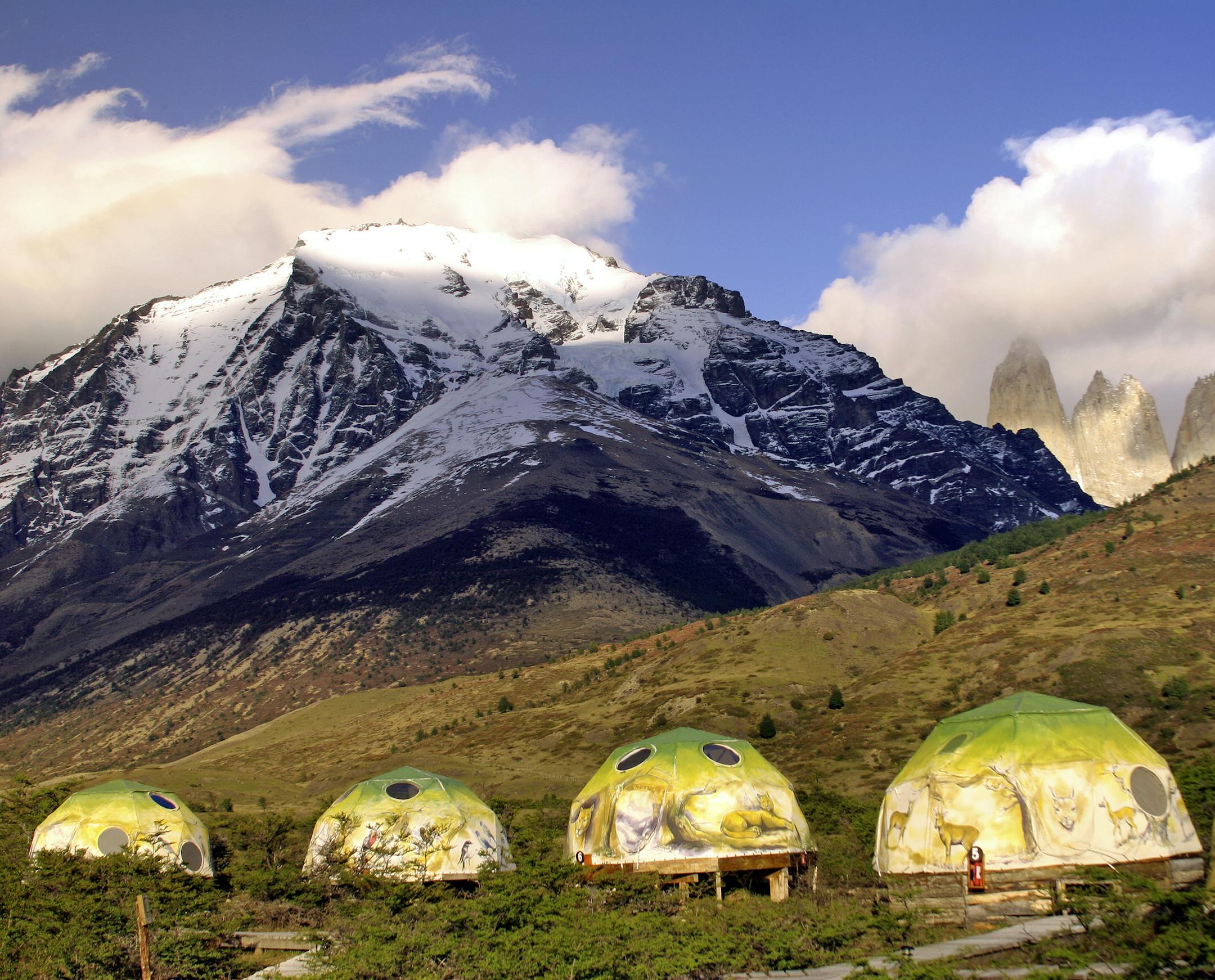
It was late afternoon when we arrived at EcoCamp Patagonia, a cluster of geodesic dome tents. The unusual structures are eye-catching, but only momentarily. The gaze is drawn inexorably up, up to nature's canvas — craggy, snow-covered peaks jutting from grassy steppes — and the Towers, granite spires caressed by clouds, golden in the fading light.
Sitting on wooden platforms connected by boardwalks, the domed "tents" offer a range of amenities, ranging from simple two-bed tents (108 square feet) with a shared bath house to family suites (398 square feet) with a wood stove, several beds and private baths with composting toilets. There's a large dining and lounging dome warmed by a potbellied stove.
In a shed near the dining tent, a lamb rotated on a spit, its juices sizzling in the fire. We gathered around, sipping pisco sours (a South American concoction of lime juice, egg whites and pisco, a strong regional liquor) and savoring the scents. When we sat down to dinner, the lamb was tender and delicious — and the Chilean wine was a perfect complement.