

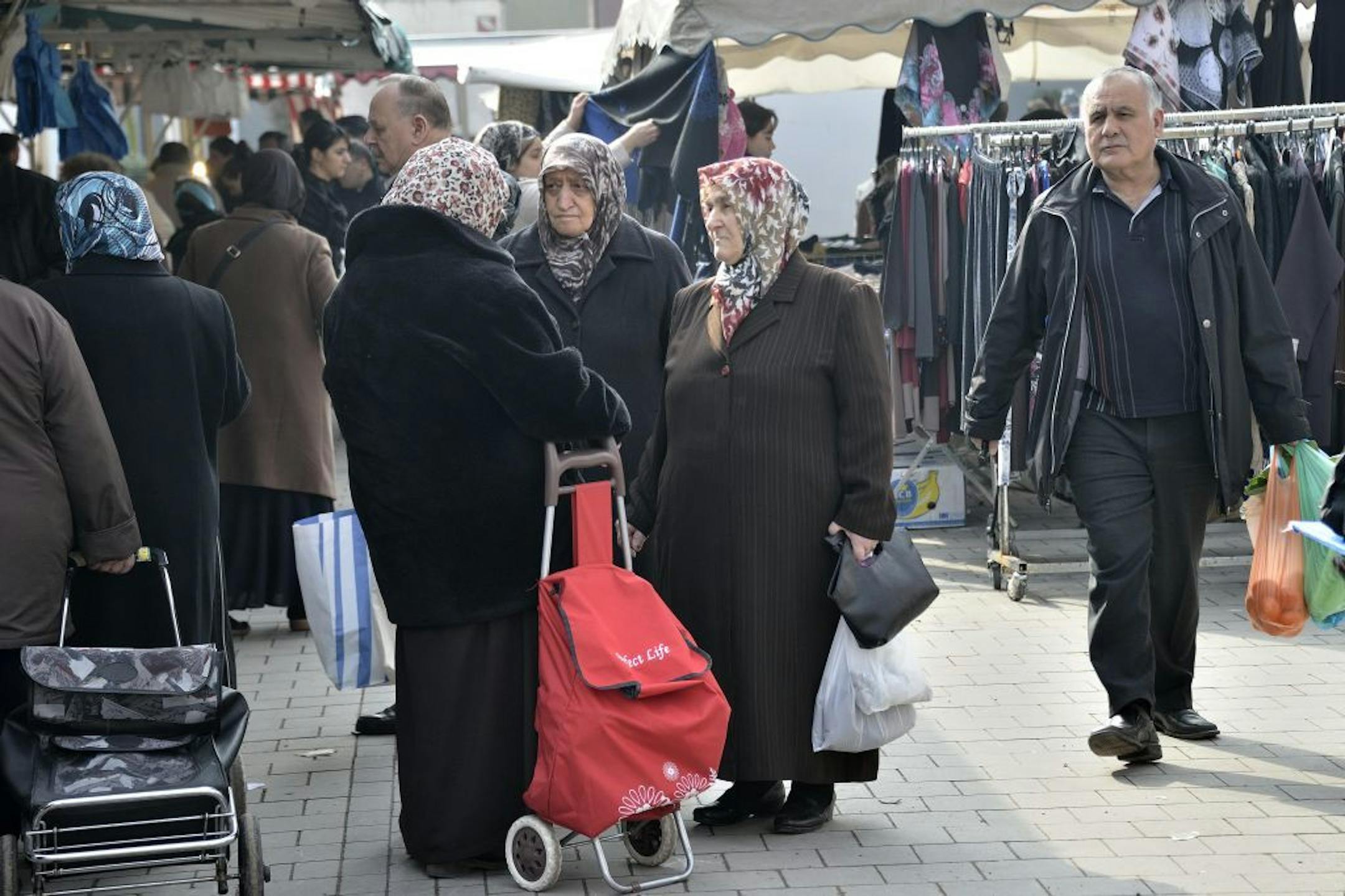
BERLIN - In gritty backstreets of Berlin and other major German cities, housewives wearing head scarves shop for lamb and grape leaves. Old men pass the time in cafes sipping coffee, chatting in Turkish and reading Turkish newspapers.
More than 3 million people of Turkish origin live in Germany — the legacy of West Germany's Cold War-era program to recruit temporary foreign labor during the boom years of the 1950s and 1960s when the country rebuilt after World War II.
What started as a temporary program has changed the fabric of German urban life — from mosques on street corners to countless shops selling widely popular Doener kebab fast food sandwiches.
Germany's experience with "guest workers" offers lessons for the U.S. as it debates immigration reform, including whether to provide a path to citizenship for unskilled foreign laborers, or whether there should be additional temporary-only visas for such workers. President Barack Obama has urged Congress to begin debate in April after lawmakers return from a two-week recess.
Decades after Germany's formal guest worker program ended in the early 1970s, the country is still wrestling with ways to integrate Turks — the second biggest group among the estimated 15 million-strong immigrant community after ethnic Germans who moved from the former Soviet Union and for Soviet bloc countries — into German society.
"When you bring people to work, it's quite hard to tell them to go back one day," said Goecken Demiragli, a social worker whose grandmother came to Berlin from Turkey in 1968. "That was the biggest mistake: to think that if you don't need them, they will go."
Initially, the Germans felt they didn't need an integration path.
They foresaw a temporary program of rotating labor, where workers from Turkey, the Balkans and southern Europe would spend a couple of years on an assembly line and then go home to be replaced by others if industry still needed them.


