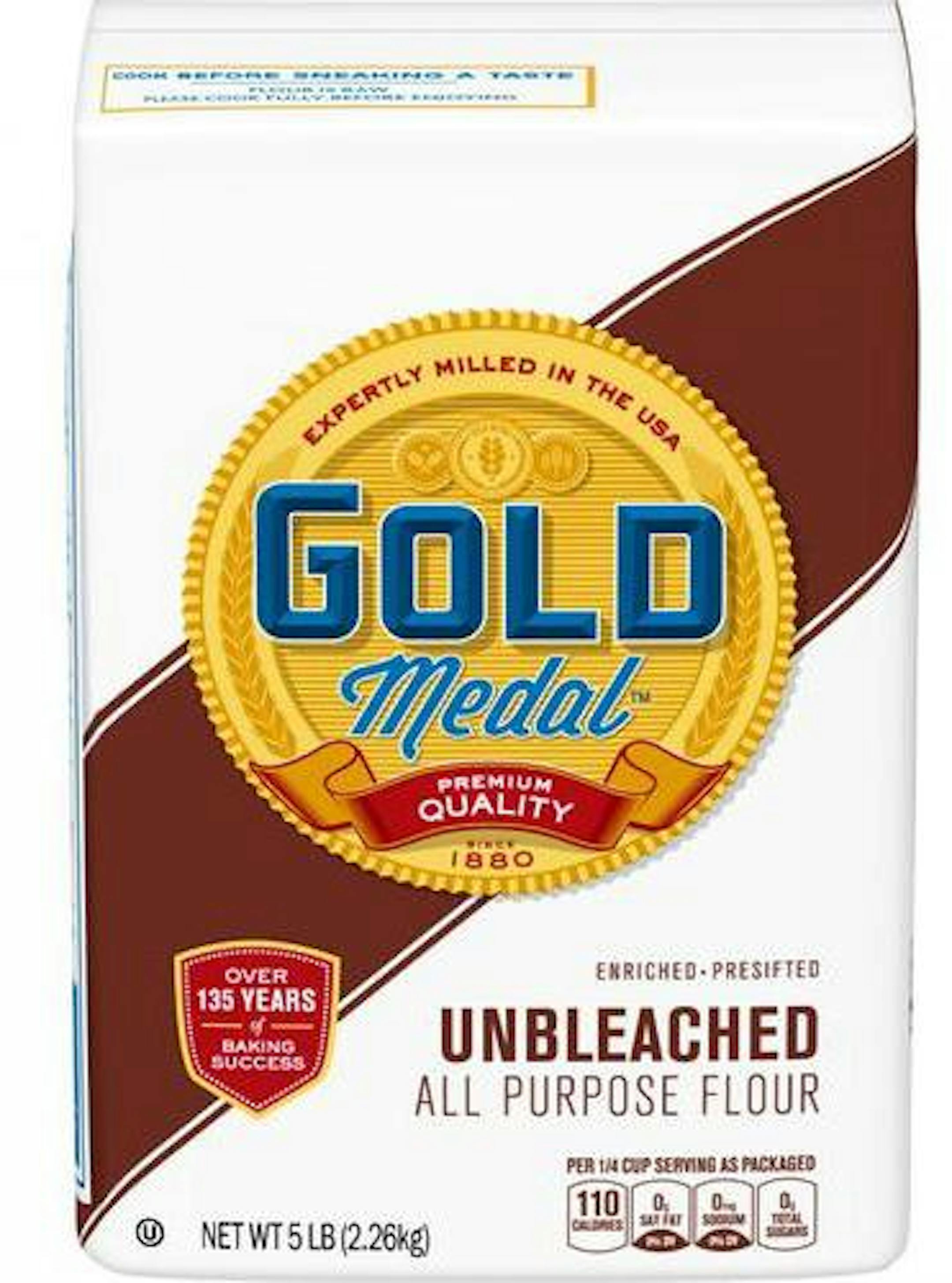
General Mills is recalling about 600,000 pounds of Gold Medal flour over concerns of E. coli contamination.
The Golden Valley-based food maker issued the voluntary recall Monday after a sampling from its Kansas City facility tested positive for E. coli 026, a potentially deadly strain of the bacteria. No consumers have yet reported illness from eating or handling the flour, according to the U.S. Food and Drug Administration (FDA) announcement.
The recall affects just one date code of 5-pound bags of Gold Medal Unbleached All Purpose Flour. General Mills is urging consumers to check their cupboards and throw away their Gold Medal flour if it's a 5-pound bag labeled with a "better if used by" date of Sept. 6, 2020.
General Mills issued a spate of Gold Medal flour recalls three years ago after two different strains of E. coli, 026 and 0121, sickened dozens of people across more than 20 states. That recall grew to include 45 million pounds of flour, or about 2% of its annual output, which also originated at its Kansas City plant. Producers of bread mixes and other products containing General Mills flour pulled them off shelves, too.
Earlier this year, the company recalled about 100,000 pounds of Gold Medal flour after salmonella was detected in random, on-shelf testing, but no illnesses were reported.
The 2016 recall event raised new questions about the safety of flour and led to public admonitions against eating raw cookie dough and cake batter by the Centers for Disease Control and Prevention and the FDA.
Flour is a raw food product that is not treated to kill potential pathogens and therefore has a greater likelihood than more heavily processed foods of being contaminated in the field or during transportation. E. coli usually originates in feces, such as from livestock. It often reaches humans through raw or undercooked meats but can contaminate crops, like wheat, as well.
"People sort of expect recalls with other types of raw agricultural products, like lettuce or sprouts," said Bill Marler, a national food safety lawyer. "But flour is still such a unique and emerging vector for pathogens that people still scratch their heads."