General Mills sets aggressive profit target, publicly segments products by their potential

Company reports hefty profit increase, says it can do better and sets targets.

June 30, 2016 at 2:44AM
General Mills corporate headquarters in Golden Valley.
General Mills earned more than expected in the March-to-May period, but U.S. sales remained under pressure. (Star Tribune/The Minnesota Star Tribune)

General Mills continued to lift profits through cost savings, the company's latest results showed Wednesday as executives unveiled an aggressive profit target and revealed products with the most growth potential.

Sales slid again in the March-to-May period, hurt chiefly by a decline in yogurt in the U.S. as well as some financial effects. But sales of cereal rose 3 percent, offering hope that a turnaround plan was paying off in General Mills' signature business.

The Golden Valley-based company's profit doubled to $380 million in the three months ended May 29, the fourth quarter of its fiscal year. Executives said General Mills could do even better, telling investors that its operating profit margin would climb above 18 percent next year from just under 17 percent in the past year, and to 20 percent in 2018.

Investors sent the company's shares up 3 percent on the news. General Mills stock closed Wednesday at $67.86, an all-time high.

Executives also did something new by publicly disclosing what products are most likely to drive sales and profit growth and distinguishing them from those that are stagnant or declining.

In the U.S., which accounts for about 60 percent of General Mills' business, the growth categories include cereal, snack bars, yogurt, pizza rolls, Mexican food and natural and organic products. They account for about three-fourths of the company's sales and operating profit.

Products such as Pillsbury refrigerated dough, Betty Crocker baking mixes and Progresso soup are not growing. The company calls them "foundational" and said it would focus on reducing the variations of those items and prioritize the most profitable ones.

"In the foundational category, there is just less growth. That doesn't mean we don't like them. The margins on those businesses are comparable to the growth markets," Ken Powell, General Mills' chief executive, said in an interview.
In the past, executives spoke to employees and some investors about the segmentation of products by growth and profit potential. Talking about it publicly creates more intensity on the company to perform. "We are very focused on keeping our organization on our toes and focused on the consumers," Powell said.

Jack Russo, an analyst at Edward Jones, said the move reassures investors that the company is focused on growth and also signals to potential buyers that General Mills may be willing to shed some more assets, as it did when it sold the Green Giant frozen vegetable line last year.

Russo called the company's margin target "really aggressive" and said it "takes a leap of faith to reach 18 percent."

But Powell and other executives discussed a number of new products and refinements that should drive growth. For instance, General Mills will roll out antibiotic-free meat in all of its Progresso chicken soups, the first major label to do so, he said.

Alexia Howard, a senior analyst with Bernstein Research, said the profit goal may also be a tactic to deter two big companies from trying to purchase General Mills.

"[It] may suggest that the company is trying to get out ahead of a possible bid from Kraft-Heinz and 3G next year — either in a bid to deter such a move by demonstrating that most of the cost-saving opportunity has already been achieved and discounted into the stock or in an effort to raise the price paid in such a deal," Howard wrote in a note to investors Wednesday. "It could also suggest that the company is talking to other potential buyers in an attempt to find a white knight buyer of the company instead of 3G."

3G Capital orchestrated the mega merger of Kraft Heinz Food Inc. last year. The private equity company, known for wringing costs out of companies, has driven the consolidation of the food industry.

General Mills' profit in the latest quarter amounted to 62 cents per share, ahead of the 60 cents per share forecast by analysts. Sales were $3.9 billion, down 9 percent from a year ago. In addition to lower unit volumes, General Mills contended with foreign currency translation and the effect of one week fewer in the quarter than a year ago. Its U.S. retail unit, the company's largest business, saw sales fall 12 percent.

The jump in cereal sales reversed several quarters of declines. It was led by gluten-free versions of Cheerios, its biggest cereal line. Introduced in 2015, they grew 5 percent in the last two quarters. The company will also launch three varieties of its Annie's Homegrown organic cereal and two varieties of its new Tiny Toast cereal in the coming year.

To reverse the decline in U.S. yogurt sales, Powell said General Mills will move "fairly aggressively" this year in the organic yogurt segment, which has even higher growth, through additional Annie's investments and transitioning its Liberte brand to be entirely organic.

"It's basically an innovation challenge for us," Powell said of yogurt. "Fundamentally, we are losing share because we don't have the right mix of products and aren't delivering on exactly what consumers are looking for, so we have to adapt and renovate to what they are consuming."

Kristen Leigh Painter • 612-673-4767


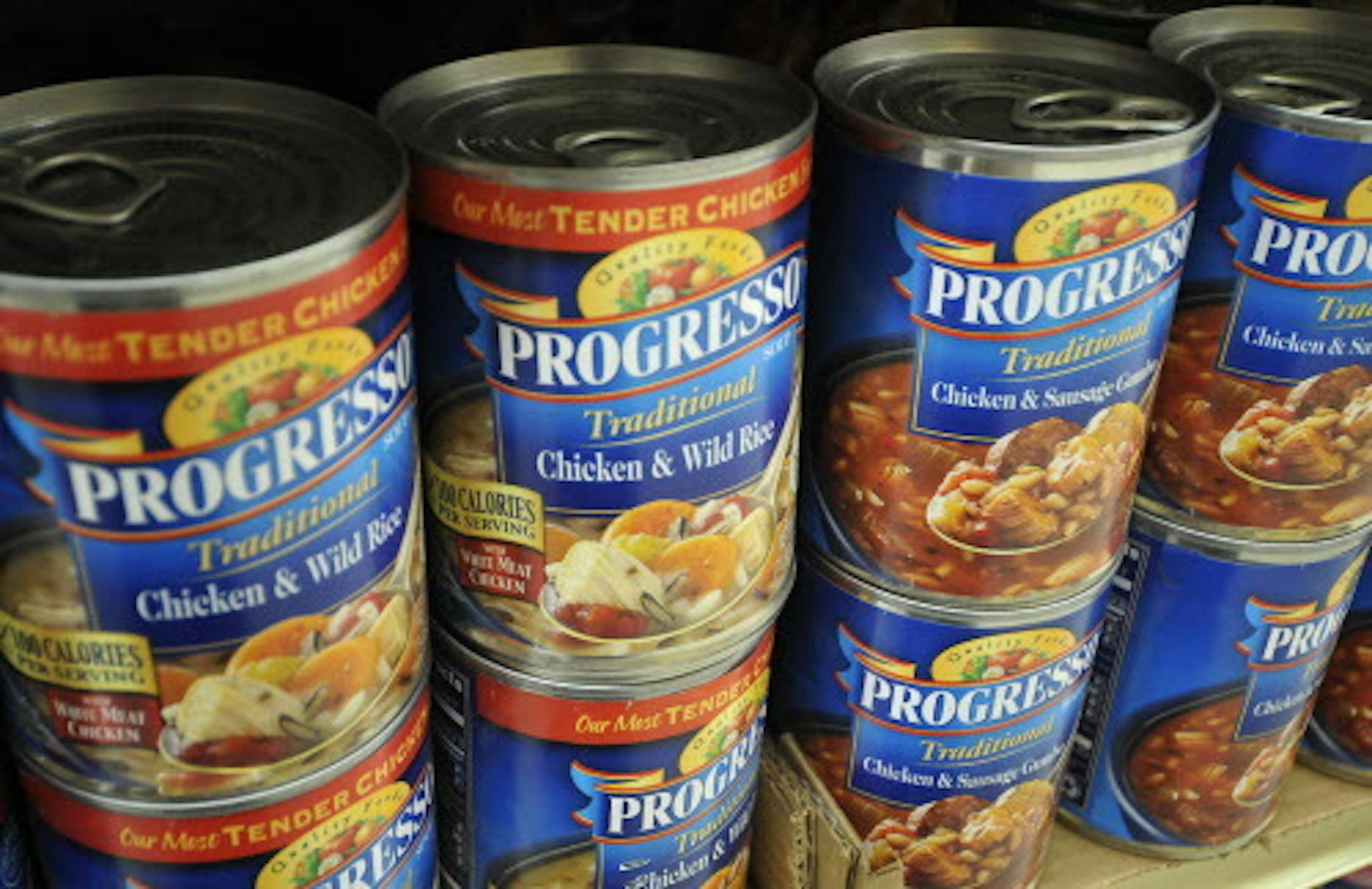
GLEN STUBBE ï gstubbe@startribune.com -- Wednesday, March 19, 2008 -- Minneapolis, Minn. -- Progresso Soups a General Mills brand in the Cub Foods at 701 West Broadway Ave., Minneapolis.
GLEN STUBBE ï gstubbe@startribune.com -- Wednesday, March 19, 2008 -- Minneapolis, Minn. -- Progresso Soups a General Mills brand in the Cub Foods at 701 West Broadway Ave., Minneapolis. (The Minnesota Star Tribune)
General Mills' Betty Crocker baking mix business has long been a staple for the company, but its sales have been hurting the past few years. New recipes and value pricing have helped sales rebound.] rtsong-taatarii@startribune.com/ Richard Tsong-Taatarii
General Mills' Betty Crocker baking mix business has long been a staple for the company, but its sales have been hurting the past few years. New recipes and value pricing have helped sales rebound.] rtsong-taatarii@startribune.com/ Richard Tsong-Taatarii (The Minnesota Star Tribune)
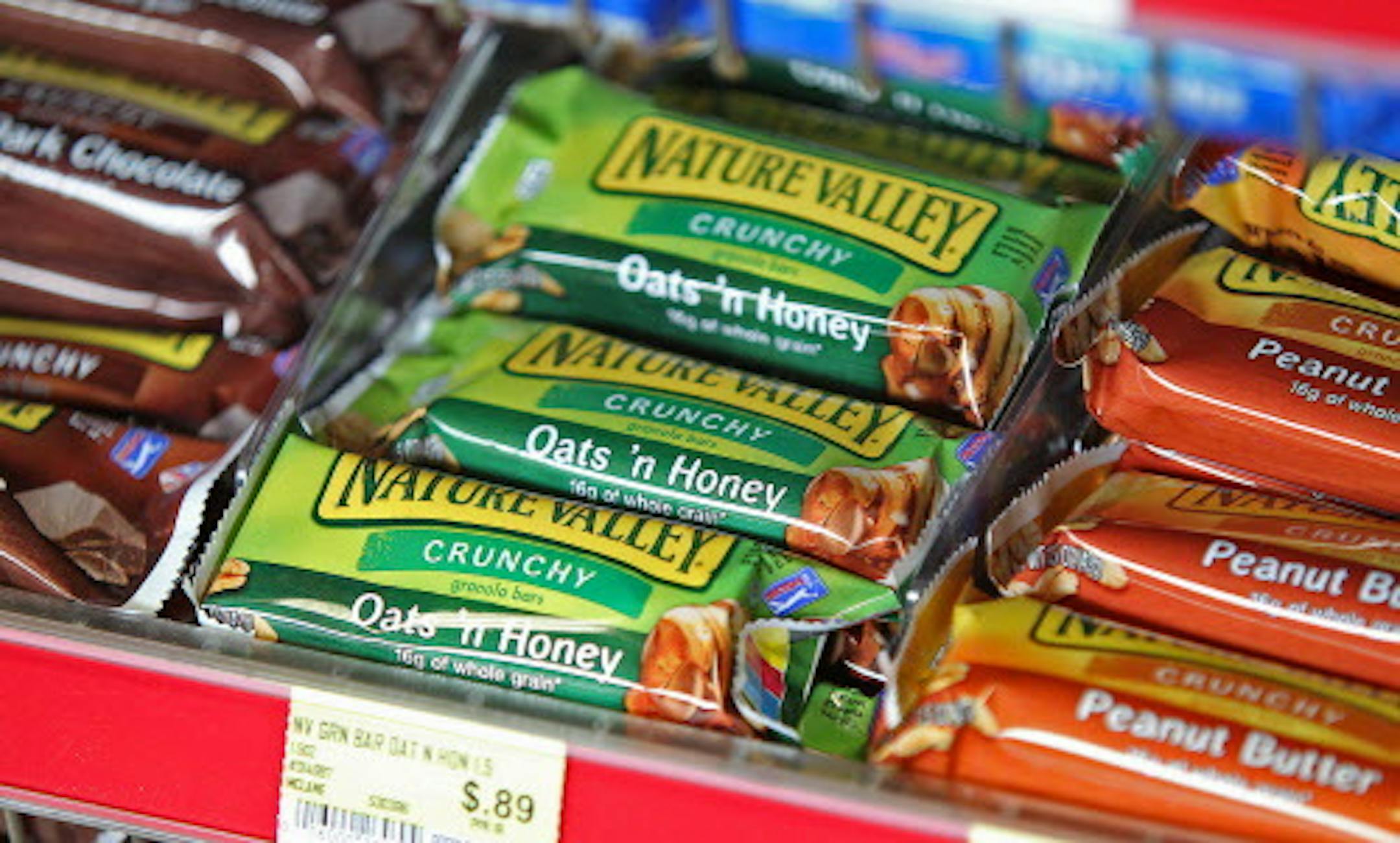
The snack business is driving the consumer packaged food industry more then ever, and General Mills is particularly reaping the benefits, particularly in snacks bars with its Nature Valley and Fiber One brands. (ELIZABETH FLORES/STAR TRIBUNE) ELIZABETH FLORES • eflores@startribune.com ORG XMIT: MIN1305221550060987
The snack business is driving the consumer packaged food industry more then ever, and General Mills is particularly reaping the benefits, particularly in snacks bars with its Nature Valley and Fiber One brands. (ELIZABETH FLORES/STAR TRIBUNE) ELIZABETH FLORES • eflores@startribune.com ORG XMIT: MIN1305221550060987 (The Minnesota Star Tribune)
A new product from Yoplait called Plenti, a Greek yogurt with oats, nuts and seeds blended in at General Mills headquarters in Golden Valley on Thursday, March 12, 2015. ] LEILA NAVIDI leila.navidi@startribune.com /
A new product from Yoplait called Plenti, a Greek yogurt with oats, nuts and seeds blended in at General Mills headquarters in Golden Valley on Thursday, March 12, 2015. ] LEILA NAVIDI leila.navidi@startribune.com / (The Minnesota Star Tribune)
General Mills' Betty Crocker baking mix business has long been a staple for the company, but its sales have been hurting the past few years. New recipes and value pricing have helped sales rebound.] rtsong-taatarii@startribune.com/ Richard Tsong-Taatarii
General Mills' Betty Crocker baking mix business has long been a staple for the company, but its sales have been hurting the past few years. New recipes and value pricing have helped sales rebound.] rtsong-taatarii@startribune.com/ Richard Tsong-Taatarii (The Minnesota Star Tribune)
Priscilla Zee, a marketing manager in General Mills' Big G cereal division Priscilla Zee, a marketing manager in General Mills' Big G cereal division shows up a couple new products coming to market: Cheerios Ancient Grains and gluten free Chex granola mix Cheerios protein is already on the shelves.]Richard Tsong-Taatarii/ rtsong- taatarii@startribune.com
Priscilla Zee, a marketing manager in General Mills' Big G cereal division Priscilla Zee, a marketing manager in General Mills' Big G cereal division shows up a couple new products coming to market: Cheerios Ancient Grains and gluten free Chex granola mix Cheerios protein is already on the shelves.]Richard Tsong-Taatarii/ rtsong- taatarii@startribune.com (The Minnesota Star Tribune)
Kendall Powell, CEO, General Mills
“We are very focused on keeping our organization on our toes and focused on the consumers.” Ken Powell, General Mills CEO (The Minnesota Star Tribune)
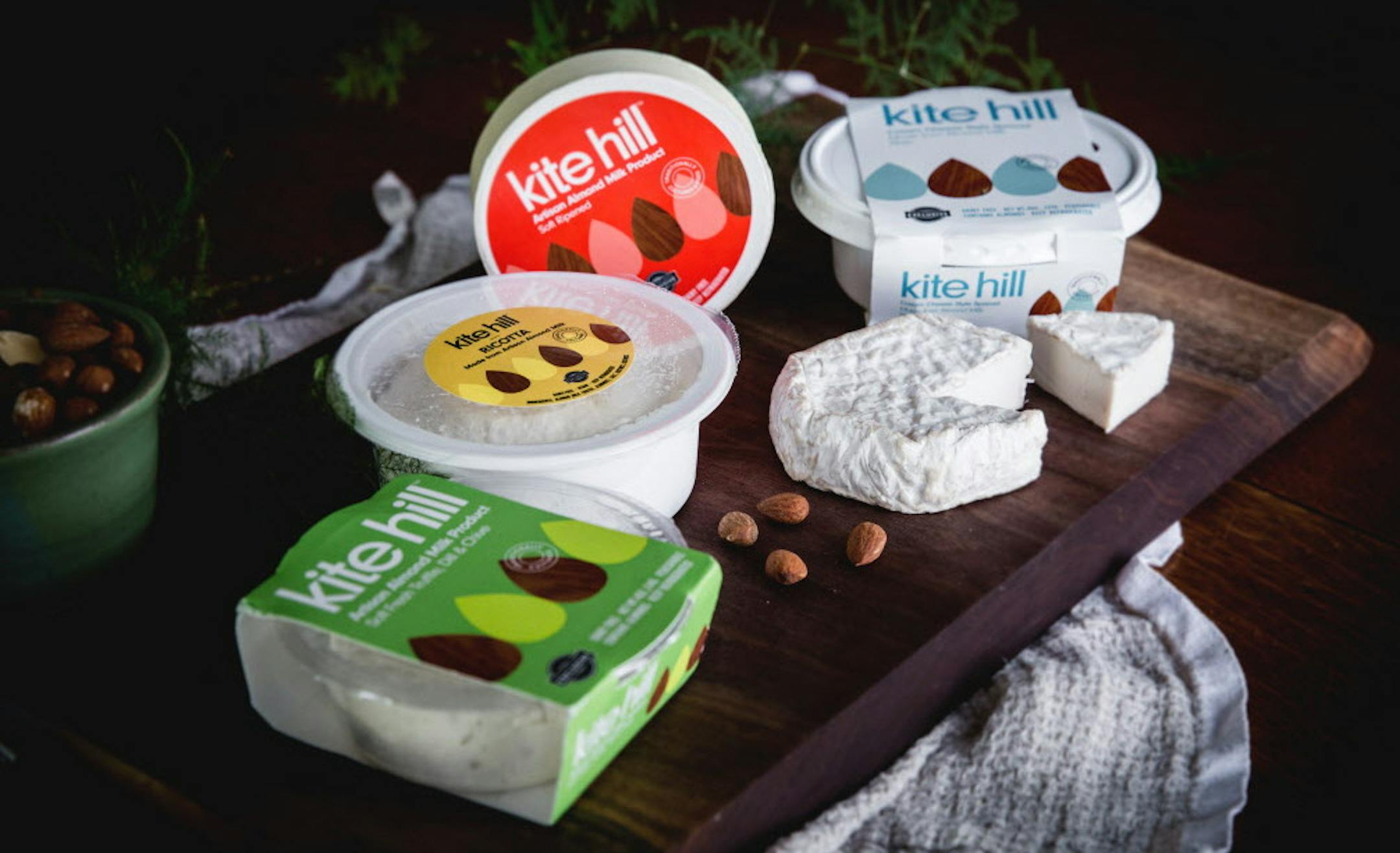
In an undated handout photo, Kite Hill food products. General Mills has recently invested $18 million in Kite Hill, which makes versions of cheese and yogurt from nuts, making it one of a small but growing number of giant food companies that have decided they can no longer afford to sit on the sidelines as smaller, more nimble startups outmaneuver them in the race for consumers seeking healthier foods. (Kite Hill via The New York Times) -- NO SALES; FOR EDITORIAL USE ONLY WITH GENERAL MILLS VENT
General Mills’ venture capital arm last month invested $18 million in Kite Hill, a northern California start-up that makes versions of cheese and yogurt from nuts. (The Minnesota Star Tribune)
about the writer

about the writer

Kristen Leigh Painter

Business Editor

Kristen Leigh Painter is the business editor.

See Moreicon

More from Business

See More
card image
Elizabeth Flores/The Minnesota Star Tribune

The Minnesota-founded chain’s new CEO is emphasizing “chalet” coffee shops, a departure from the tiny “cabin” storefronts started in 2019.

card image
card image