

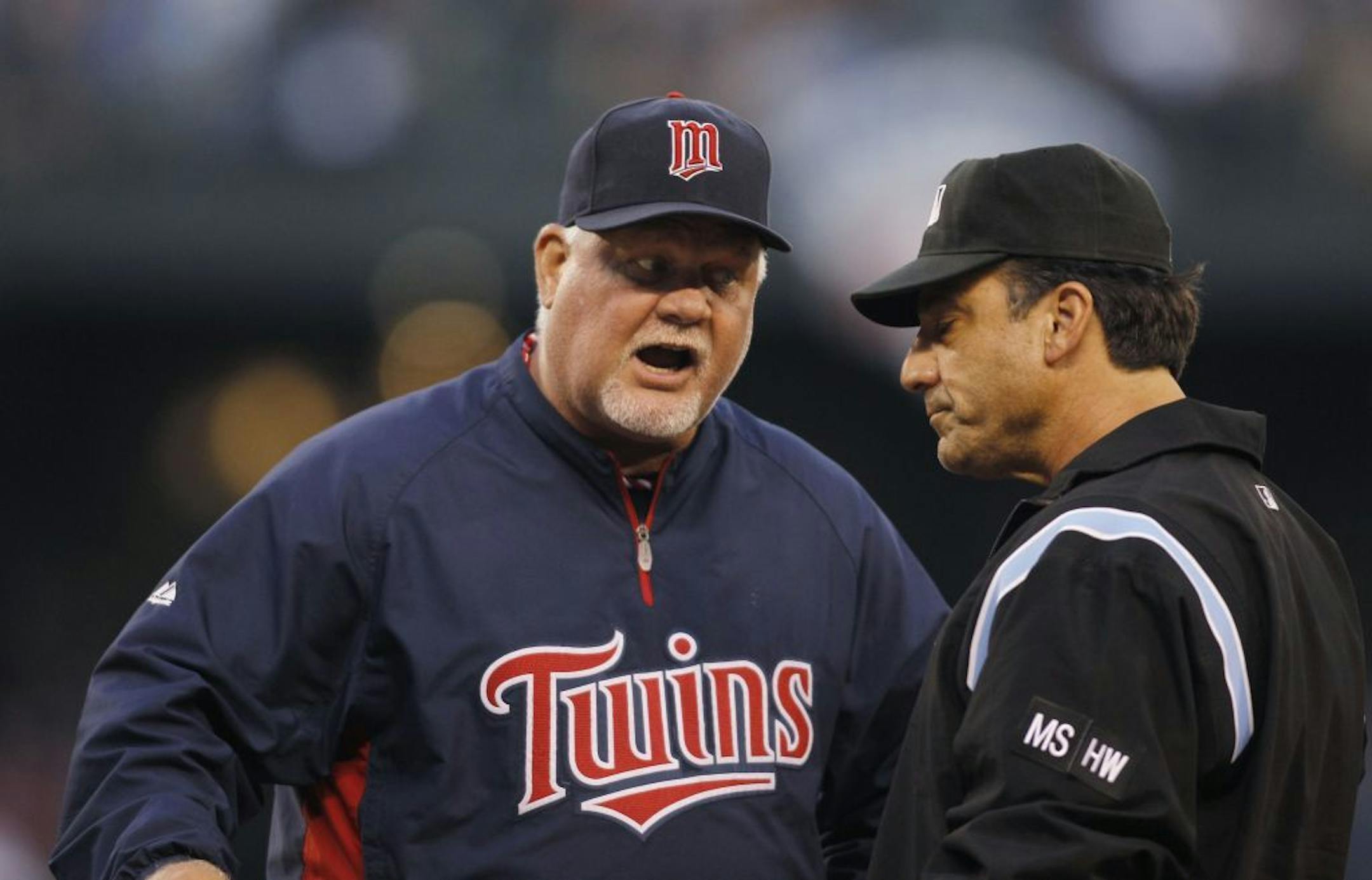
The paradox of being a major league manager on a losing team, Tom Kelly says, is that by the time a new season starts, nobody knows better the level of talent assembled on the roster. And nobody is more willing to believe that this assessment is wrong.
"When you're a manager, the glass is always half-full. I got on my wife about that the other day -- you've got to try to see how things can get better," the former Twins manager joked. "You've got to be willing to let your players surprise you, because each day you go to work to make them better. And it happens all the time -- some of them get better."
That's one of the secrets to surviving a few rough seasons, as Kelly did in the late 1990s, when the transition from a championship team to a next-generation contender crash-landed with eight straight last-place or next-to-last finishes. And it's a mindset, Kelly says, for which his successor, Ron Gardenhire, is particularly suited.
"I don't worry about Ronnie, because he looks forward to the challenge. He enjoys them," Kelly said. "He thrives on challenges."
He came to the right place, then. Because "thrive" is not a word easily attached to the past two Twins seasons, nor to the widespread assumptions about the 2013 team, which gathers this week in Fort Myers, Fla., to open spring training. In many ways, from his coaching staff to his job security to an unprecedented number of mysteries about who will play and where, 2013 shapes up as unlike any of Gardenhire's 11 previous seasons as manager.
The eight winning records and six postseason appearances in Gardenhire's first nine seasons have been marred by 195 losses over the past two seasons, the product of an all-around collapse. The Twins last year allowed 832 runs, more than in any season since 2000, and you have to go back four decades, to 1972-73, to find a two-year (non-strike) period in which Minnesota scored fewer than the 1,320 runs the Twins have managed with back-to-back last-place finishes.
And this year? The team Gardenhire greets won't include starting outfielders Denard Span and Ben Revere, traded over the winter for a trio of pitchers, two of whom will spend the season in the minor leagues. It doesn't have bankable solutions in center field or second base; is gambling on the big league readiness of youngsters at shortstop, third base and right field, and depends heavily on cross-your-fingers newcomers in the starting rotation. All while assuming health and All-Star production from the team's veteran stars.
Sunny disposition, do your stuff.


