

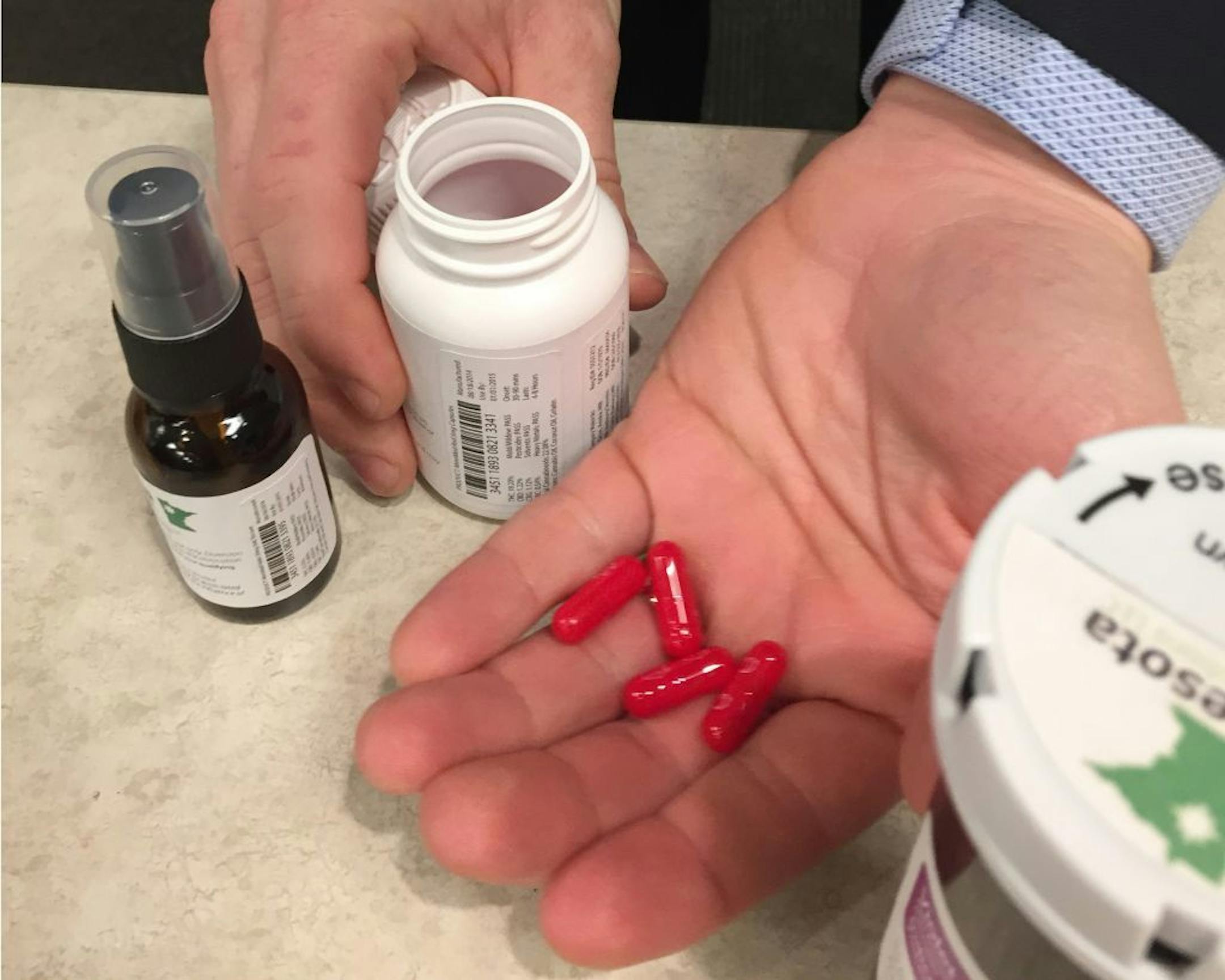
Minnesota has 87 counties, but you'll only be able to buy medical marijuana in eight of them. With half the state's proposed clinics clustered around the Twin Cities, gaps in the cannabis coverage map will leave some families hours away from the nearest clinic.
Four marijuana distribution sites will open within 20 miles of the Twin Cities: Minneapolis, St. Paul, Eagan and Maple Grove. Four more will open outstate: St. Cloud, Hibbing, Moorhead and Rochester. The first clinics will open by July, when patients with serious, chronic or terminal illnesses can begin lining up to buy cannabis products legally.
None of them will open anywhere near the southwestern corner of Minnesota. Jeremy Pauling, of Montevideo, is facing a two-hour drive to St. Cloud to access the cannabis oil he hopes might bring some relief to his 7-year-old daughter, Katelyn, who's battling a debilitating seizure disorder.
"You forgot a quarter of the state of Minnesota," Pauling, who sits on the state's medical cannabis task force, told lawmakers and policymakers last week. Not that that will stop him. "Two hours for me to drive for my daughter — I'll do it," he said.
He worries, however, about frail patients who live even farther away from the planned clinics than he does. Luverne, in southwest Minnesota, is 200 miles from the nearest clinic. So is Roseau, to the north. It's a 3 ½ hour drive from Grand Marais to the clinic in Hibbing. Patients in the Twin Cities, meanwhile, will have their choice.
"We're very fortunate to live in the Twin Cities," said Angela Garin, who plans to enroll her son Paxton in the program.
Paxton, who turns 6 next month, suffers from a brain abnormality that can trigger hundreds of seizures a day. When he enrolled in an experimental cannabis therapy in Oregon, the oil — low in the chemical THC that gives marijuana its buzz but rich in other compounds — cut the seizures by 88 percent in a matter of weeks.
"He was able to walk better, he was feeding himself," Garin said. Now, she's waiting and worrying about whether the state's two new marijuana manufacturers will be able to reproduce the dosage that worked so well for her son in Oregon and whether her family, which is expecting a new baby this spring, will be able to afford the estimated $500 cost for the monthly prescription that insurance won't cover.


